
On September 13, 2010, Conviasa Flight 2350 was approaching Manuel Carlos Piar Guayana Airport in Ciudad Guayana, Venezuela, after a domestic flight from Porlamar.
The ATR 42-320, registration YV1010, was carrying 47 passengers and four crew members. What began as a routine approach ended in a devastating loss-of-control accident that killed 17 people, including both pilots. Thirty-four occupants survived, although many suffered injuries.
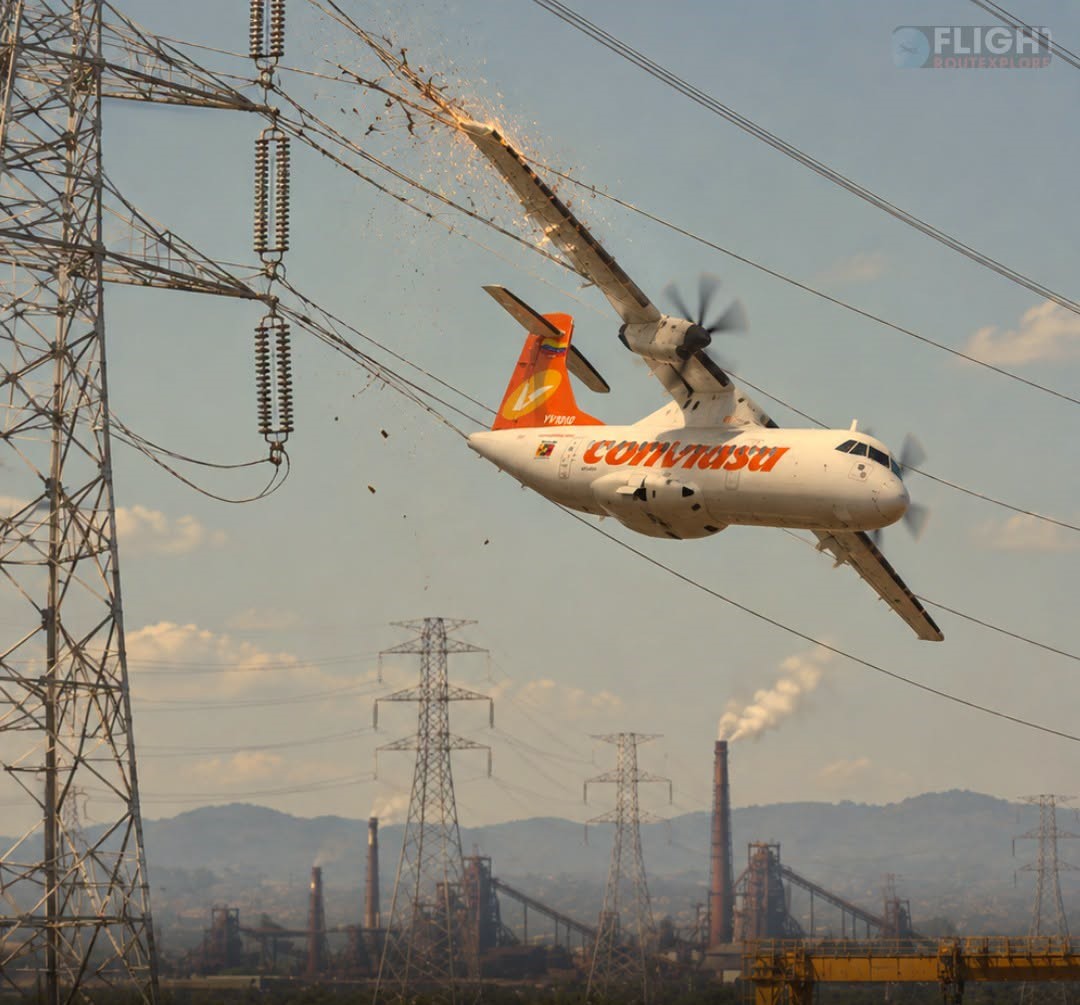
As the aircraft neared the airport at about 9:59 a.m. local time, the crew reported difficulties controlling the aircraft. The ATR was flying at low altitude when it struck high-voltage power lines, then continued into an industrial area containing equipment and structures associated with a steel mill.
The impact sequence was severe: the aircraft crossed obstacles, lost parts of its landing gear and struck additional structures before the left side of the aircraft was badly damaged. The forward fuselage and cockpit were destroyed and the wreckage caught fire.
Despite the violent crash, 34 people survived. Workers at the industrial site and firefighters rushed to the wreckage and helped evacuate survivors, who escaped mainly through the rear of the aircraft.
The initial death toll was reported as 14, but it later increased to 15 and ultimately 17 as additional survivors died from their injuries. Both the captain and first officer were among those killed.
The accident raised immediate questions about why an apparently serviceable aircraft became uncontrollable so close to the runway. Investigators from Venezuela were assisted by France’s Bureau of Enquiry and Analysis for Civil Aviation Safety (BEA), while ATR supplied technical advisers.
The investigation eventually identified a malfunction of the central crew alerting system that produced an erroneous stall warning as the probable cause. The aircraft also experienced decoupling of its elevators, creating serious control difficulties.
However, investigators concluded that the technical problems alone did not explain the disaster. The crew’s response was a major contributing factor.
The final findings cited weaknesses in crew resource management, loss of situational awareness, inadequate cockpit coordination, poor decision-making during the abnormal situation, insufficient knowledge of the stall-warning system and improper handling of the flight controls. Investigators also described serious communication failures and confusion between the pilots.
The commander reportedly had to make considerable physical effort to maintain control during the final moments. Investigators concluded that errors in judgment and ineffective leadership contributed to the aircraft’s loss of control during the final approach.
The accident therefore became a striking example of how a technical malfunction can become catastrophic when combined with confusion, inadequate coordination and inappropriate control inputs.
The aftermath was significant. Venezuela declared three days of national mourning, while Conviasa was eventually grounded nationwide so its fleet could undergo a technical review. The airline’s services were temporarily suspended, including international operations, as authorities examined its safety and operational practices.
Conviasa Flight 2350 remains one of the most serious accidents involving an ATR 42 and a sobering reminder that an aircraft can remain flyable after a system malfunction, yet rapidly become uncontrollable when crews misunderstand warnings and lose situational awareness during a critical phase of flight.