
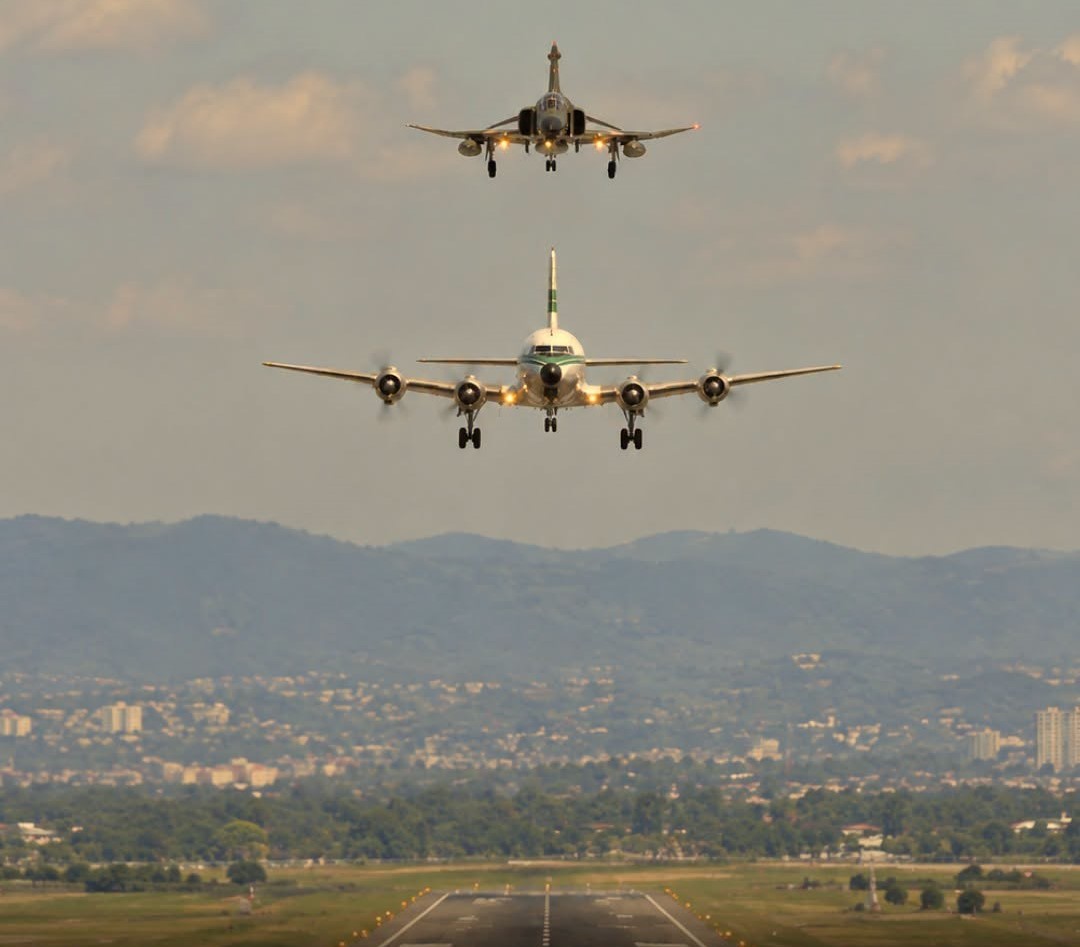
On September 20, 1969, one of the deadliest aviation accidents of the Vietnam War era unfolded near Da Nang Air Base when an Air Vietnam Douglas C-54 Skymaster collided with a U.S. Air Force F-4E Phantom II during the approach to the busy military and civilian airfield.
The Air Vietnam aircraft, registration XV-NUG, was operating a scheduled passenger flight from Saigon to Da Nang with a stop at Pleiku. It was carrying 71 passengers and six crew members.
At the same time, the F-4E, registration 67-0393, was returning to Da Nang after a combat mission with two crew members aboard.
The weather was generally favorable, with visibility reported at about 10 miles, although there was high overcast and scattered lower clouds.
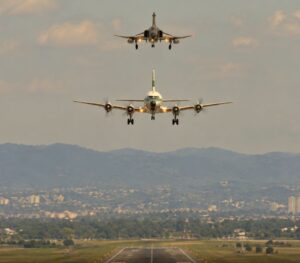
Da Nang had two parallel runways, with civilian traffic normally using Runway 17 Left and military aircraft using Runway 17 Right.
At about 4 p.m., air traffic control cleared both aircraft to land on their respective runways. The F-4 was cleared for Runway 17 Right, while the C-54 was supposed to land on Runway 17 Left.
However, the C-54 crew apparently failed to hear or correctly interpret the transmission. They believed the clearance for the F-4 was intended for them and acknowledged, “Roger, 17-Right.”
The misunderstanding put both aircraft on converging paths. As the C-54 approached the runway, it moved into the path of the descending Phantom. At approximately 300 feet above the ground, the two aircraft collided.
The F-4 struck the C-54’s right horizontal stabilizer and left wingtip, causing catastrophic damage to the airliner.
The Phantom’s navigator ejected and was injured during the landing, while the pilot managed to bring the damaged fighter safely back to Da Nang.
The C-54 crew attempted an emergency go-around, but the aircraft had lost critical flight-control structure. Unable to recover, it crashed into a paddy field near the village of Hoa An. Of the 77 people aboard, 75 were killed.
Only two passengers survived, including a 12-year-old boy who was found in the aircraft’s tail section. Debris also struck the nearby village, killing a mother and her daughter and injuring two other people.
Emergency helicopters, ambulances, fire trucks and rescue teams reached the crash site rapidly. Military personnel were also deployed to secure the area and prevent looting. The scale of the destruction was considerable, with wreckage scattered across the surrounding fields.
The accident triggered a joint investigation by the U.S. Air Force and South Vietnamese authorities beginning the following day. The investigation centered on the fatal communication and runway-identification error that had placed the civilian airliner on the military runway approach.
The evidence indicated that the collision was not caused by poor weather or a mechanical failure initiating the sequence, but by a breakdown in air traffic communication and the C-54 crew’s misunderstanding of its landing clearance.
The Da Nang collision became particularly significant because it was the first recorded mid-air collision in Vietnam between a civilian aircraft and an American military aircraft. In seconds, a mistaken understanding of a runway clearance turned a routine landing into a catastrophe that claimed 77 lives on the ground and in the air.