
On September 6, 1985, Midwest Express Airlines Flight 105 departed General Mitchell Field in Milwaukee, Wisconsin, bound for Atlanta. The McDonnell Douglas DC-9-14, registered N100ME, carried 27 passengers and four crew members.
The flight appeared routine as the aircraft accelerated down Runway 19R and lifted into the clear afternoon sky. Less than a minute later, however, everything changed.
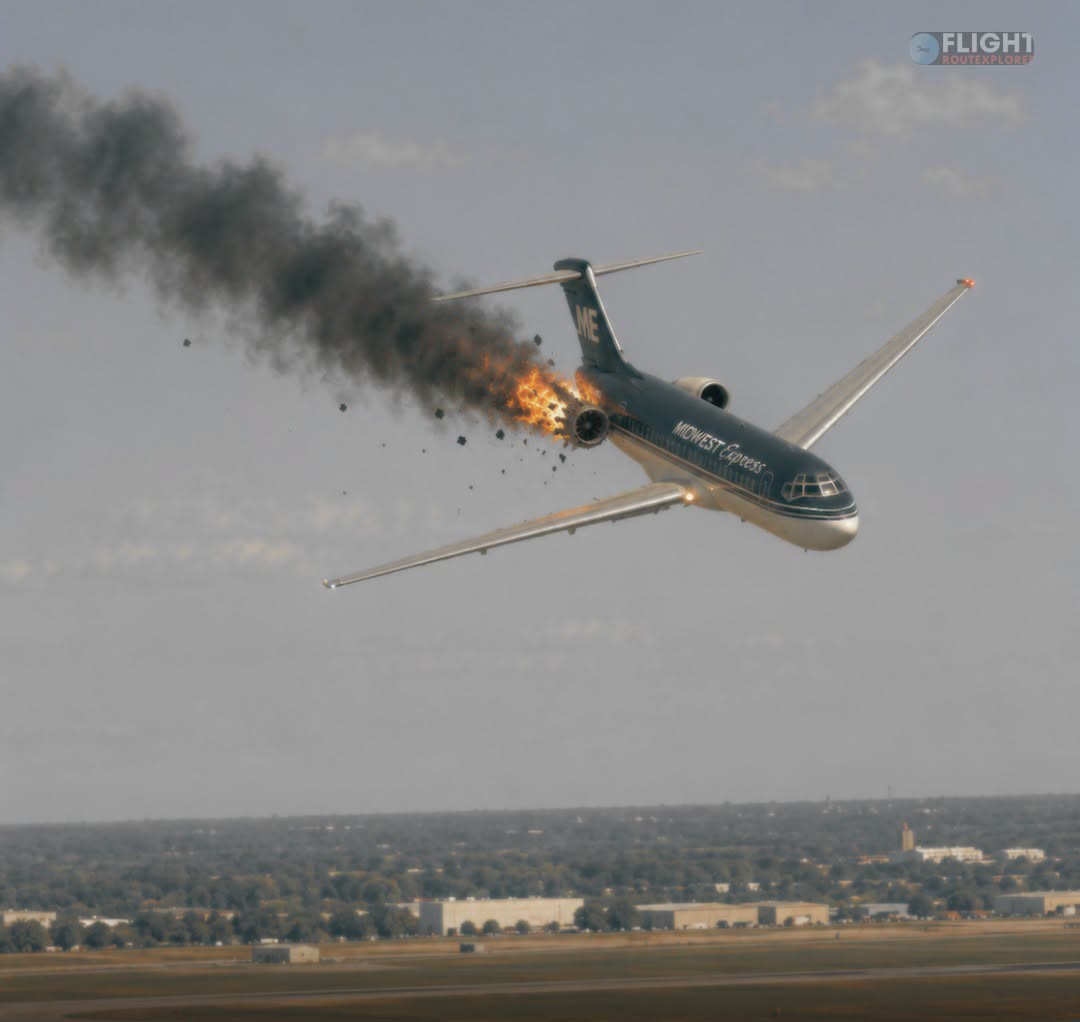
At about 700 feet above the ground, the crew heard a violent bang and the aircraft began to sway. The right Pratt & Whitney JT8D engine had suffered an uncontained failure involving a high-pressure compressor spacer.
Engine components were thrown outward, and witnesses reported seeing smoke and flames coming from the right side of the aircraft. Debris was scattered near the runway as Flight 105 continued climbing.
Captain Danny Martin asked, “What the hell was that?” and then asked his fellow pilot what they had. The crew declared an emergency, but the aircraft continued climbing at a high angle of attack. Its airspeed fell rapidly.
Instead of stabilizing, the DC-9 began rolling to the right. The aircraft eventually reached an extreme bank, approaching 90 degrees, and entered an accelerated stall.
The situation deteriorated within seconds. The left engine also lost power, possibly after ingesting debris from the failed right engine. With little altitude available, the pilots could not recover the aircraft.
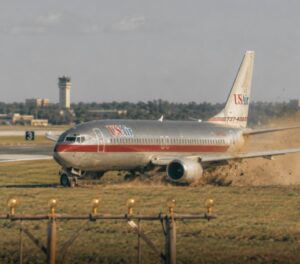
The DC-9 rolled violently before plunging into an open field near the airport at approximately 3:21 p.m. The impact destroyed the aircraft, and a post-crash fire followed. All 31 people aboard—27 passengers, two pilots and two flight attendants—were killed. There were no survivors.
The investigation initially faced several possibilities. Investigators examined whether fragments from the exploding engine could have penetrated the aircraft and damaged its flight-control system. They also considered pilot error and the possibility of a breakdown in cockpit coordination.
Investigators found a large opening in the damaged engine casing and compressor components scattered along the runway, confirming the seriousness of the engine failure.
The NTSB ultimately concluded that the engine failure itself did not make the DC-9 uncontrollable. The aircraft was designed to continue flying after losing one engine. Instead, the investigation determined that the pilots failed to properly control the aircraft following the emergency.
The crew’s response, loss of effective coordination, and inadequate FAA oversight were identified as important factors. The mechanical failure therefore triggered the emergency, but the subsequent loss of control turned it into a catastrophe.
The crash became one of the major U.S. aviation accidents of 1985 and prompted scrutiny of engine component reliability, flight-crew performance and regulatory oversight. Flight 105 remains a stark example of how a seemingly survivable engine failure, occurring only moments after takeoff, can become fatal when an aircraft loses control at low altitude.