
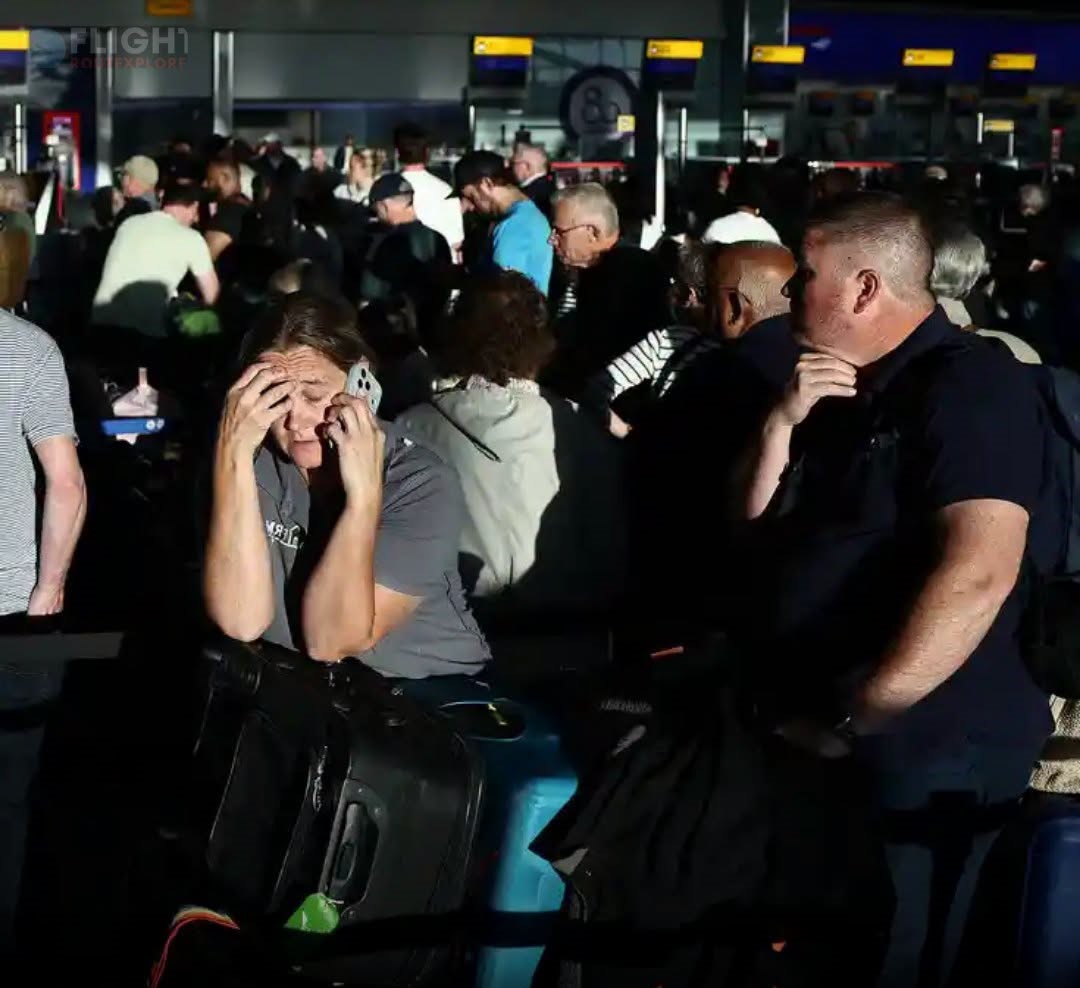
The UK’s air travel disruption has entered a second day, with hundreds more flights cancelled as airlines struggle to recover from Tuesday’s major air traffic control failure.
By late Wednesday morning, aviation analytics firm Cirium reported 291 cancellations across UK airports — 120 departures and 171 arrivals. That was around 5% of the 5,869 flights scheduled for the day, compared with a normal cancellation rate of just 1–2%.
The scale of Tuesday’s disruption was far greater, with around 1,750 flights cancelled and hundreds of thousands of passengers affected.
British Airways alone cancelled 198 flights scheduled for Wednesday, following 349 cancellations the previous day. The airline said aircraft and crew had been left in the wrong locations, forcing it to rebuild its schedule overnight.
And that is why simply fixing the original technical problem does not immediately restore normal operations.
When hundreds of flights are cancelled, aircraft can end up stranded at airports where they were never supposed to be, while pilots and cabin crew can also become displaced. Crew members may then reach legally permitted working-hour limits, creating additional cancellations even after air traffic control operations resume.
Heathrow and Gatwick have both warned passengers that delays and cancellations could continue while airlines reposition aircraft and crews and work through the backlog.
NATS Chief Executive Martin Rolfe has apologised for the failure and said a full investigation will be conducted. Importantly, a cyberattack has been ruled out as the cause.
The immediate outage may be over, but the ripple effects are still being felt across the UK aviation network — and for some airlines, the recovery could take several days.