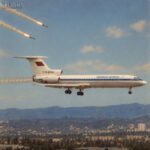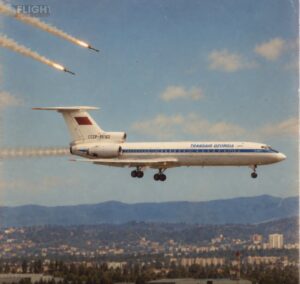

On 13 September 1997, one of the deadliest military aviation accidents over southern Africa unfolded about 65 nautical miles west of Namibia.
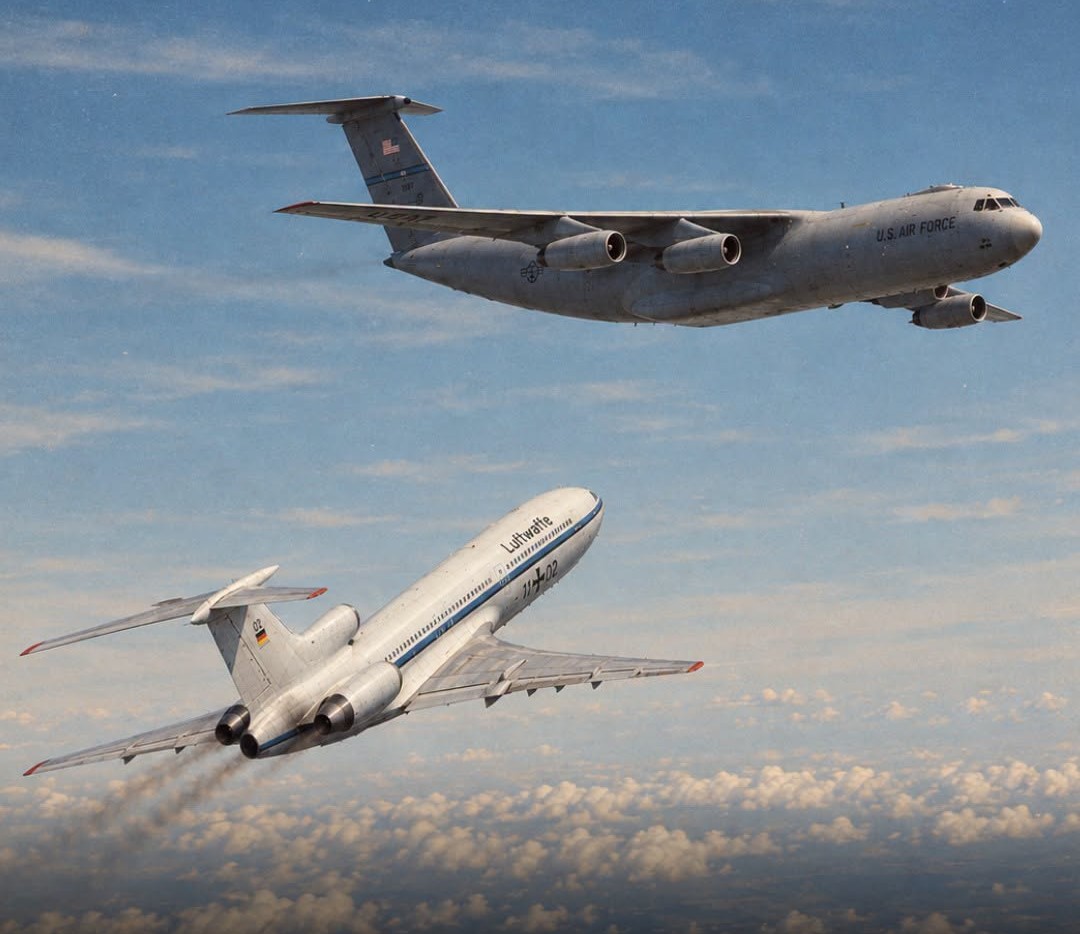
A German Air Force Tupolev Tu-154M, operating as GAF 074, and a United States Air Force Lockheed C-141B Starlifter, REACH 4201, collided in mid-air at approximately 35,000 feet. All 33 people aboard the two aircraft were killed: 24 aboard the German aircraft and nine aboard the American transport.
The German Tu-154M had departed Niamey, Niger, at 10:35 UTC and was flying south toward Cape Town, South Africa, carrying 14 passengers and 10 crew members.
The passengers included German marines and their spouses travelling to South Africa for events marking the 75th anniversary of the South African Navy.
Meanwhile, the C-141B had departed Windhoek at 14:11 UTC after delivering humanitarian supplies and was heading northwest toward Ascension Island with nine crew members aboard.
The critical problem was altitude. The C-141 was properly operating at FL350 according to its flight plan. The Tu-154 had originally filed for FL350 with a planned climb to FL390, but it remained at FL350.
Investigators also found that the altitude was inappropriate for the German aircraft’s direction of flight under the applicable cruising-level rules. The two aircraft therefore converged on the same flight level with no effective separation between them.
At about 15:10 UTC, the aircraft collided over the Atlantic. The Tu-154 struck the C-141’s lower fuselage, catastrophically damaging both aircraft. A bright flash was reportedly detected by a surveillance satellite, while a nearby French military aircraft heard a distress call. Both aircraft plunged into the ocean. There were no survivors.
The tragedy became even more disturbing when the communication failures were examined. Namibian air traffic controllers were tracking the American C-141 but were unaware that the German aircraft was in their airspace.
Although flight-plan information existed, failures in the African Aeronautical Fixed Telecommunication Network disrupted the transmission of information. Luanda controllers were communicating with the Tu-154 but failed to ensure that Namibian controllers knew about its presence.
Neither aircraft had a Traffic Alert and Collision Avoidance System, meaning the crews lacked the modern automated warning that might have provided a final opportunity to avoid the collision.
The subsequent investigation primarily blamed the German crew for flying at the wrong level, while also identifying serious air-traffic-control and communications deficiencies as contributing factors. The Luftwaffe also acknowledged responsibility for its aircraft’s role in the accident.
The search that followed involved aircraft and vessels from several nations. The first wreckage was found on 16 September, but the deep ocean made recovery extremely difficult. Only a small amount of wreckage and very few human remains were recovered.
The disaster exposed dangerous weaknesses in regional air-traffic management and communications. It also demonstrated how several seemingly manageable failures—an incorrect cruising altitude, incomplete coordination between controllers and unreliable communication systems—could combine with devastating consequences. In just seconds, two military aircraft carrying 33 people collided over the open Atlantic, leaving no survivors.