
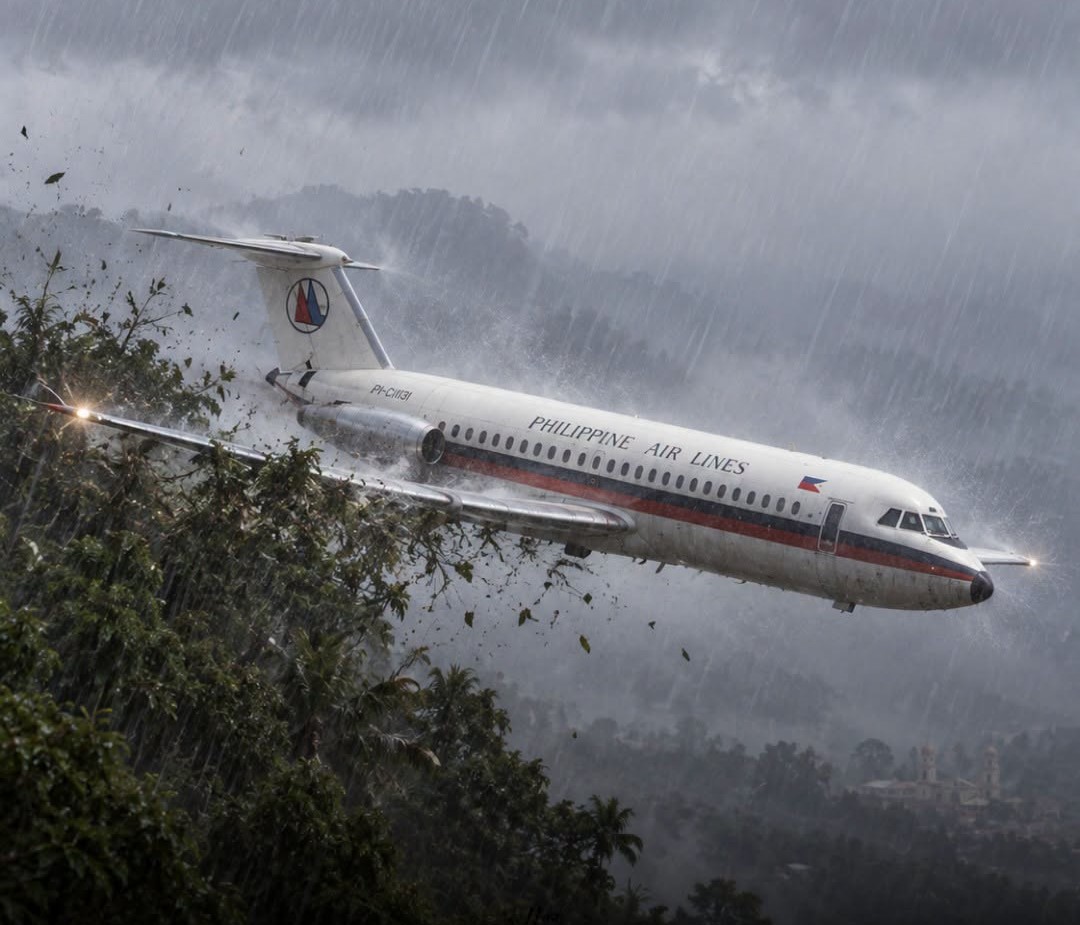
On September 12, 1969, Philippine Air Lines Flight 158 was nearing the end of its scheduled journey from Mactan-Cebu International Airport to Manila International Airport. The aircraft was a BAC One-Eleven 402AP, carrying 42 passengers and five crew members.
The flight was approaching Manila at night and was being positioned for a VOR approach to Runway 24. Instead of reaching the airport, the jet descended into the hills of Kula-ike in Antipolo, Rizal, about 22 kilometres east of Manila International Airport.
At approximately 760 feet above sea level, the aircraft struck a mango tree on a hillside before crashing. The impact destroyed the aircraft and triggered a devastating fire.
Of the 47 people aboard, 45 were killed. Remarkably, only two people survived: one passenger and one flight attendant. Both suffered serious burns and required hospitalization.
The crash immediately became one of the Philippines’ worst aviation disasters. At the time, it was the deadliest accident involving a commercial aircraft in the country and remained so until Philippine Airlines Flight 206 crashed in 1987.
The investigation classified the accident as controlled flight into terrain, meaning the aircraft remained capable of flying but was unintentionally flown into the ground. The accident occurred during a difficult nighttime approach in heavy rain and turbulence, with poor visibility affecting the crew’s ability to maintain adequate awareness of the surrounding terrain.
Weather conditions were a crucial factor. A heavy rainstorm was affecting the area as the aircraft descended toward Manila. Turbulence and reduced visibility made the approach more challenging, while the aircraft was operating relatively close to rising terrain.
The aircraft ultimately descended to an altitude where the hillside remained directly in its flight path. There was no indication that an engine failure or catastrophic structural problem caused the crash. Instead, the circumstances pointed to a dangerous loss of terrain clearance during the approach.
One of the most striking details was how close the aircraft was to its destination. The BAC One-Eleven was only about 22 kilometres from Manila International Airport when it struck the hillside. Despite being on an instrument approach toward the airport, it never reached the runway.
The tragedy demonstrated the dangers of conducting an approach at night in severe weather, particularly when heavy rain, turbulence and rising terrain are present. Even when an aircraft is functioning normally, a loss of situational awareness during an approach can have catastrophic consequences.
The crash also became a major milestone in the history of Philippine aviation. It exposed how quickly a routine flight could turn into a disaster when adverse weather and terrain combined during the critical final stages of flight.
Flight 158 had begun as a normal domestic service from Cebu to Manila. Instead, just a short distance from its destination, the aircraft struck a hillside and was destroyed. Forty-five people lost their lives, leaving only two survivors from the 47 people aboard.