
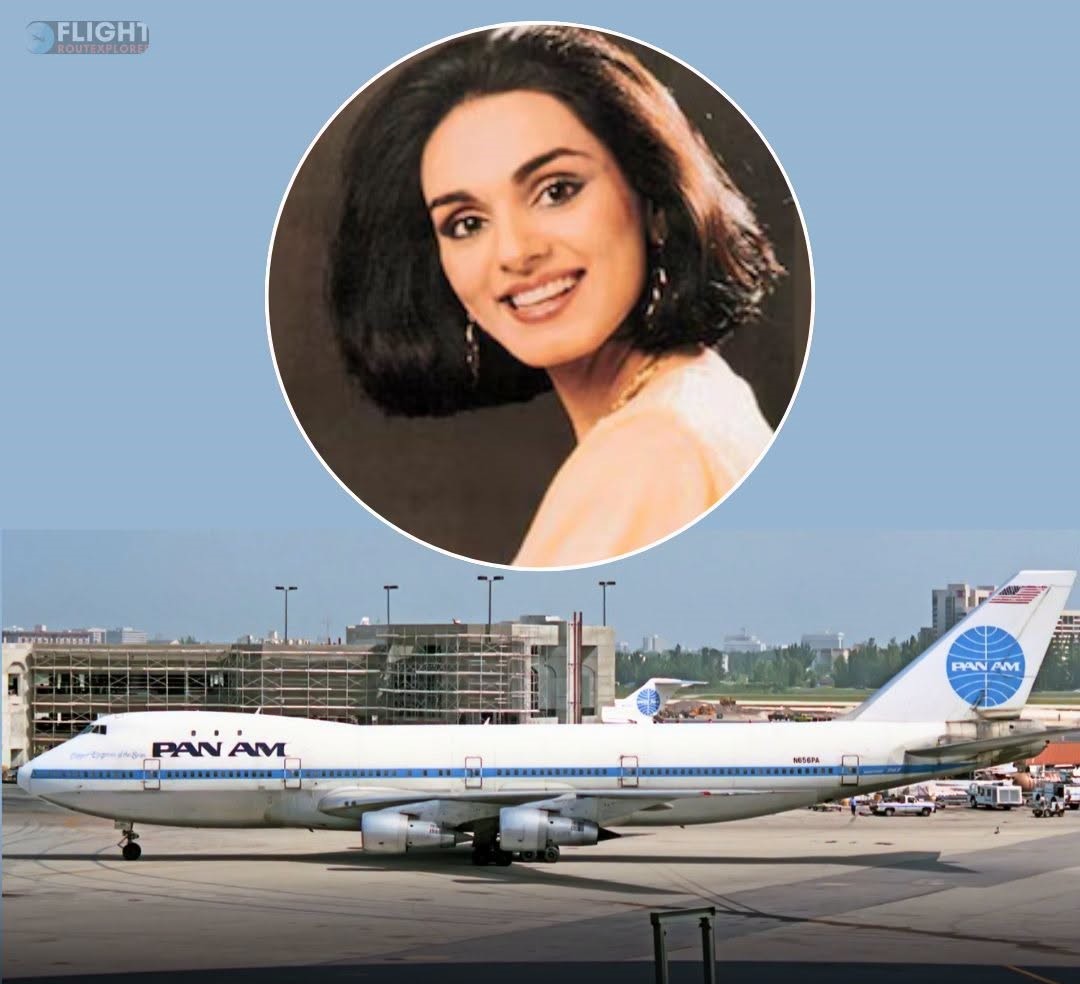
On September 5, 1986, Pan Am Flight 73 was making a scheduled stop at Karachi, Pakistan, while flying from Mumbai to New York via Frankfurt.
The Boeing 747, carrying 379 people, had just arrived at Jinnah International Airport when four armed Palestinian militants disguised as airport security personnel stormed onto the aircraft.
They approached in a van made to resemble an airport security vehicle, complete with flashing lights and a siren, allowing them to pass through a security checkpoint. The attackers were armed with assault rifles, pistols, grenades and explosive belts.
The hijackers quickly seized control of the cabin, but their plan suffered a major setback almost immediately. Senior purser Neerja Bhanot secretly alerted the cockpit crew using the hijack warning code.
Captain William Kianka, First Officer Conway Dodge and Flight Engineer John Ridgway escaped through the cockpit’s overhead emergency hatch, leaving the aircraft unable to fly.
The hijackers therefore found themselves trapped on the ground with hundreds of hostages and no pilots to force into the cockpit.
The standoff continued for hours. The hijackers demanded that the pilots be returned and threatened passengers when officials refused. Rajesh Kumar, a recently naturalized American citizen, was selected as a hostage and eventually shot dead after negotiations failed.
Meanwhile, flight attendants were ordered to collect passengers’ passports. Realizing that American passengers could be singled out, Bhanot and other crew members secretly hid or discarded many American passports.
After more than 16 hours, the aircraft’s auxiliary power unit failed at about 9 p.m., plunging the cabin into darkness except for emergency lighting. In the confusion, the hijackers suddenly opened fire and threw grenades.
Passengers rushed toward emergency exits while crew members opened doors and helped people escape. Some passengers jumped roughly 20 feet from doors where slides failed to deploy. Other exits provided safer escape routes, allowing hundreds to flee into the darkness.
The hijackers were eventually overwhelmed as Pakistani Special Service Group commandos moved in after hearing gunfire. Four hijackers were captured alive. Neerja Bhanot, who had helped protect passengers and organize the evacuation, was shot and killed. In total, 20 passengers and crew members died, while about 120 others were injured.
The investigation identified the attackers as members of the Abu Nidal Organization. A Pakistani court convicted five men connected with the attack in 1988 and initially sentenced them to death, although the sentences were later commuted to life imprisonment.
Lead hijacker Zayd Hassan Abd al-Latif Safarini was eventually handed over to the United States and received a 160-year sentence in 2005. The other four were transferred to the Palestinian Authority in 2008.
Investigators also examined allegations of wider state involvement, particularly claims concerning Libya’s alleged support for the Abu Nidal Organization. The FBI continued pursuing suspects decades later and released age-progressed images in 2018, offering a $5 million reward for information leading to the capture of four remaining alleged hijackers.
The tragedy remains one of aviation’s most notorious hostage crises, remembered especially for Neerja Bhanot and the crew members whose courage helped hundreds of passengers escape.