
Final Fish Stocking Mission Ends in Tragedy: NTSB Preliminary Report Reveals Last Moments of Maine Warden Service Cessna A185F Crash
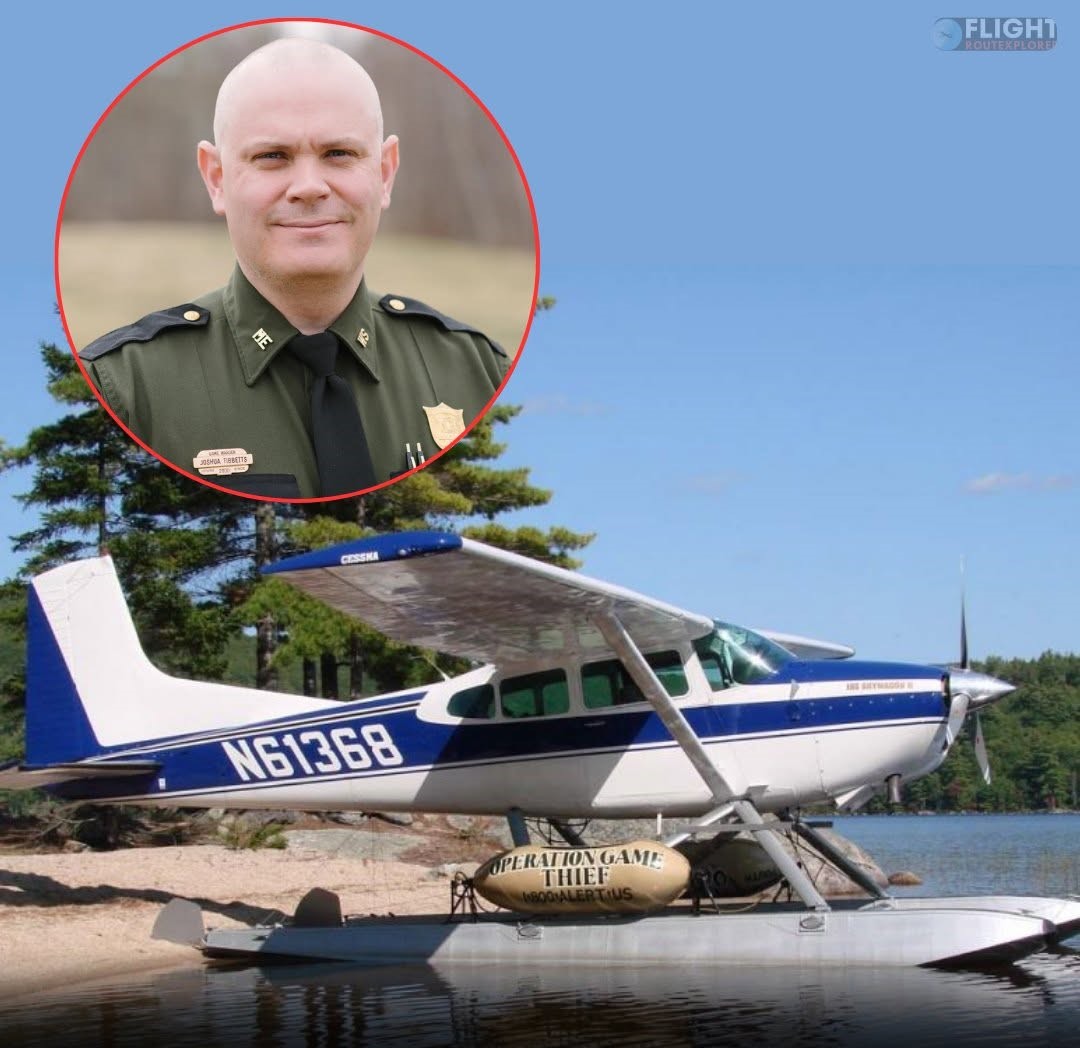
A newly released National Transportation Safety Board (NTSB) preliminary report has revealed new details surrounding the tragic May 12, 2026 crash of a Maine Warden Service aircraft that claimed the life of veteran pilot and Game Warden Joshua Tibbetts.
The accident occurred at approximately 10:58 a.m. local time near Avon, Maine, when Cessna A185F floatplane N61368 crashed into a densely wooded hillside about 400 yards southwest of Schoolhouse Pond during a fish stocking mission. The aircraft was substantially damaged and Tibbetts, the only person on board, was fatally injured.
According to the report, the flight began at a seaplane base on Crystal Lake in Harrison, Maine, before repositioning to Rangeley Lake to load fish destined for Schoolhouse Pond. The aircraft carried two specialized fish pods mounted on its floats, operated through cockpit controls. Before departure, the right pod was loaded with approximately 12 gallons of water and 42 pounds of fish.
FAA ADS-B tracking data showed the aircraft departed Rangeley Lake around 10:30 a.m. and flew roughly 21 miles southeast toward Schoolhouse Pond. The aircraft passed about 1.5 miles east of the pond, turned left, and followed the eastern shoreline in a southwesterly direction. The final recorded data points showed the airplane entering a right turn moments before impact.
Investigators found the aircraft resting nose-down among trees on rising terrain. The floats remained attached but displayed significant impact damage, while fish from the mission were discovered both inside the right fish pod and scattered on the ground near the wreckage. Tree branches around the crash site showed impact marks and paint transfers, indicating the aircraft struck vegetation before coming to rest.
The preliminary examination found the aircraft’s flight control system remained connected, the fuel selector was set to BOTH, and fuel line continuity was established from the tanks to the gascolator. The flaps were found set at 20 degrees. The engine was partially separated from the firewall, and the three-bladed propeller showed leading-edge impact damage. The wreckage has been retained for further examination as investigators continue working to determine the exact cause of the crash.
Weather at the time included visual flight conditions, visibility of 10 miles, broken clouds at 4,800 feet, and winds from 290 degrees at 13 knots with gusts reaching 25 knots. No flight plan had been filed for the operation.
The loss of Joshua Tibbetts was a devastating blow to Maine’s conservation and aviation communities. As investigators continue to analyze the evidence, the preliminary report serves as a sobering look at the final moments of a dedicated public servant carrying out a mission to preserve Maine’s natural resources.