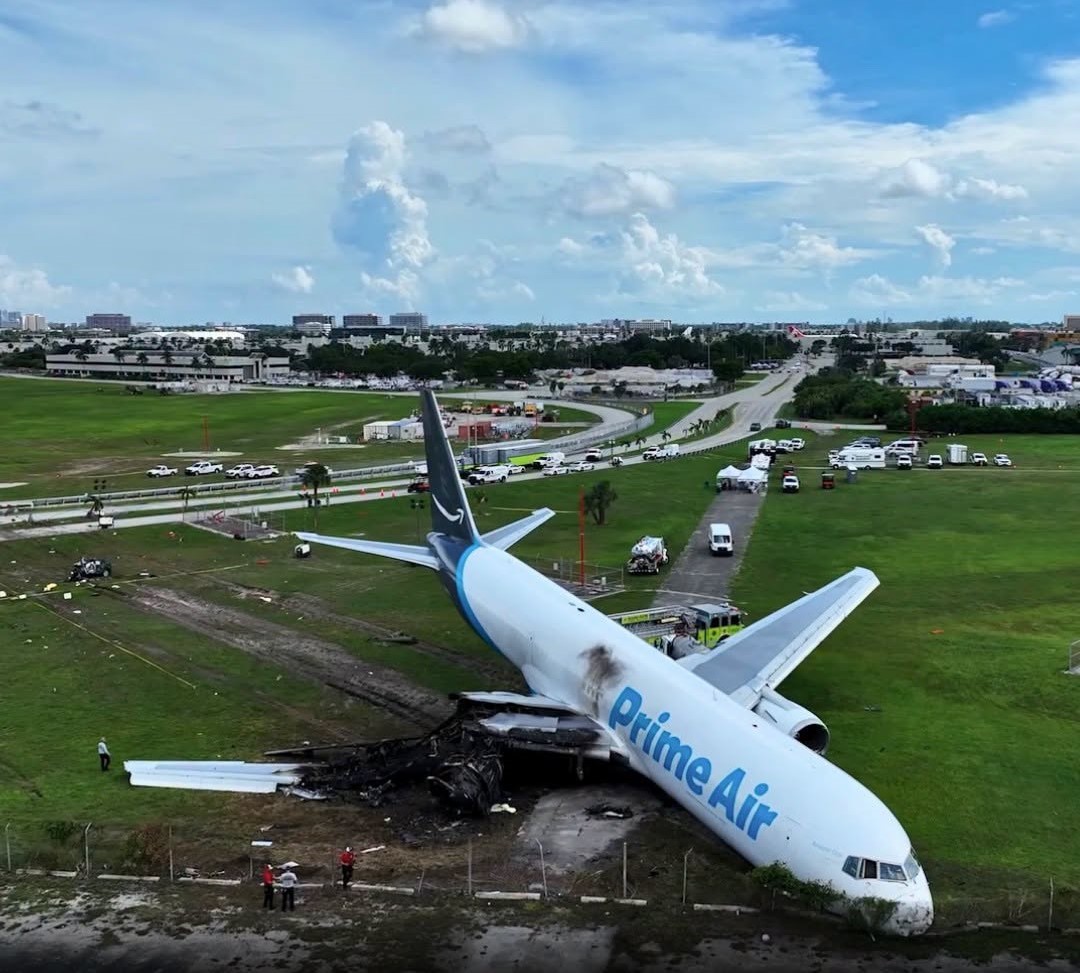
A deadly Boeing 767 crash at Miami International Airport is raising serious questions about the crew’s decisions, the safety culture of the carrier operating the flight, and Amazon’s use of smaller cargo airlines.
According to newly released NTSB flight data and cockpit recordings, the Amazon cargo flight operated by 21 Air was already showing warning signs during its approach. Automatic alerts were sounding in the cockpit, while one pilot reportedly warned that the aircraft was approaching too fast.
Yet the crew continued the landing.
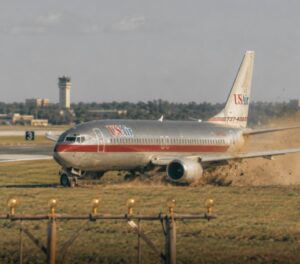
The Boeing 767 touched down at roughly 180 mph in an unstable approach. The pilots briefly attempted to take off again, but the aircraft could not recover. It overran the runway by approximately 1,300 feet before crashing into vehicles on the ground.
Five people were killed, all workers involved in cleaning aircraft, while five others were injured.
Retired airline captain Ross Aimer described the approach as extremely unstable and questioned why the crew did not execute a go-around, a standard procedure when an approach becomes unsafe.
The investigation has also turned attention toward 21 Air, a relatively small cargo carrier operating eight aircraft for Amazon. The company also flies for DHL.
The crew had comparatively limited experience on the Boeing 767. The captain had been qualified on the type for less than five months, while the first officer had less than 18 months of 767 experience, according to the NTSB.
Even more concerning are allegations from former 21 Air employees. Former union president Karl Seuring said he had previously warned about safety issues and claimed the company struggled to retain experienced pilots because of comparatively low pay.
A former safety director also allegedly warned company leadership in 2021 about what he considered serious safety problems.
21 Air disputes the allegations and says its organization has focused on proper training, protocols and operational safety.
Amazon, meanwhile, says contracting flights to certified third-party carriers is standard practice in the aviation industry and insists that safety is its highest priority.
The Miami crash is also notable because it is the third major accident involving a Boeing 767 flying for Amazon.
In 2019, an Atlas Air 767 crashed into Trinity Bay during approach to Houston, killing all three people aboard. The NTSB determined pilot error was the probable cause.
In 2024, a Cargojet 767 operating for Amazon overran the runway at Vancouver International Airport after the crew reported problems with the aircraft’s wing flaps. No one was injured.
Investigators are now examining not only what happened inside the cockpit, but also the relationship between Amazon and 21 Air — including training, operational responsibilities, safety provisions and contractual requirements.
The critical question is no longer simply why the Miami aircraft crashed.
It is whether warning signs existed long before the aircraft ever reached the runway.
The NTSB investigation remains ongoing.