
A newly released investigation has revealed troubling details about the chain of decisions that preceded last year’s catastrophic UPS MD-11 freighter crash in Louisville, Kentucky. Documents released by the National Transportation Safety Board (NTSB) suggest that a critical engine-mount component went without the detailed inspections needed to detect dangerous wear—even though Boeing had developed an enhanced inspection procedure years earlier.
According to UPS, the company chose not to adopt the additional inspection requirements because Boeing had stated that failure of the spherical bearings inside the engine pylon was not considered a “safety-of-flight” issue. Boeing also maintained that the existing inspection program was sufficient, despite recommending an enhanced inspection method to better detect bearing movement.
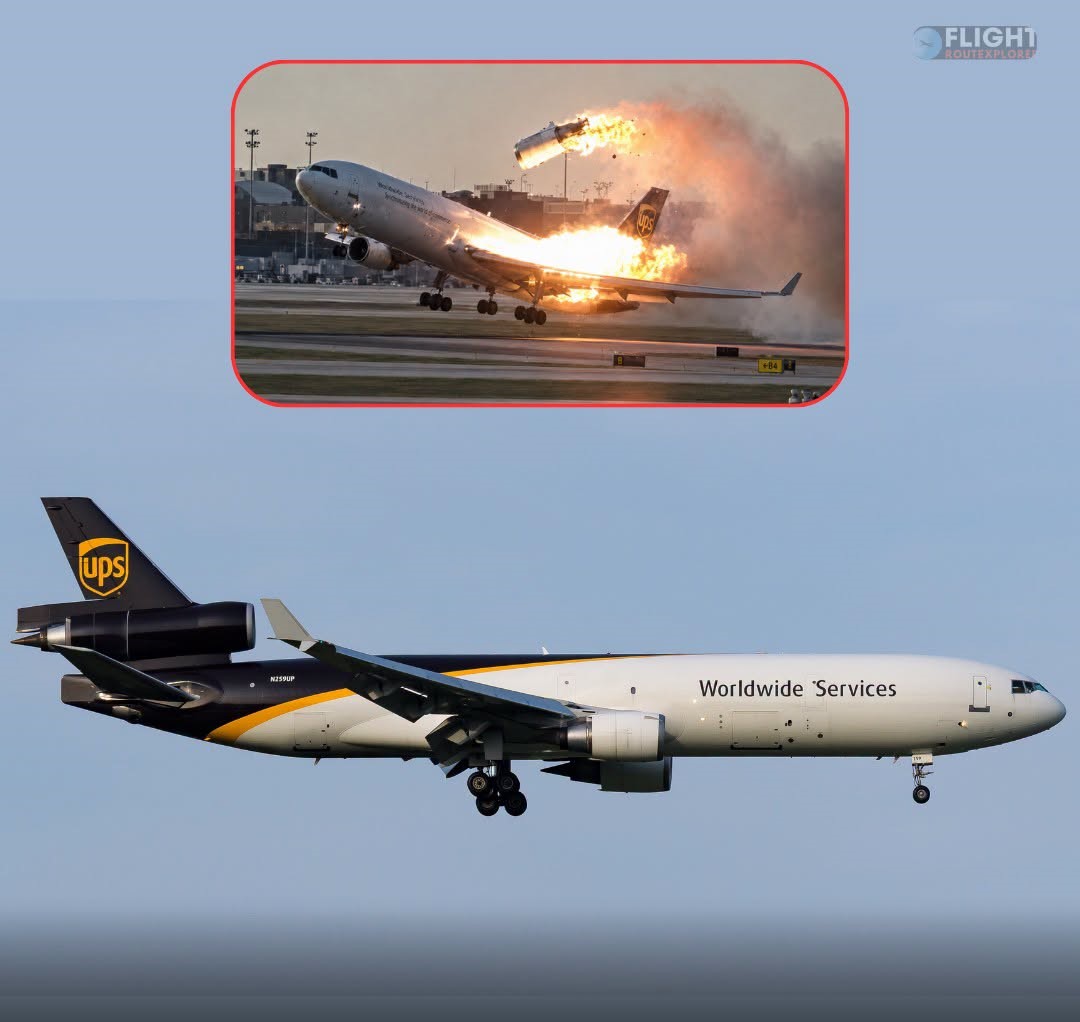
The consequences were devastating. During takeoff from Louisville Muhammad Ali International Airport in November, one of the aircraft’s engines separated from the wing after the engine mount failed. The aircraft crashed in a massive fireball, killing all three pilots on board and 12 people on the ground, while injuring another 23.
Investigators say the bearings responsible for securing the engine are buried deep within the pylon structure, making them nearly impossible to inspect without removing the entire engine. Although Boeing included an enhanced inspection procedure in the MD-11 maintenance manual, it never incorporated it into the FAA-approved Maintenance Planning Document (MPD), meaning operators like UPS were not required to perform those inspections.
The investigation also revealed that Boeing had previously convinced the FAA to extend inspection intervals from 19,900 flight cycles to 29,260 cycles—even after multiple reports of bearing defects had already surfaced. Ironically, the crashed UPS aircraft had accumulated just over 21,000 flight cycles, meaning it would have undergone a thorough inspection under the original maintenance schedule.
Aviation safety experts say responsibility does not rest with a single organization. Instead, Boeing, UPS, the FAA, and maintenance provider STE San Antonio Aerospace all played a role in allowing the defect to go undetected. As former NTSB and FAA investigator Jeff Guzzetti stated, aviation safety is a shared responsibility, and investigators must now determine how accountability should be divided.
The fallout has already changed the future of the aging MD-11 fleet. Following the accident, the FAA approved a new inspection and replacement program requiring spherical bearings to be replaced every 4,000 flight cycles. FedEx resumed MD-11 operations only after implementing these measures, while UPS chose to retire its entire MD-11 fleet earlier than planned.
The NTSB’s final report is expected later this year or early next year, but the evidence released so far raises serious questions about maintenance standards, regulatory oversight, and whether this tragedy could have been prevented.