
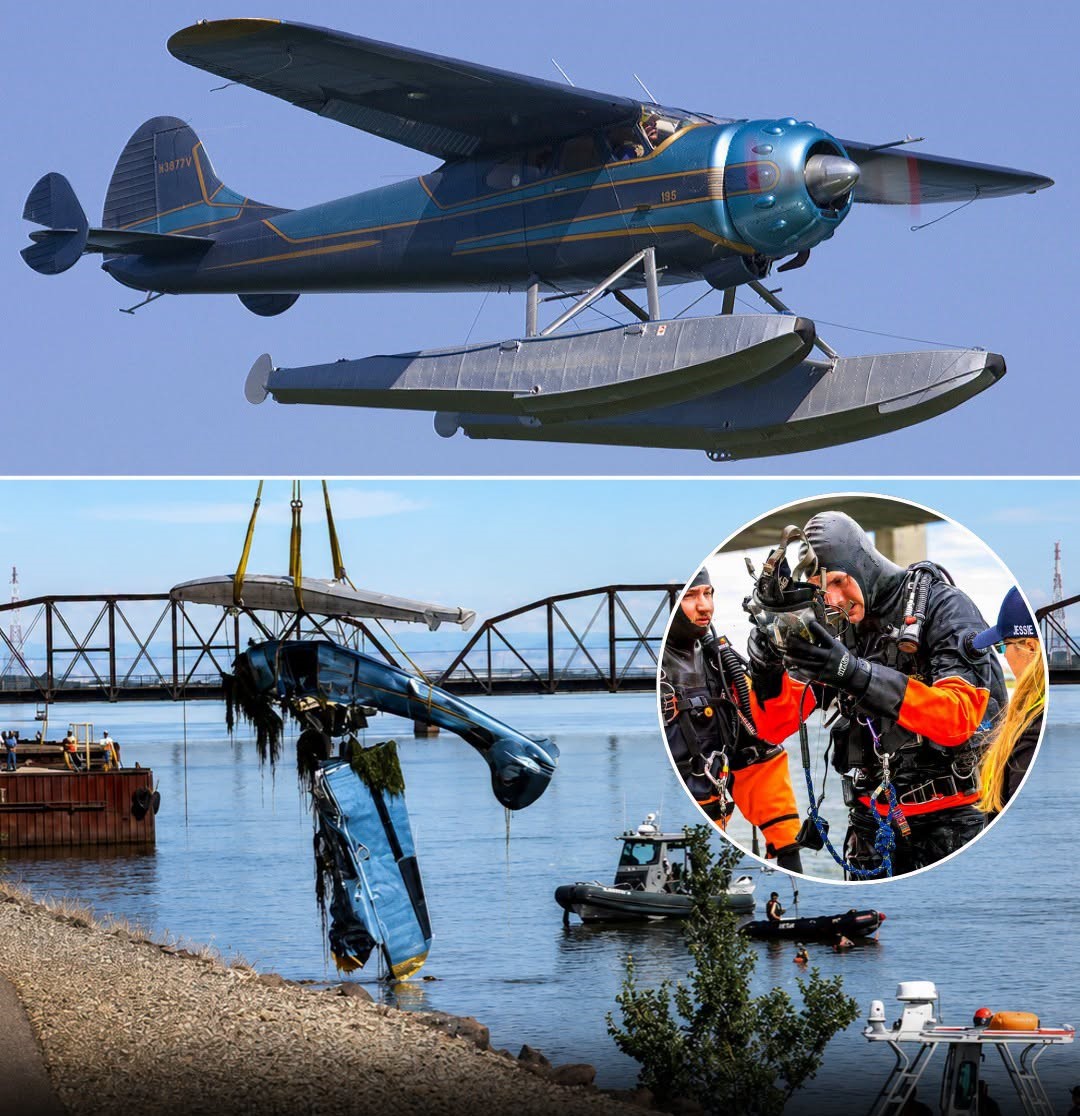
Underwater Search Continues as Investigators Probe Fatal Columbia River Floatplane Crash
Recovery and investigation efforts are continuing in the Columbia River following last week’s tragic floatplane crash that claimed the lives of two men from California.
On Sunday, Columbia Basin Dive Rescue returned to the crash site to assist federal investigators by searching for additional aircraft wreckage believed to have separated from the plane during the impact. Working alongside the Franklin County Sheriff’s Office Marine Patrol, dive teams conducted an extensive underwater operation stretching from the power transmission lines west of the cable bridge to the railroad bridge downstream.
Before entering the water, crews used advanced sonar equipment to map the riverbed, allowing divers to focus on areas where debris was most likely to be located. The nearly four-hour mission also included underwater imaging of the search area, with all collected data and documentation being turned over to the National Transportation Safety Board (NTSB) to support its ongoing investigation.
The accident occurred shortly after 2:30 p.m. on June 24 when a 1949 single-engine Cessna floatplane struck a high-voltage Benton PUD transmission line crossing the Columbia River just west of the cable bridge. After clipping the wires, the aircraft plunged into the river and drifted downstream before emergency responders secured the wreckage near the Pasco shoreline.
The crash claimed the lives of pilot Randy J. Peterson, 64, and passenger Eric Wayne Houston, 50, both from Sonoma, California. There were no survivors.
With the investigation still active, officials have not released additional details regarding Sunday’s recovery operation. Every piece of debris recovered and every image captured beneath the river’s surface could help investigators reconstruct the aircraft’s final moments and determine exactly what led to this devastating accident.
The NTSB continues to lead the investigation, and a final report identifying the probable cause of the crash is expected after a comprehensive examination of the wreckage, flight path, environmental conditions, and other available evidence.