
Retiring an aircraft is usually a one-way decision. Once a type disappears from an airline’s fleet, it rarely returns nearly two decades later.
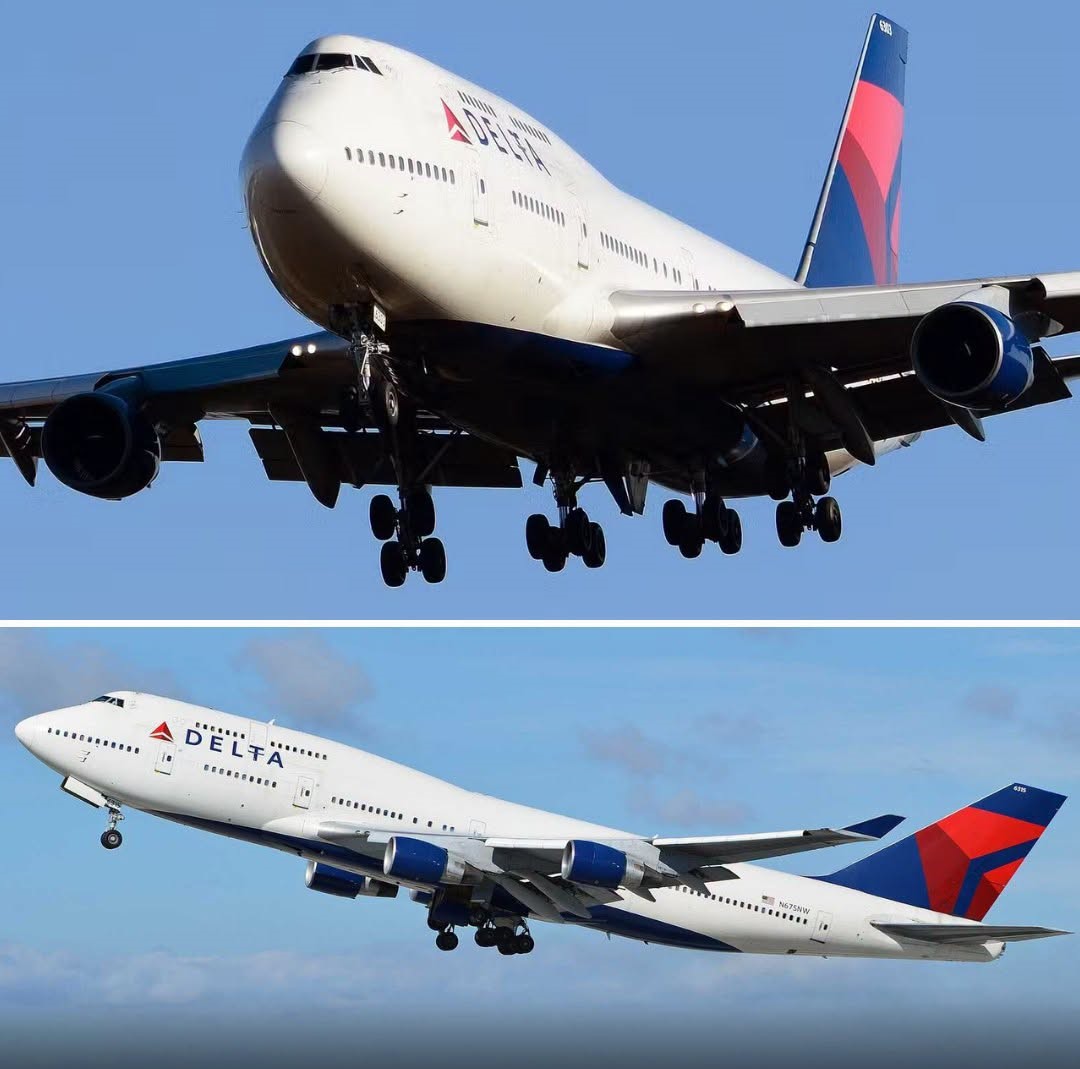
But Delta Air Lines and the legendary Boeing 747 have one of the most unusual fleet stories in aviation history.
Delta first welcomed the “Queen of the Skies” in 1970. Then, after operating the jumbo jet for only a few years, the airline removed every 747 from its fleet.
For the next 18 years, Delta did not operate a single Boeing 747.
Then the jumbo suddenly returned.
So, why did Delta bring back an aircraft it had already decided was too large for its network?
The answer was not nostalgia. It was a massive airline merger and a completely transformed global strategy.
Delta’s first Boeing 747-100 arrived on October 2, 1970, with the aircraft entering commercial service just three weeks later on October 25. By November 1971, Delta had five Boeing 747-100s in its fleet, each capable of carrying roughly 370 passengers.
At the time, the 747 represented the future of air travel.
Boeing’s revolutionary jumbo jet had first flown on February 9, 1969. Its enormous passenger capacity, long range and distinctive upper-deck “hump” quickly earned it the famous nickname “Queen of the Skies.”
Delta used its 747s primarily between major American cities, including Atlanta, Chicago, Dallas/Fort Worth, Detroit, Los Angeles, Miami, New York and San Francisco.
The aircraft occasionally ventured across the Atlantic as part of Delta’s relationship with Pan American World Airways, operating European services from Atlanta and Washington to destinations including London and Frankfurt.
And Delta did something particularly interesting with the 747’s upper deck.
The airline introduced a six-person private “penthouse” on the upper deck — a remarkable premium experience for its time. The 747 also became the first Delta aircraft equipped with personal passenger audio systems and overhead bins for carry-on baggage instead of traditional luggage racks.
Passengers loved the jumbo.
But there was one major problem.
Delta’s network simply wasn’t built for it.
During the 1970s, Delta remained heavily focused on domestic flying. Filling nearly 370 seats consistently on many routes was difficult, and the economics of operating a four-engine jumbo jet made little sense when smaller aircraft could handle Delta’s passenger demand more efficiently.
Between 1974 and 1977, Delta returned all five of its Boeing 747-100s.
The Queen of the Skies disappeared from Delta.
For 18 years.
Then, in 2008, everything changed.
Delta merged with Northwest Airlines, creating one of the world’s largest airlines. Northwest had something Delta did not — a major Pacific network and a fleet of Boeing 747s specifically suited to long-haul, high-capacity international flying.
Through the Northwest merger, Delta inherited the Boeing 747-400.
Suddenly, the aircraft that had been too large for Delta’s domestic-heavy network in the 1970s made strategic sense.
Delta was no longer primarily a domestic airline with limited international operations. It had become a global aviation powerhouse with major routes spanning the Atlantic and Pacific.
The 747-400 gave Delta the capacity and range needed for some of its most important long-haul services, particularly across the Pacific. The jumbo became closely associated with Delta’s operations to Asia, flying passengers on major international routes where its enormous capacity could finally be properly utilized.
In other words, Delta didn’t really “change its mind” about the Boeing 747.
Delta itself had changed.
The airline that retired the 747 in the 1970s was operating a completely different network from the global carrier that inherited the 747-400 through Northwest decades later.
The first time, the jumbo was simply too big for Delta’s needs.
The second time, Delta had finally become big enough for the jumbo.
Delta eventually retired its final Boeing 747-400 in December 2017 as more fuel-efficient twin-engine widebody aircraft transformed long-haul aviation.
But the 747’s second chapter at Delta remains one of the most fascinating fleet stories in airline history.
An aircraft rejected because it didn’t fit Delta’s network returned 18 years later — not because the airplane had changed, but because Delta had become a completely different airline.
The Queen of the Skies was finally flying for a Delta network built to use her.