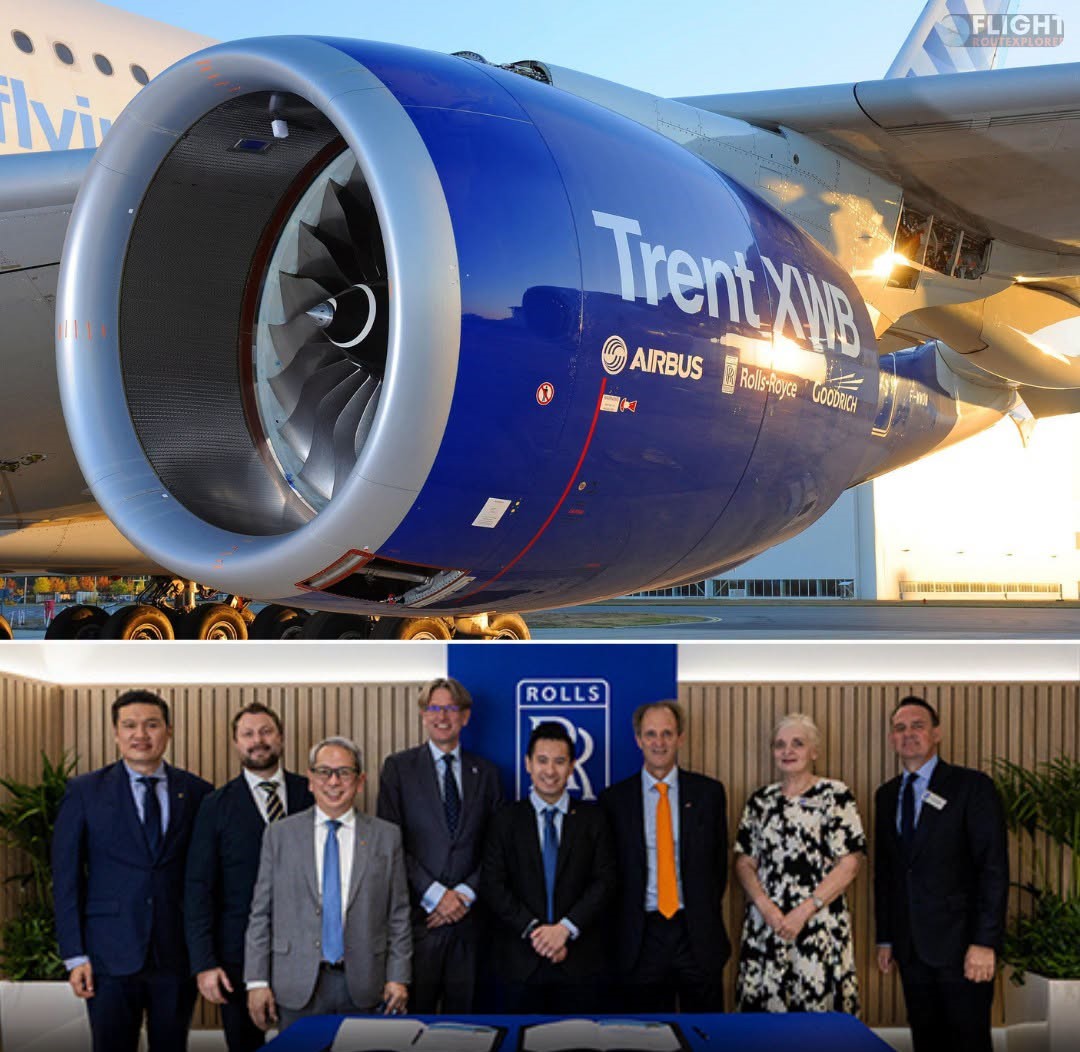
Rolls-Royce and Philippine Airlines strengthen their long-standing partnership with a major engine deal that will power the airline’s next generation of flagship long-haul aircraft.
The two companies have signed a Memorandum of Understanding for 18 Rolls-Royce Trent XWB-97 engines to equip nine new Airbus A350-1000 aircraft. The agreement also includes engine options for up to five additional aircraft covered under Philippine Airlines’ purchase rights, giving the carrier flexibility for future fleet expansion.
Alongside the engine order, Philippine Airlines has also signed a proposal for Rolls-Royce’s TotalCare service, a comprehensive maintenance and engine health monitoring program designed to improve reliability, maximize fleet availability, and provide greater cost predictability throughout the aircraft’s operational life.
Rolls-Royce President of Civil Aerospace Rob Watson said the Trent XWB-97 has become the company’s best-selling engine over the past 18 months thanks to its proven reliability and efficiency. He added that the combination of the engine and TotalCare support will help Philippine Airlines achieve stronger operational performance as it expands its A350-1000 fleet.
PAL Holdings President and Chief Operating Officer Lucio C. Tan III said the investment reflects the airline’s confidence in its future growth. He noted that the Airbus A350-1000, powered by the Trent XWB-97, will remain the backbone of Philippine Airlines’ flagship long-haul operations for years to come, while the TotalCare agreement provides valuable maintenance planning and long-term operational confidence.
The latest agreement builds on Philippine Airlines’ 2023 order for nine Airbus A350-1000 aircraft powered by the same Trent XWB-97 engines.
The Trent XWB-97 has accumulated more than four million flying hours over eight years of service and continues to receive durability upgrades. Rolls-Royce says the final enhancement package, expected to enter service in 2028, will significantly extend engine life, doubling time on wing in demanding operating environments and improving durability by 50% in less challenging conditions.
The engine is already certified to operate on a 50% Sustainable Aviation Fuel (SAF) blend and has successfully demonstrated compatibility with 100% SAF, supporting the aviation industry’s long-term sustainability goals.