
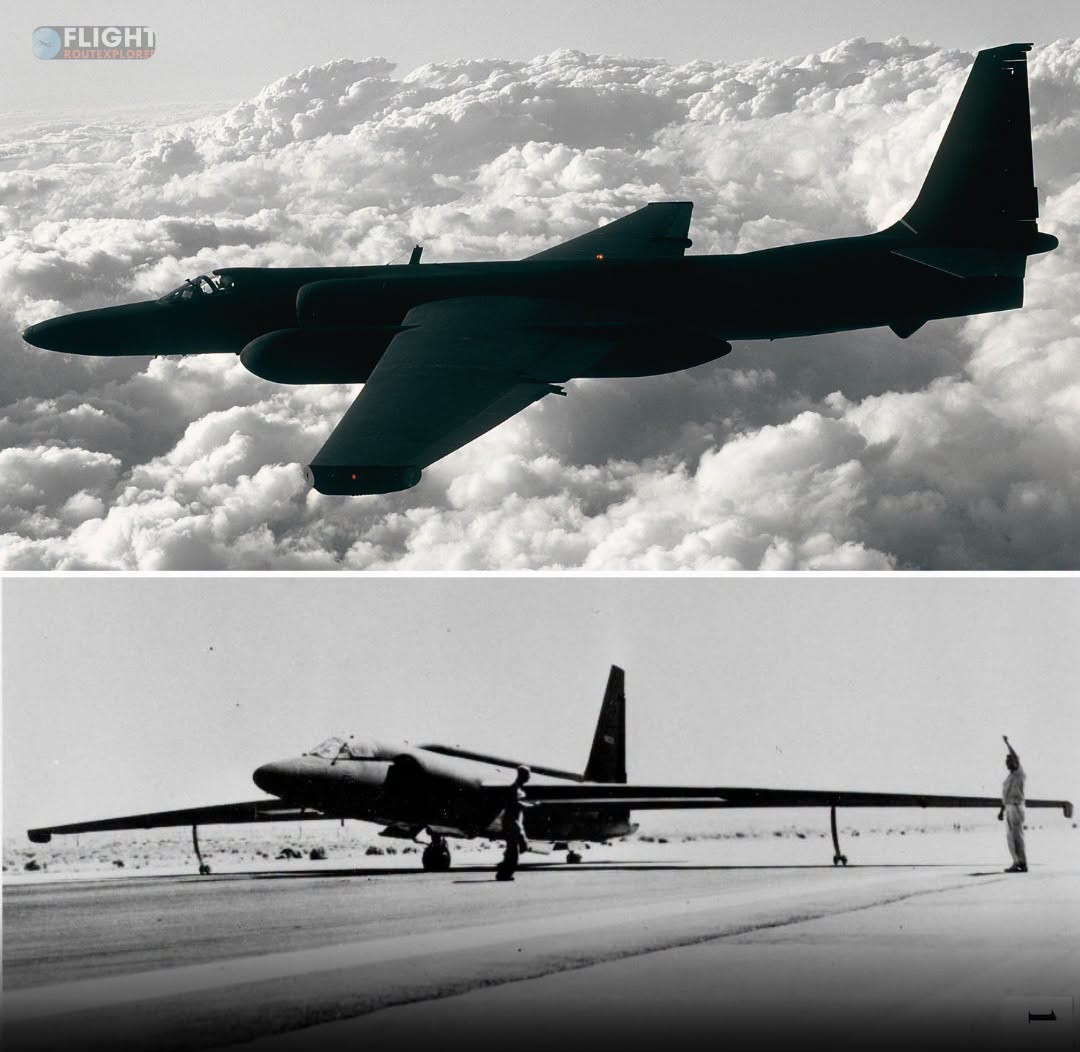
Today, July 4, marks one of the most remarkable milestones in aviation history.
On July 4, 1956, the legendary Lockheed U-2 completed its first operational reconnaissance mission, forever changing the world of aerial intelligence. Designed by Lockheed’s Skunk Works team, the U-2 was built to fly at incredible altitudes exceeding 60,000 feet—far beyond the reach of most fighter aircraft of its time.
Its greatest contribution came during the Cuban Missile Crisis in October 1962, when U-2 pilots photographed Soviet nuclear missile sites being secretly built in Cuba. The crystal-clear images provided undeniable proof that offensive nuclear missiles were just 90 miles from the United States. Those photographs became the critical evidence presented to President John F. Kennedy and his advisers, ultimately leading to a naval quarantine and intense diplomatic negotiations that helped avert what could have become a catastrophic nuclear war.
The U-2 also flew countless high-risk reconnaissance missions during the Cold War, often deep into hostile airspace, providing intelligence that reshaped military strategy and global security. The courage of its pilots and the groundbreaking technology on board changed the way nations understood threats from above.
Nearly seven decades later, the Lockheed U-2 remains in active service, proving that truly revolutionary engineering can stand the test of time.
Today we celebrate not just an extraordinary aircraft, but the visionaries, engineers, and pilots whose innovation and bravery helped shape history. Their legacy reminds us that aviation is not only about pushing the limits of flight—it is also about protecting peace through knowledge.