
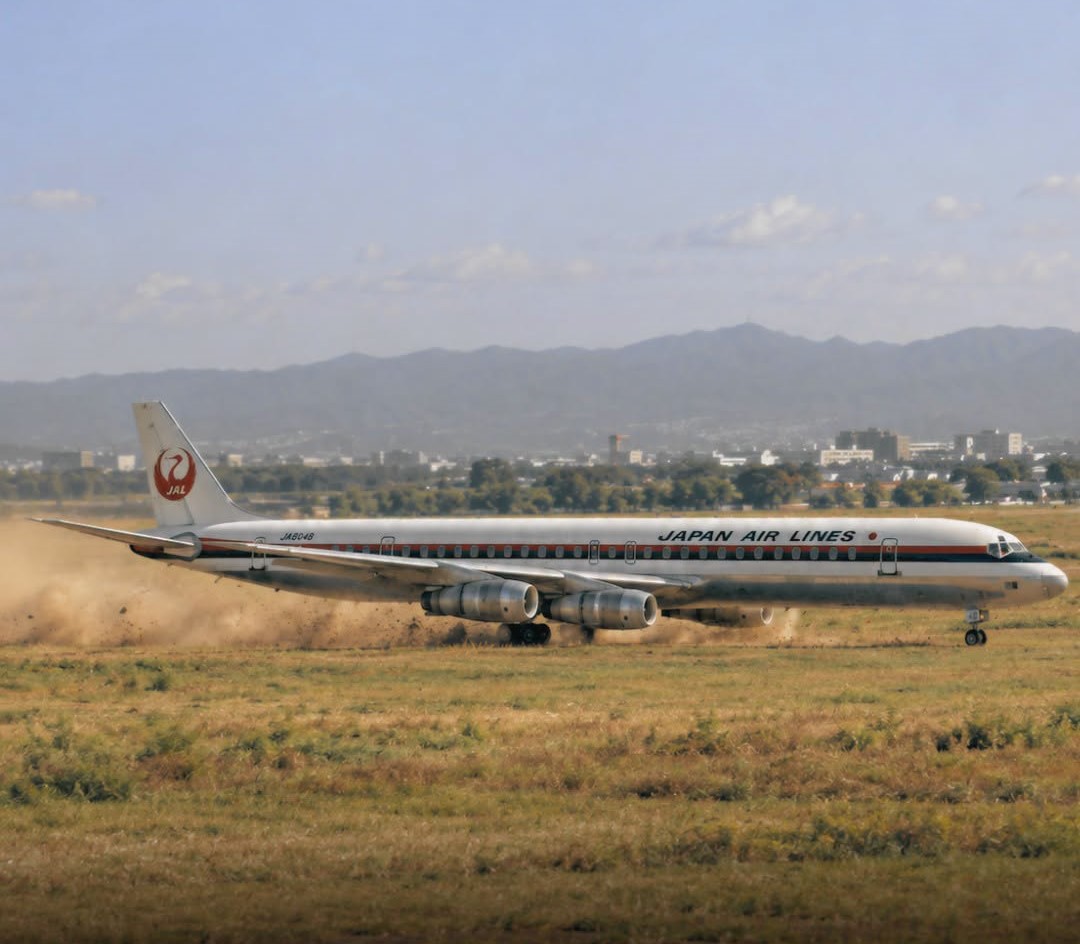
On September 17, 1982, Japan Air Lines Flight 792 was preparing to fly from Shanghai Hongqiao International Airport to New Tokyo International Airport, now known as Narita.
The aircraft was a Douglas DC-8-61 registered JA8048, carrying 113 passengers and 11 crew members. The flight departed Shanghai at approximately 1:57 p.m., but within minutes, the crew encountered a serious mechanical emergency.
About nine minutes after takeoff, the crew heard an unusual noise coming from the lower middle section of the aircraft. Almost immediately, several warning indications appeared in the cockpit.
The hydraulic system showed low fluid and low reservoir air pressure, followed by a complete loss of hydraulic pressure. The crew also saw abnormal flap indications and discovered that the aircraft had lost its normal air-brake pressure.
With several important systems affected, the pilots decided to abandon the flight to Tokyo and return to Shanghai for an emergency landing. The aircraft approached Hongqiao Airport with its braking and other systems severely compromised.
The crew attempted to land as quickly as possible, believing that some emergency braking capability might still be available.
The DC-8 touched down on the runway at high speed, but the aircraft could not decelerate normally. It continued beyond the runway and overran the available stopping area before eventually coming to rest in a drainage ditch.
Despite the violent runway excursion and extensive damage to the aircraft, there was no fire that consumed the airplane and all 124 occupants survived. Reports record dozens of injuries, with the commonly cited investigation account giving the number as 39.
The accident immediately triggered an investigation by Chinese and Japanese authorities. Investigators initially suspected a sudden failure somewhere in the aircraft’s hydraulic system. Examination of the wreckage eventually revealed a much more specific chain of events.
The emergency braking system depended on an air bottle. Investigators determined that this bottle, manufactured from 41xx-series steel, had developed cracks and suffered corrosion.
The largest crack was only about 1.9 millimeters long in an area where the material was approximately 2.3 millimeters thick. The bottle ultimately ruptured with explosive force.
Its failure damaged 13 hydraulic-system tubes and two emergency air-brake lines. The resulting damage caused the loss of hydraulic pressure and severely compromised both normal and emergency braking. The aircraft therefore landed with dramatically reduced ability to stop, allowing it to run beyond the runway.
Investigators also discovered that the aircraft’s maintenance procedures had not included an X-ray inspection of the air bottle. The final investigation concluded that such an inspection could have detected the corrosion before the failure. The cracking was believed to have originated from a manufacturing defect.
The accident also raised questions about the crew’s understanding of the remaining emergency braking capability. The captain believed the emergency brakes were still usable, while the copilot had noticed that an air-bottle pressure indication was zero but did not alert the captain.
Investigators considered these cockpit circumstances, although the final report did not conclusively assign pilot error as a cause.
In the aftermath, Japan’s transport authorities ordered inspections of JAL’s DC-8 fleet, including additional examinations intended to identify similar hidden defects.
The incident demonstrated how a relatively small concealed structural defect in an emergency component could trigger a chain reaction involving multiple aircraft systems—and turn a routine international departure into a desperate emergency landing.