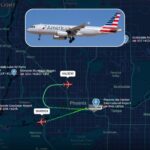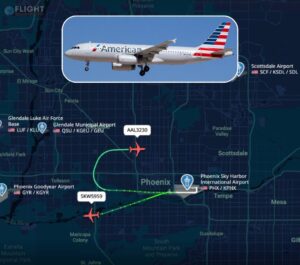

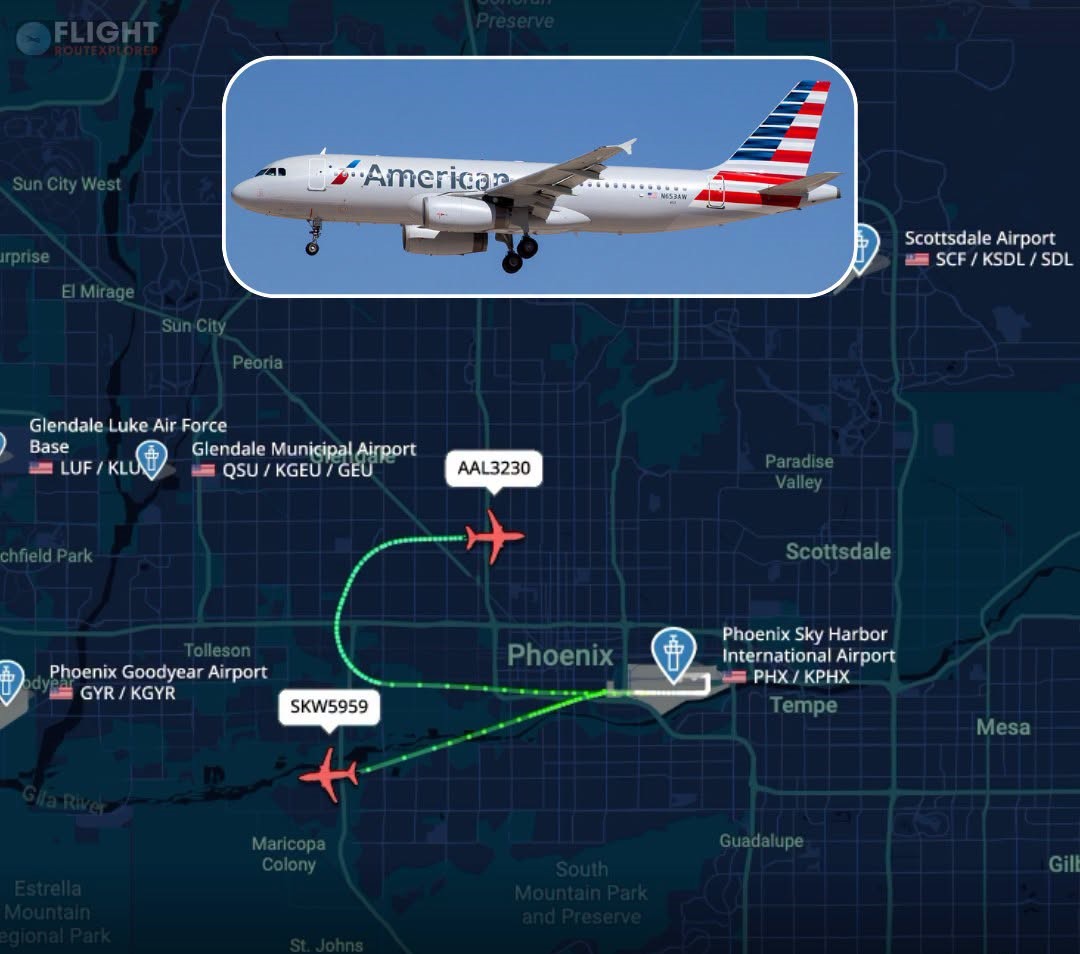
An American Airlines flight bound for Portland was forced to make an emergency return to Phoenix Sky Harbor International Airport on Thursday after another departing aircraft reported seeing flames coming from one of its engines.
American Airlines Flight 3230, operated by an Airbus A319, had departed Phoenix at approximately 4:15 p.m. when air traffic control alerted the crew about the reported flames and a possible fluid leak.
“The flight departing behind you said they saw flames coming out of one of your engines,” the controller warned.
The pilots reported a hydraulic problem and immediately requested to return to the airport. The captain subsequently declared MAYDAY, confirming that approximately 120 people were on board and that the aircraft did not need to burn off fuel before landing.
The aircraft safely touched down at Phoenix approximately 20 minutes after departure. Fortunately, no injuries were reported.
American Airlines confirmed a mechanical issue and said the aircraft was removed from service for maintenance inspections. However, the airline stated that there was no evidence of an actual fire.
Passengers were subsequently accommodated on another flight to Portland.
The incident comes just days after another American Airlines aircraft made an emergency landing in Orlando following engine problems, raising fresh questions about the airline’s recent technical disruptions.
While the aircraft landed safely, the incident highlights how quickly pilots and air traffic controllers must respond when a potential engine or hydraulic emergency develops shortly after takeoff.