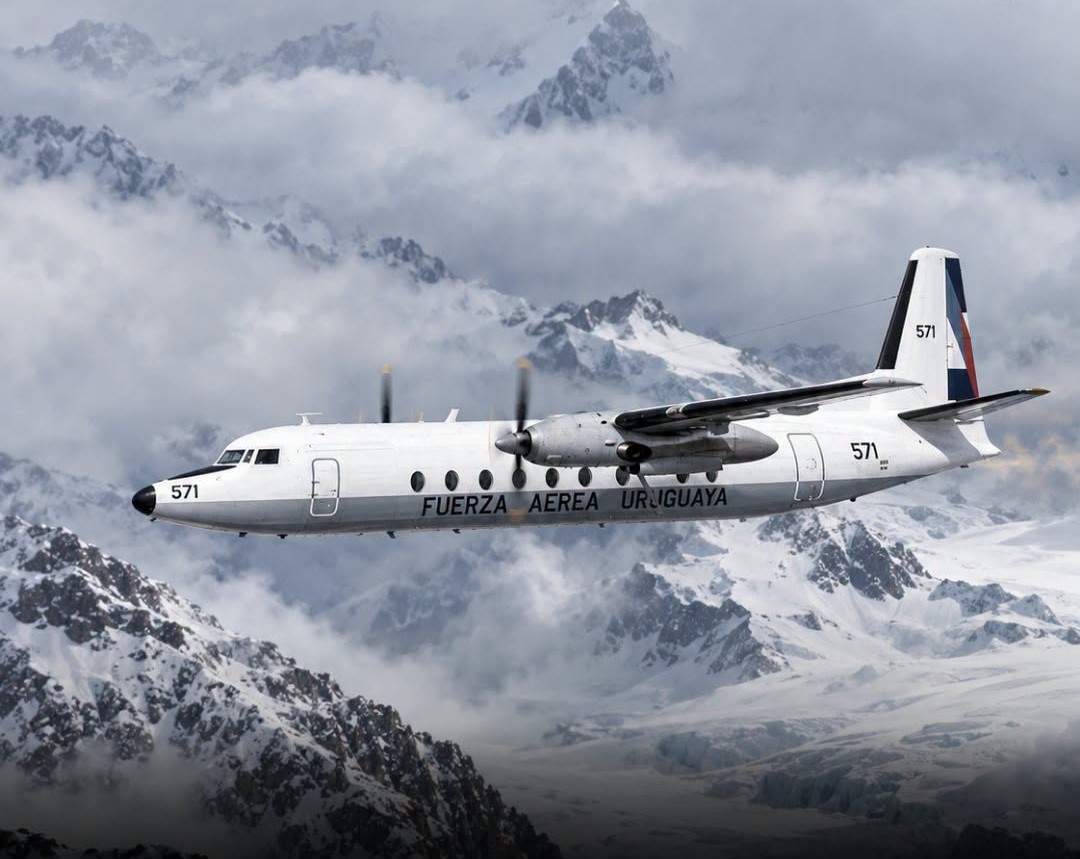
On October 13, 1972, Uruguayan Air Force Flight 571 crashed into the remote Andes Mountains while carrying 45 people, including members of the Old Christians rugby team, their relatives and friends, from Montevideo, Uruguay, to Santiago, Chile. What followed became one of aviation history’s most extraordinary survival stories.
The aircraft, a Fairchild FH-227D, had stopped overnight in Mendoza, Argentina, because of bad weather. It departed the following day and continued toward Chile, but thick clouds concealed the towering mountains.
Co-pilot Lieutenant-Colonel Dante Lagurara was flying under the supervision of Captain Julio César Ferradas.
After crossing the Planchón mountain pass, the crew mistakenly believed they had passed Curicó, a crucial navigation point for turning north toward Santiago. In reality, the aircraft was still east of the waypoint, deep within the Andes.
The crew requested permission to descend, and air traffic control approved it, unaware of the aircraft’s actual position.
As the plane descended through clouds, it encountered severe turbulence and approached a mountain ridge. The pilots attempted to climb over the obstacle, but the aircraft struck the mountainside.
Its tail section and wings were torn away, leaving the fuselage to slide approximately 2,379 feet down a glacier before crashing into a snowbank.
Twelve people died in the initial crash, and several others succumbed to their injuries and the extreme cold soon afterward. The survivors found themselves stranded at an altitude of around 12,000 feet, without adequate food, medical supplies or communication equipment.
Rescue aircraft searched the region, but the white fuselage was nearly invisible against the snow. After eight days, authorities called off the search.
The survivors eventually learned of the decision through a small radio. Facing starvation and freezing temperatures, they made the agonising decision to consume the bodies of those who had died to stay alive.
On October 29, an avalanche buried the wreckage, killing eight more people. Eventually, survivors Nando Parrado and Roberto Canessa set out across the mountains to find help. After an exhausting trek, they encountered Chilean muleteer Sergio Catalán, whose assistance made rescue possible.
On December 22 and 23, 1972, helicopters evacuated the remaining survivors. Of the 45 people aboard, 16 survived after 72 days in the mountains, while 29 died.
The investigation attributed the crash to controlled flight into terrain caused by a navigational error. The crew began descending before reaching the correct turning point, while cloud cover, difficult mountain terrain and incorrect position estimates contributed to the disaster.
The tragedy exposed the devastating consequences of navigational misjudgment in mountainous conditions. Yet the survivors’ extraordinary endurance, teamwork and determination transformed the crash into a lasting story of human resilience.