
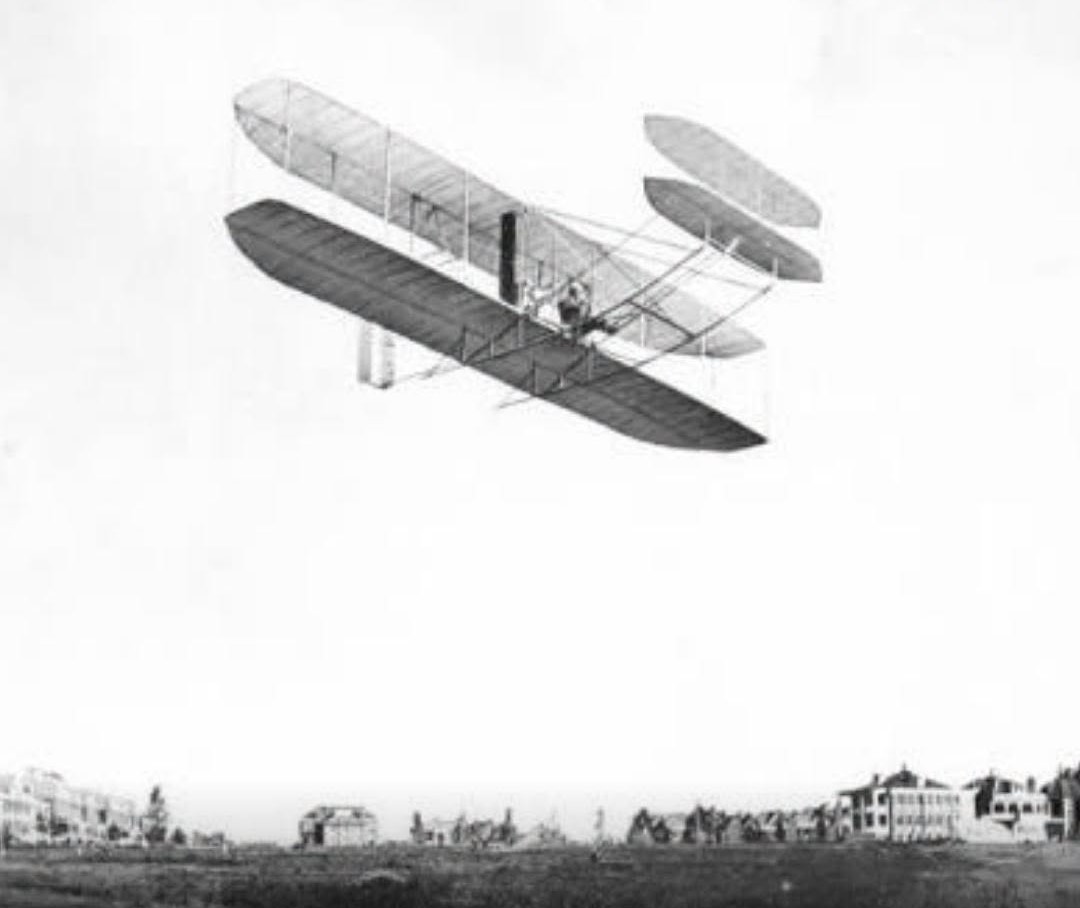
On September 17, 1908, aviation history took a tragic turn at Fort Myer, Virginia, during an important U.S. Army demonstration flight.
Orville Wright was testing the Wright Military Flyer for the Army Signal Corps, which was evaluating the aircraft for a potential military contract.
Riding beside him was 26-year-old U.S. Army Lieutenant Thomas E. Selfridge, an aviation pioneer and one of the Army’s most knowledgeable officers on powered flight.
The flight began normally at about 5:14 p.m. The aircraft climbed and completed several circuits of the field while flying roughly 125 to 150 feet above the ground.
Selfridge was serving as an observer and passenger, and the flight was part of the Army’s continuing evaluation of the Wright machine.
After approximately four minutes in the air, Orville heard an unusual tapping or clicking sound from behind him. The problem involved one of the aircraft’s newly fitted, longer wooden propellers.
A section of the right propeller blade fractured, producing severe vibration and causing the damaged propeller to strike a guy wire associated with the rear rudder.
The wire was severed, and the rear rudder was pulled out of its normal position. With the aircraft’s control system damaged, Orville suddenly lost the ability to keep the Flyer level. He shut down the engine and attempted to bring the aircraft down under control, but the damaged rudder made recovery impossible.
The Flyer plunged toward the ground from roughly 75 feet. It struck the field heavily and collapsed, trapping both men in the wreckage. Orville suffered a fractured thigh or hip, several broken ribs and other injuries. Selfridge was knocked unconscious and suffered a severe skull fracture.
Rescuers quickly worked through the tangled wires and wreckage to free the two men. Selfridge was taken for emergency medical treatment, but his injuries were fatal. He died later that evening, becoming the first person killed in an accident involving a powered airplane and the first U.S. Army service member to die in an aviation accident while on duty.
The crash destroyed the 1908 Wright Flyer and temporarily halted the Army’s aircraft trials. The War Department postponed the remaining evaluation, giving the Wright brothers time to develop an improved aircraft. Orville remained hospitalized for several weeks and spent a long period recovering from his injuries.
Investigation of the wreckage focused on the propeller and rudder-control system. Evidence showed that the propeller blade had failed and struck the supporting wire, while marks on the components helped establish the sequence that led to the loss of control.
Contemporary accounts also noted that the Wrights had recently installed longer propellers in an effort to improve performance, placing additional demands on the components.
Despite the catastrophe, the Army did not abandon the Wright brothers’ aircraft. The brothers returned to Fort Myer in 1909 with an improved Flyer featuring changes to the aircraft, including modifications to the rudder and wire bracing. The Army eventually accepted the Wright machine, marking another major step in the development of military aviation.
Selfridge’s death became a defining moment in aviation history. His name was later commemorated by Selfridge Air National Guard Base in Michigan, while the crash itself became an early and painful lesson about structural failure, propeller design, aircraft control and the dangers faced by pioneers of powered flight.