
A potentially serious runway incident was averted at Mumbai’s Chhatrapati Shivaji Maharaj International Airport after air traffic controllers ordered an Air India flight to abort its take-off when another Air India Express aircraft was still on the runway.
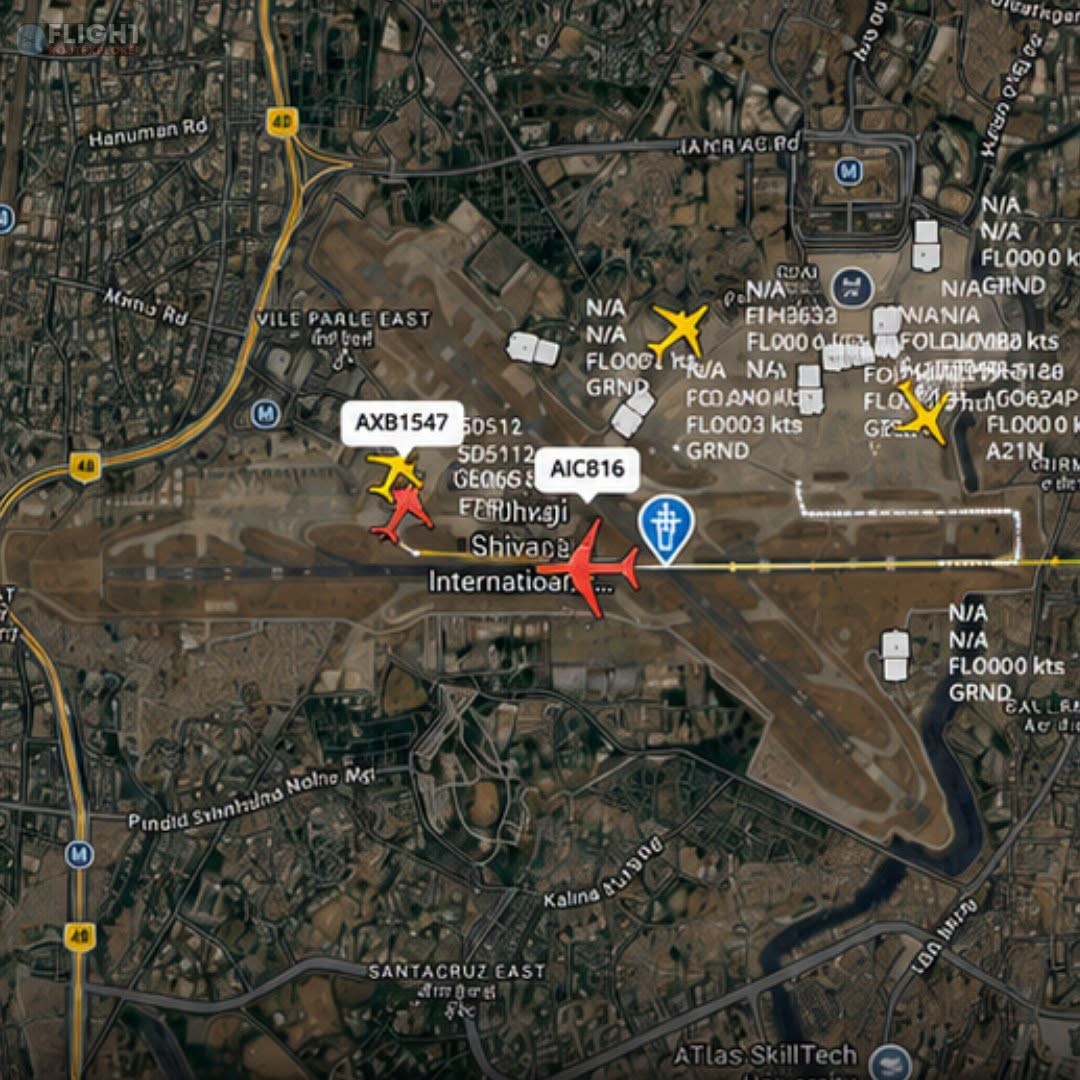
The incident occurred at around 10:00 PM on Tuesday when Air India flight AI816, a Boeing 777-300ER bound for Delhi, had begun its take-off roll on Runway 27. At the same time, Air India Express flight AIX1547, operated by a Boeing 737 MAX 8 arriving from Siliguri, was still vacating the same runway.
ATC quickly detected the conflict and immediately instructed the Air India crew to reject the take-off before the aircraft became airborne. Both aircraft came to a safe stop, with no injuries or damage reported.
Following the rejected take-off, Air India returned the aircraft to the bay for mandatory safety inspections in accordance with standard operating procedures. The airline also arranged alternative travel for affected passengers and reiterated that passenger safety remains its highest priority.
Mumbai Airport, one of India’s busiest aviation hubs, operates with a single active runway handling nearly 1,000 flight movements every day. The incident highlights the importance of precise coordination between pilots and air traffic controllers, where even a minor lapse can lead to a dangerous runway incursion.
Aviation authorities are expected to investigate how both aircraft came to be on the same runway simultaneously. The review is likely to examine ATC communications, runway occupancy procedures, and compliance with separation standards to determine what went wrong and whether any procedural changes are required.