

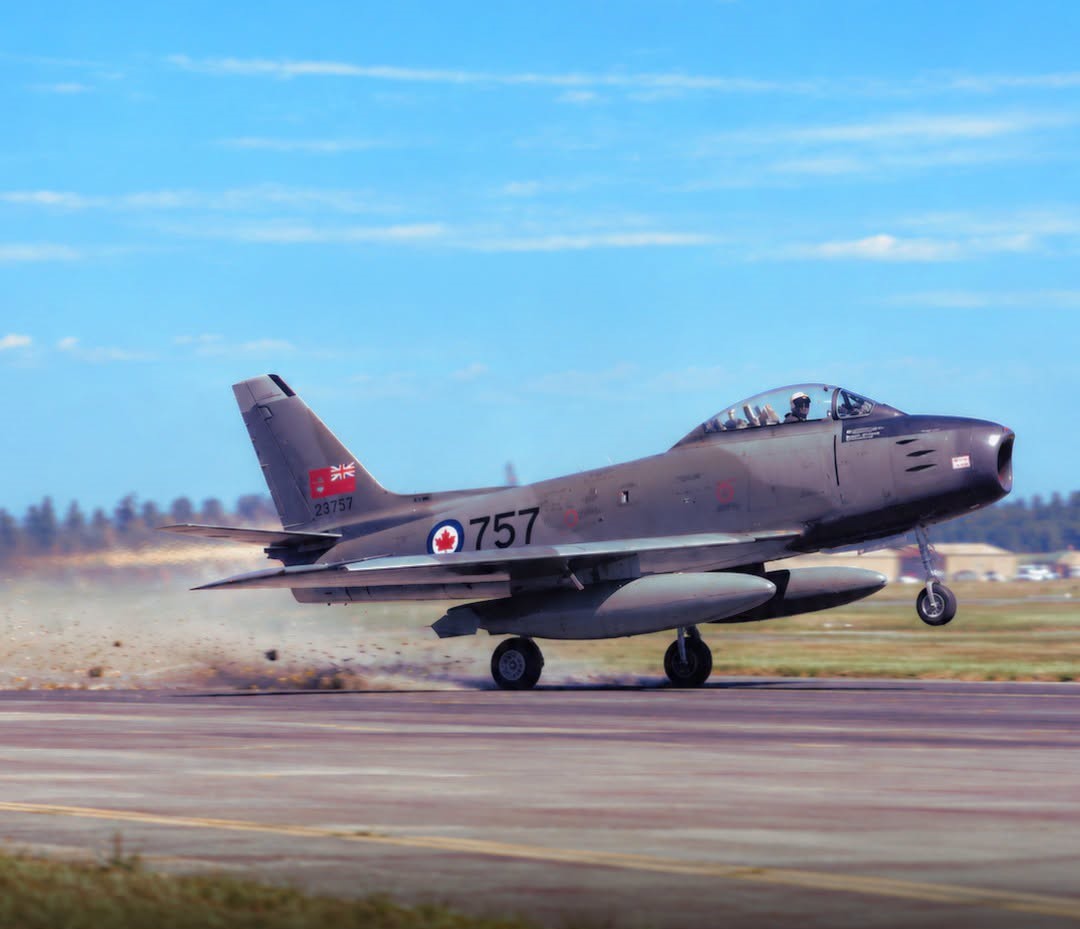
On September 24, 1972, a spectacular air show at Sacramento Executive Airport in California ended in one of the deadliest aviation disasters ever to occur at a U.S. air show.
A privately operated Canadair Sabre Mk. 5, registration N275X, crashed into a busy Farrell’s Ice Cream Parlor shortly after attempting to depart the airport, killing 22 people on the ground and injuring 28 others, including the pilot.
The accident occurred at approximately 4:24 p.m. during the second day of the Golden West Sport Aviation Air Show. The aircraft, operated by Spectrum Air, was being flown by Richard L. Bingham and was scheduled to fly from Sacramento to Oakland International Airport.
As the Sabre accelerated along Runway 30, the takeoff initially appeared normal. The aircraft became airborne, but it failed to climb properly and returned to the runway.
According to the National Transportation Safety Board investigation, the aircraft became airborne twice during the attempted takeoff. Bingham reported feeling a vibration shortly after the first liftoff, although investigators could not establish that a mechanical failure caused the accident.
The critical problem was the aircraft’s attitude during the takeoff. The nose had been rotated too far upward, reducing the Sabre’s ability to accelerate and climb.
The fighter overran the runway and struck an earthen berm before tearing through a chain-link fence at the airport boundary. Its two external underwing fuel tanks ruptured and ignited, producing a massive fireball.
The Sabre then crossed Freeport Boulevard at high speed, struck a moving automobile and continued toward the shopping area. The impact with the car and other vehicles slowed the aircraft somewhat before it slammed into Farrell’s Ice Cream Parlor at an estimated 150 mph.
Inside the restaurant were numerous customers, including members of the Sacramento 49ers junior football team. The impact and resulting fire killed 22 people on the ground, including 12 children.
Two people died in the automobile struck by the aircraft. The pilot survived but suffered serious injuries, including a broken leg and arm. Twenty-seven people on the ground were injured.
The aftermath was devastating for Sacramento. Families lost multiple relatives, and emergency crews faced a major fire and mass-casualty scene immediately after the crash. An elderly woman who went toward the accident site was also killed after being struck by a vehicle, adding to the tragedy.
The NTSB investigation ultimately found that the Sabre was capable of taking off safely under the conditions that existed that afternoon. Investigators determined that the probable cause was overrotation of the aircraft followed by degradation of its performance. The overrotation resulted from inadequate pilot proficiency in the Sabre and misleading visual cues. Bingham had fewer than four hours of experience flying the aircraft.
Investigators also identified broader safety concerns. The Sabre had been an ex-military aircraft, and the NTSB found that regulations and procedures governing experimental aircraft and pilot authorization were inadequate. The proximity of the shopping center to the runway greatly magnified the consequences of the accident.
The disaster prompted regulatory changes. The FAA tightened requirements for pilots operating former military jets, including additional proficiency checks and closer observation of takeoffs and landings. Rules concerning the operation of such aircraft around densely populated areas were also strengthened.
In the years that followed, the crash remained deeply embedded in Sacramento’s memory. Lawsuits were filed on behalf of victims and survivors, and settlements were eventually reached. A memorial at the former crash site was dedicated in 2003, preserving the names of those who died in a tragedy that began with a failed takeoff but ended far beyond the airport’s boundaries.










