
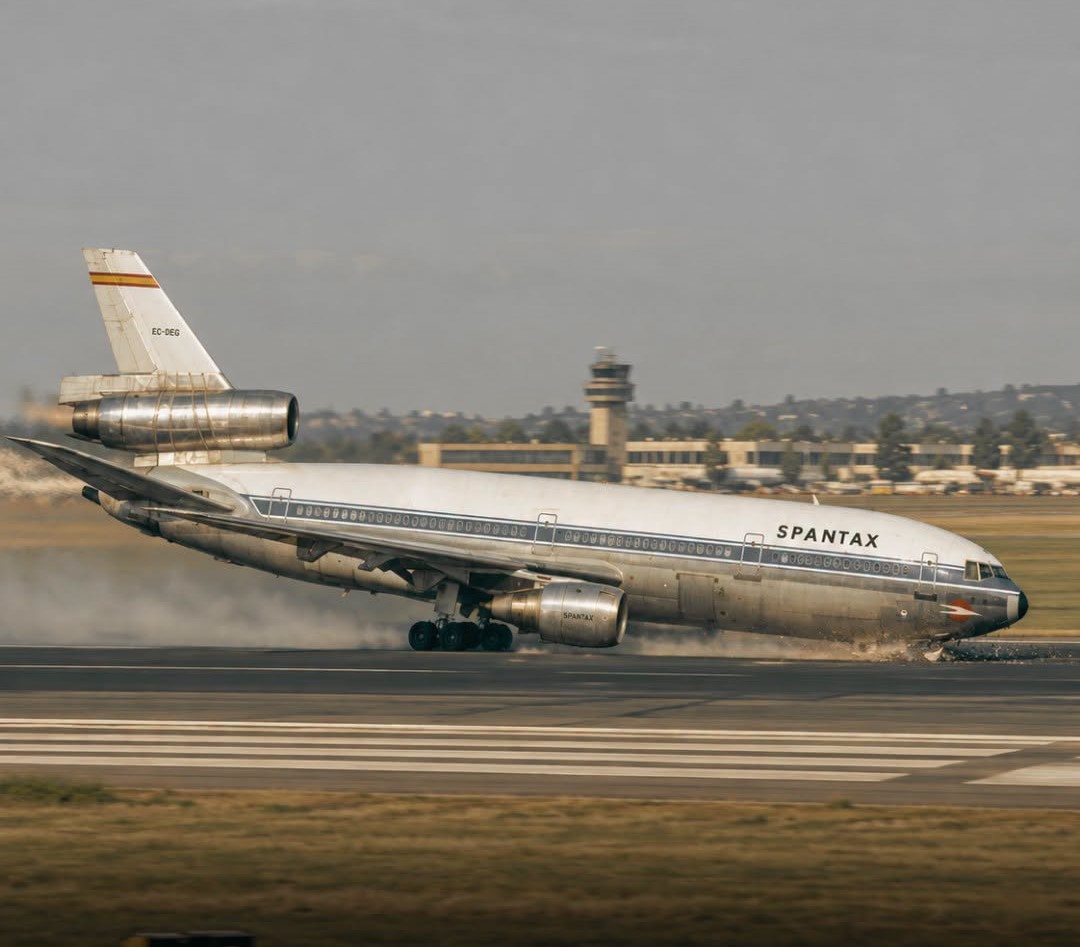
On September 13, 1982, Spantax Flight 995 was preparing to leave Málaga Airport in Spain for New York’s John F. Kennedy International Airport, carrying 381 passengers and 13 crew aboard a McDonnell Douglas DC-10-30CF registered EC-DEG.
The aircraft had arrived from Madrid and was making its scheduled stop in Málaga before continuing across the Atlantic.
The takeoff initially appeared normal. As the DC-10 accelerated along Runway 14, the crew made their routine speed calls.
But shortly before V1, investigators later determined that part of the retreaded tread on a right nose-wheel tire began separating. The developing tire failure produced a powerful vibration that became increasingly severe.
The captain initially continued the takeoff, but as he began rotation, the vibration suddenly became much worse.
Fearing the aircraft could become uncontrollable in the air, he made the critical decision to reject the takeoff even though the aircraft had already passed the normal point at which a takeoff would ordinarily be continued. The DC-10 was travelling at roughly 184 knots, leaving only about 4,250 feet of runway.
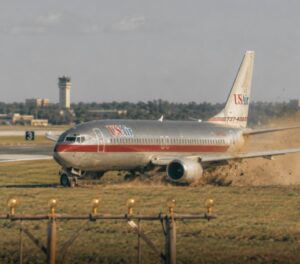
The crew applied braking and attempted to use reverse thrust, but there was simply not enough runway remaining to bring the heavily loaded wide-body jet to a halt. The aircraft overran the runway at high speed, struck an airport installation and lost its No. 3 engine.
It then crossed a nearby highway, hitting vehicles, before colliding with another structure. The impact severely damaged the right wing and other parts of the aircraft, after which a fire erupted as the DC-10 came to rest beyond the runway.
A massive emergency response followed as survivors attempted to escape the burning aircraft. Of the 394 people aboard, 50 were killed and more than 100 were injured. The victims died from a combination of impact injuries and the effects of the intense post-crash fire.
The investigation ultimately identified the initiating failure as the partial detachment of the retread from the right nose-gear tire. The resulting vibration was not recognized by the captain as a tire failure, leading him to believe that continuing the takeoff could be dangerous.
Investigators considered the decision to reject the takeoff understandable given the extraordinary circumstances, the very short time available to react, limited crew training for a wheel-related failure and the absence of specific procedures for rejecting a takeoff because of failures other than an engine problem.
The accident also prompted wider concern about retreaded tires and aircraft emergency procedures. Subsequent safety discussions examined restrictions on certain retread practices for nose-gear tires and ways for crews to monitor tire condition from the cockpit. The crash also contributed to renewed attention to passenger emergency information and evacuation procedures.
Spantax Flight 995 became a tragic example of how a seemingly small mechanical failure—a tire tread beginning to separate during the most critical seconds of a takeoff—could trigger an irreversible chain of events, turning a routine stop in Málaga into one of Spain’s major aviation disasters.