
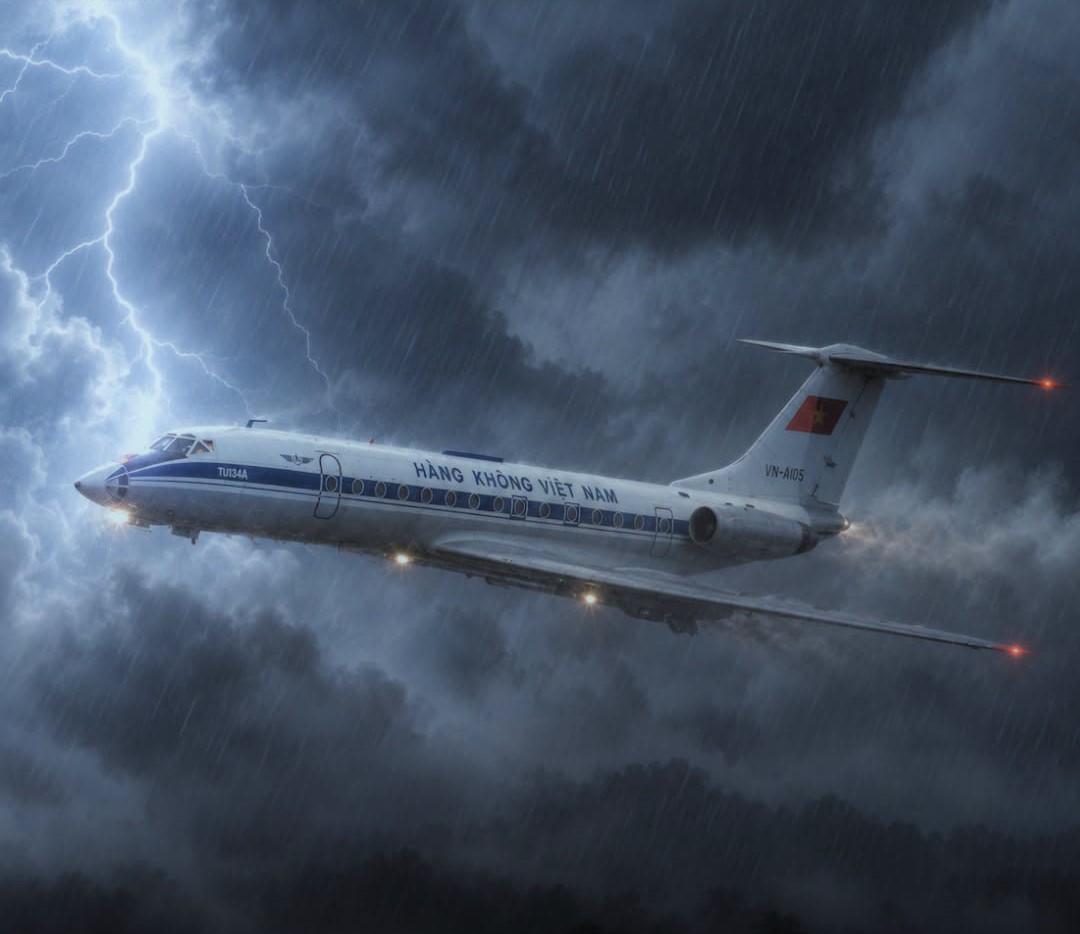
On September 9, 1988, Vietnam Airlines Flight 831 was approaching Bangkok after departing Hanoi, carrying 84 passengers and six crew members aboard a Tupolev Tu-134, registration VN-A102.
The flight was nearing Don Mueang International Airport when conditions deteriorated dramatically. Heavy monsoon rain had moved into the area, creating a dangerous environment for an aircraft on approach.
As Flight 831 entered the stormy area near the airport, the crew encountered lightning. According to accounts from the surviving captain and reports published immediately after the crash, the navigator warned the cockpit about lightning.
Despite the worsening weather, the aircraft continued its descent toward Bangkok. The situation became critical when the aircraft was at about 380 metres (1,250 feet). A powerful flash reportedly occurred, and the cabin crew were incapacitated.
The aircraft then passed over the outer marker while descending below the minimum safe altitude. Instead of remaining clear of the terrain and completing a safe approach, Flight 831 continued downward until it struck the ground in a rice field roughly 6 kilometres north of Bangkok’s airport.
The impact was catastrophic. The Tu-134 exploded, broke into three major sections and scattered wreckage across an area of roughly 500 metres.
Of the 90 people aboard, 76 were killed and 14 survived. Three crew members and 73 passengers died. Among those killed were Vietnamese Minister of Public Health Đặng Hồi Xuân, Indian ambassador to Vietnam Arun Padwardhan and Japanese diplomat Kiyokata Ida. Early reports gave different passenger and casualty figures as rescue teams worked through the wreckage, fire and torrential rain.
The crash immediately raised a disturbing question: what had happened inside the cockpit during the final seconds? Investigators recovered the aircraft’s black box and examined the wreckage with assistance from international aviation investigators and Soviet/Russian experts.
The investigation ultimately attributed the accident to a lightning strike, although some published summaries still describe the precise cause as undetermined or only possibly related to lightning.
The surviving captain later recalled that the lightning strike appeared to incapacitate the flight crew. According to his account, there was no further crew communication recorded after the strike and no meaningful control input during the critical moments that followed.
This helps explain how the aircraft could descend through the safe altitude and collide with the ground so close to its destination.
The tragedy became one of Thailand’s deadliest aviation accidents. At the time, it was the country’s second-deadliest air disaster. The most haunting aspect of Flight 831 remains that the aircraft was only minutes from landing when a combination of severe weather, lightning and loss of effective crew control turned an ordinary approach into a fatal descent.