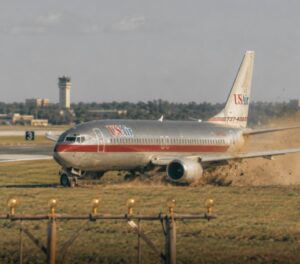

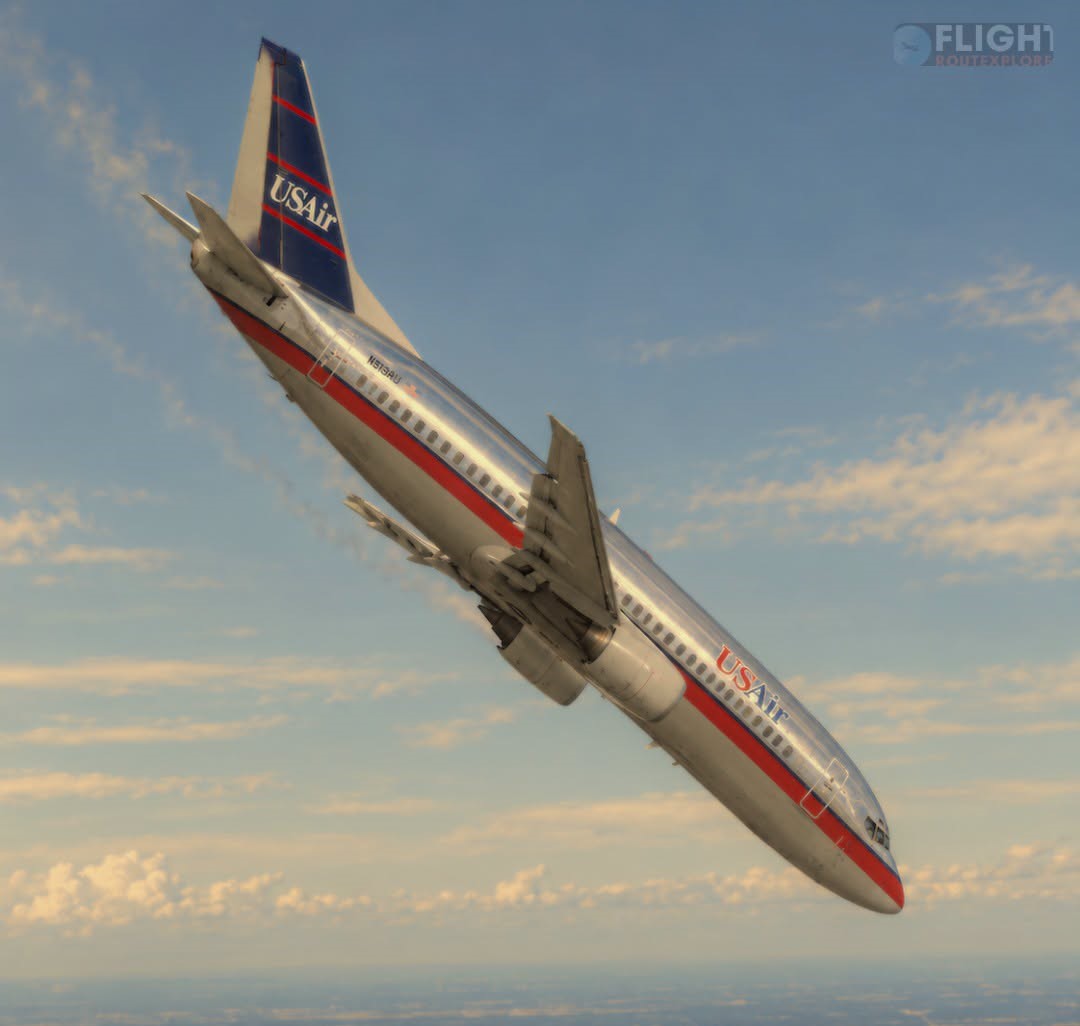
On September 8, 1994, USAir Flight 427 was approaching Pittsburgh International Airport when a routine landing suddenly became one of the most baffling disasters in aviation history.
The Boeing 737-300 was carrying 127 passengers and five crew members. Within seconds, the aircraft would enter an uncontrollable dive, killing everyone aboard.
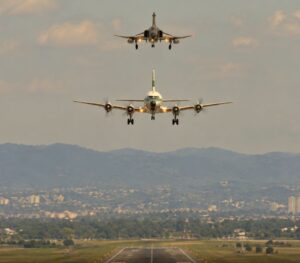
Flight 427 was flying from Chicago to Pittsburgh and was continuing toward its destination at about 6,000 feet. The aircraft was following Delta Air Lines Flight 1083, a Boeing 727, and was never closer than about 4.1 miles.
At approximately 7:02:57 p.m., Flight 427 encountered the wake turbulence generated by the preceding aircraft. Several sudden thumps were heard, the autopilot disconnected, and the 737 abruptly began rolling to the left.
The pilots immediately fought to regain control. First Officer Charles Emmett applied right rudder while both pilots used the control yokes to counter the rapidly increasing left bank.
But they did not know that the aircraft’s rudder had moved fully in the opposite direction from the command they were making. The unexpected rudder movement produced a powerful yaw and roll that overwhelmed their attempts to recover.
As the aircraft continued rolling, the pilots pulled back on the controls in an effort to stop the descent. That increased the airplane’s angle of attack until the stick shaker activated, warning of an impending aerodynamic stall.
The crew had only seconds to understand what was happening. Captain Peter Germano declared an emergency to Pittsburgh air traffic control, but the aircraft continued descending.
Flight 427 eventually rolled through a full rotation while remaining nose-down. At about 7:03:25 p.m., roughly 28 seconds after entering the wake turbulence, the 737 struck a wooded ravine near Aliquippa, Pennsylvania, at approximately 300 mph. The aircraft was destroyed by the impact and fire. All 132 people aboard were killed.
The crash site presented investigators with an extraordinary challenge. The aircraft had been shattered into thousands of pieces, and the remains were so extensively fragmented that investigators had to treat the site as a biohazard.
The investigation also faced another major obstacle: the flight data recorder did not record the actual positions of the flight-control surfaces, including the rudder. Investigators therefore had to reconstruct the final seconds from radar, cockpit voice recordings, aircraft performance data and wreckage examination.
Initially, investigators considered whether wake turbulence, pilot inputs or some combination of factors could explain the violent maneuver. Simulator testing became crucial. Of the numerous failure scenarios examined, only a rudder hardover produced results generally consistent with Flight 427’s recorded flight data.
The breakthrough came from testing the Boeing 737’s rudder power control unit. Investigators discovered that a jam involving the secondary slide of the servo valve could cause the primary slide to overtravel, producing an uncommanded rudder movement in the opposite direction.
The failure could occur under particular hydraulic and temperature conditions and could leave little or no physical evidence afterward.
After more than four years of investigation, the NTSB concluded in 1999 that the probable cause was loss of control resulting from the rudder moving to its blowdown limit, most likely because of the servo-valve malfunction. The board rejected the idea that pilot error alone explained the accident.
The tragedy exposed serious weaknesses in the 737 rudder system and became a turning point in aviation safety. Similar rudder-control events involving other 737s were examined, including United Airlines Flight 585 and Eastwind Flight 517. The 737 rudder system was subsequently redesigned, and new upset-recovery training was developed for airline pilots.
Flight 427 became a grim reminder that a highly experienced crew can be left almost helpless when a flight-control system behaves in a way they were never trained to expect—and that uncovering the truth can sometimes take years.