
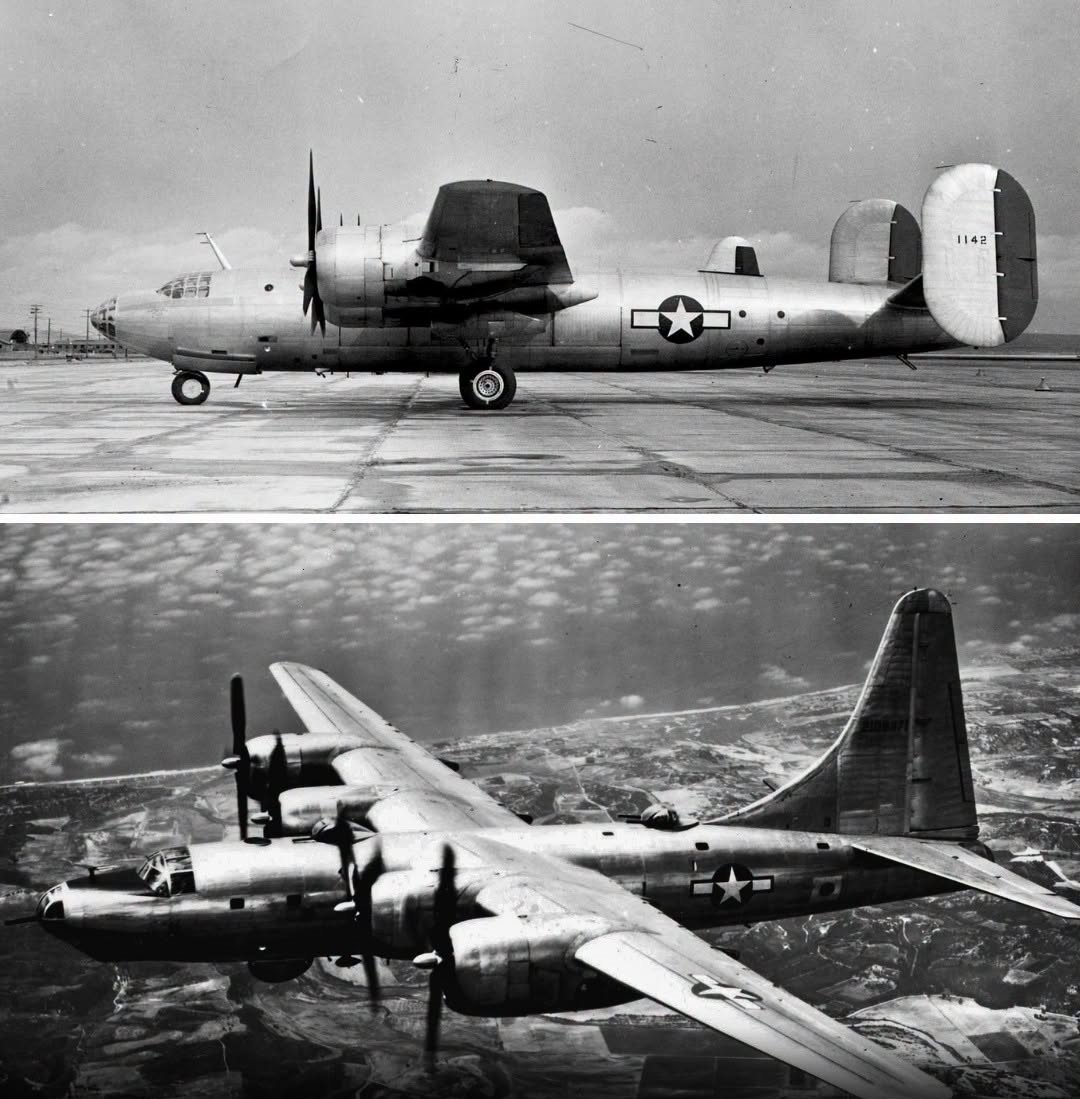
On September 7, 1942, a massive four-engine bomber took flight with a critical mission: be ready if America’s revolutionary B-29 Superfortress failed.
It was called the B-32 Dominator.
Built by Consolidated during World War II, the Dominator was essentially America’s insurance policy. The U.S. Army Air Corps feared the ambitious B-29 program could run into serious problems, so Consolidated was ordered to develop an alternative heavy bomber.
And the result was enormous.
The B-32 stretched more than 82 feet long, carried a 135-foot wingspan and was powered by four 2,200-horsepower Wright R-3350 engines. It could carry up to 20,000 pounds of bombs and reach around 357 mph at 30,000 feet.
But there was a catch.
The B-32’s own development became a nightmare.
Pressurization systems failed to mature as planned. Defensive turrets caused problems. Engine cooling, landing gear and stability issues delayed the aircraft again and again.
Meanwhile, the B-29 was getting the job done.
By the time the Dominator finally reached the Pacific in 1945, there was little time left in the war. B-32s nevertheless flew combat and reconnaissance missions during the final months of the conflict.
Then came an extraordinary final chapter.
On August 18, 1945, after Japan had already announced its surrender, B-32s encountered Japanese fighters over Tokyo.
During that engagement, U.S. Army Air Forces Sergeant Anthony Marchione was killed.
He would become the last American serviceman killed in aerial combat during World War II.
The Dominator’s combat career ended almost as quickly as it had begun.
Only 118 B-32s were ultimately completed before production was cancelled.
The aircraft had been designed to ensure America wouldn’t be left without a strategic bomber.
Instead, history remembered the B-29.
And the B-32 became the forgotten bomber that was supposed to be its backup.
But here’s the question that makes its story fascinating:
What if the B-29 really had failed?
Would the B-32 Dominator have become one of the most important aircraft of World War II — instead of one of its forgotten giants?