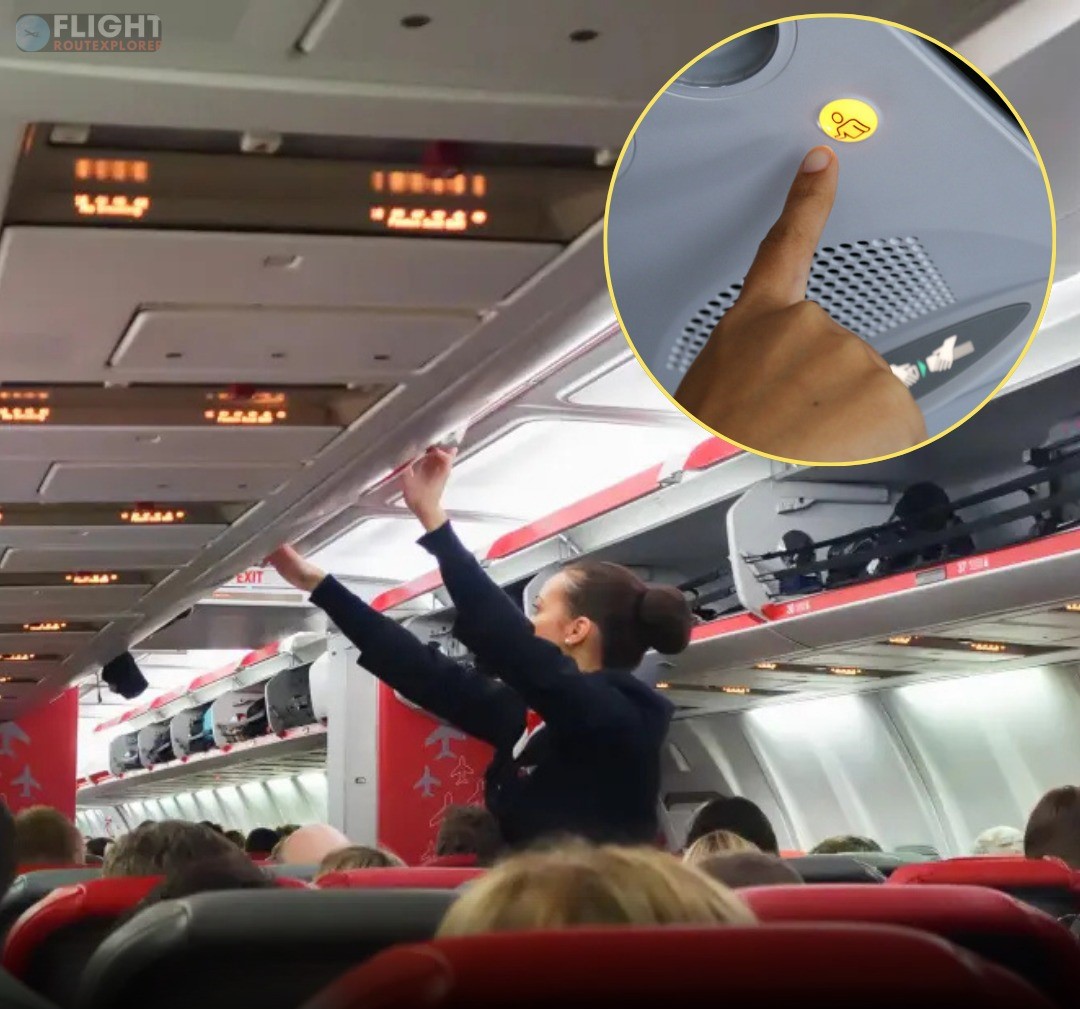
The call button exists to give passengers a quick and easy way to get a flight attendant’s attention. Most importantly, the call button is a non-intrusive way to do so. “It’s uncomfortable to be poked, touched, or lightly tapped, so ringing the flight attendant call button is often our preferred way to assist customers,” says Shannon Brown, a Detroit-based Delta Air Lines flight attendant. “Customers should feel empowered to ring the call light for many different reasons.”
Across the board, flight attendants agree: if something feels urgent or you truly need help at your seat, don’t hesitate. “It’s always appropriate to use the call button if you need assistance with something specific,” says Rina Raj, an inflight service manager with Air New Zealand.
Medical or safety concerns are the clearest green light. “When I hear a call button chime, my first instinct is to assume that it’s a medical emergency,” says Sherry Peters, an international flight attendant and founder of Atlas + Wild, a guiding company. “We have emergencies onboard more often than passengers realize. Everything from fainting and panic attacks to seizures and heart attacks. We’re trained to respond to call lights right away, because if it’s an emergency, even a few seconds can matter.”
Former flight attendant Kristine Eksteine-Nizka of travel planning company Love Your Italy doubles down on safety first. “If it’s an emergency? Ring multiple times!” she says.
But even non-critical situations count, too. For example, Peters says you’re free to ring the bell, “if you are sitting in a window seat and don’t want to bother the passengers in the middle and aisle seats to ask for a drink.” You can also ring the bell if you’re a nervous flier and need reassurance, if you’ve dropped something that’s disappeared into the seats, or if you have questions about a flight connection or immigration and customs procedures. And, of course, people with disabilities can always ring the flight button any time they need assistance during a flight.
What if the crew simply forgot to bring you something you asked for? “With well over 100 customers on many of our flights, we may, on occasion, forget to bring you that soda refill that we told you we would get for you,” says Benjamin Biffis, a Boston-based Delta flight attendant. “If it’s been a reasonable amount of time and we haven’t returned, please feel free to ring your call light to remind us.”
That said, be mindful of overusing the call button. “Think of it like a doorbell, not a texting app,” says former flight attendant Bobby Laurie, travel expert at The Jet Set. “It’s absolutely there for a reason, but it shouldn’t be used every five minutes. When it goes off, we assume someone actually needs us, so overusing it slows things down for everyone else onboard.”
Passengers get into murkier territory when they use the button for something they can do themselves. For instance, you probably shouldn’t ring the bell to ask a flight attendant how much time is left in the flight; that info should be on your seatback screen or in the airline’s mobile app. On a similar note, don’t ring the call button to have a flight attendant remove your trash. They make several passes with garbage bags throughout the flight. You can also bring your trash to the galley, where there are often trash bags set up for passengers.
Timing matters as well. Unless it’s an emergency, pressing the button during critical phases of flight is frowned upon. “When moving on an active taxiway, taking off, or in the final moments before landing … please refrain from pressing your call light button unless it is an urgent matter that cannot wait to be addressed, such as a medical emergency,” says Biffis. “Pressing call lights during taxi, takeoff, or landing for non-urgent requests—like asking for a pair of headphones—can put you and us at risk for unnecessary injury.”
As for general call button etiquette, repeated ringing—unless it’s an emergency—is one of the biggest missteps. “It shows impatience,” Peters says. Another impatience-fueled move is ringing the bell for snacks or drinks when the flight attendants are in the middle of meal or beverage service. The flight attendants are busy taking care of all passengers at this time, and you’ll need to wait for your turn. Finally, make sure your kids are keeping their hands to themselves. “Don’t let your kids play with the call button! It’s annoying for everyone, including other passengers, and it disturbs the work of flight attendants,” says Eksteine-Nizka.
If you’re able to get up and visit the galley, where flight attendants can often be found mid-flight, they often prefer you do. “It’s faster for you and helps us prioritize people who can’t get up,” says Laurie. “I honestly didn’t mind passengers coming and asking questions in the galley, as then I could sometimes even do two things at the same time,” Eksteine-Nizka adds.
You’ll often find self-serve snacks and water in the galley, too. “Air New Zealand premium economy and economy customers can visit Sky Pantry in flight so they can stretch their legs, grab a bite to eat, and hydrate at their leisure throughout their journey,” says Raj. “It gives our crew a great opportunity to build rapport and connect with customers, while also allowing space for any questions or concerns to be discussed in a relaxed, friendly way.”
Just be aware that galleys can be rather cramped spaces, and if the cabin crew needs to utilize the galley for cooking, that’s probably not the best time to visit for an extended stay. And, as always, when getting up on an airplane, only visit the galley when it’s safe. “If the seatbelt sign is on and we are experiencing turbulence, you should remain seated for your safety,” Peters says.
Despite the anxiety some passengers feel about the call button, flight attendants are clear: the call button exists for a reason, and they want you to use it when necessary. “If it feels important to you, press it,” says Laurie. “Just don’t treat it like a concierge button.”