
Today in 2002: The Mid-Air Collision That Changed Aviation Forever — Opposite Safety Warnings Led to a Tragedy That Claimed 71 Lives
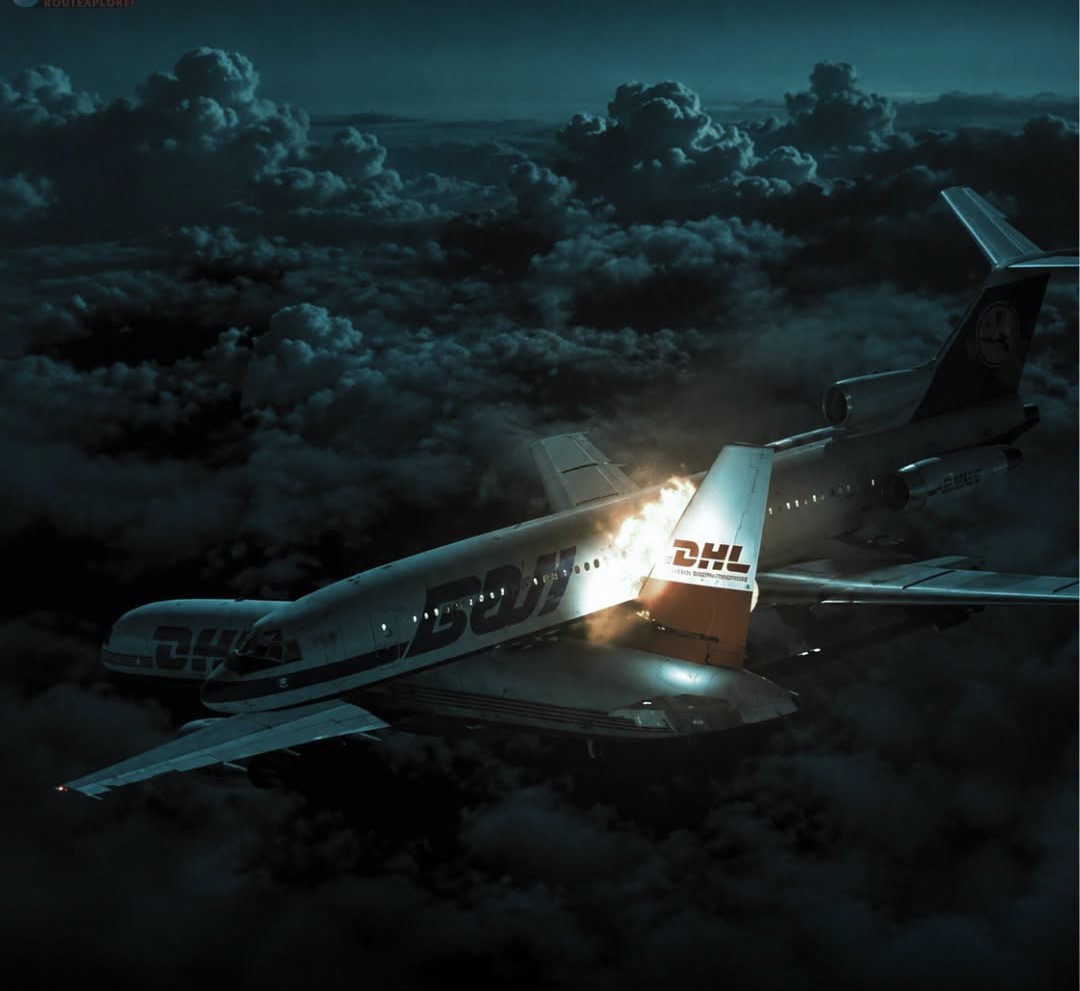
On the night of July 1, 2002, one of the deadliest and most influential mid-air collisions in aviation history unfolded above the quiet German town of Überlingen, near Lake Constance. In a disaster that forever changed international aviation procedures, Bashkirian Airlines Flight 2937, a Tupolev Tu-154 carrying 69 people, and DHL Flight 611, a Boeing 757 cargo aircraft with two crew members, collided at an altitude of approximately 35,000 feet. Every person aboard both aircraft was killed, including 52 children traveling on a holiday trip to Spain. The accident exposed critical weaknesses in air traffic control operations and conflicting cockpit procedures involving the Traffic Collision Avoidance System (TCAS), ultimately leading to major safety reforms worldwide.
Bashkirian Airlines Flight 2937 departed Moscow’s Domodedovo Airport for Barcelona on a charter flight carrying schoolchildren from the Russian republic of Bashkortostan, accompanied by teachers and parents. Many of the children had earned the trip as an educational reward. Meanwhile, DHL Flight 611 was operating a scheduled overnight cargo service from Bahrain to Brussels with a stop in Bergamo, Italy. Both aircraft were cruising normally and were expected to pass safely through the busy airspace controlled by Skyguide from Zurich, Switzerland.
That night, however, the Zurich Area Control Center was operating under unusual conditions. Scheduled maintenance had taken several systems offline, including parts of the radar processing equipment and telephone communications. Only one air traffic controller, Peter Nielsen, was actively managing multiple sectors because his colleague was on a break. At the same time, Nielsen was also occupied coordinating another aircraft approaching Friedrichshafen Airport, reducing his ability to monitor the converging traffic.
As the two aircraft approached each other at the same cruising altitude of Flight Level 360, the controller realized the conflict only seconds before the aircraft would cross paths. He instructed the Bashkirian Tupolev to descend immediately. The crew acknowledged the instruction and began descending. Almost simultaneously, the onboard TCAS collision avoidance systems activated on both aircraft. The Tupolev received a command to climb, while the DHL Boeing 757 was instructed to descend. The DHL crew immediately obeyed the TCAS command, as required by their procedures. However, the Tupolev crew chose to follow the controller’s earlier descent instruction instead of the TCAS climb advisory, believing that instructions from air traffic control took priority. This placed both aircraft on descending flight paths toward each other.
The controller, unaware that the DHL aircraft had already started descending under TCAS instructions, continued telling the Tupolev crew to descend faster. Seconds later, the aircraft collided almost head-on at approximately 11:35 p.m. local time. The Boeing 757’s vertical stabilizer sliced through the Tupolev’s fuselage, causing the passenger aircraft to break apart instantly. Both aircraft disintegrated in the air, scattering wreckage across more than 30 square kilometers of countryside surrounding Überlingen. There were no survivors among the 71 people aboard the two aircraft.
The aftermath was devastating. Emergency responders recovered wreckage and victims throughout the night. Entire communities in Russia mourned the loss of the schoolchildren, while Germany and Switzerland faced intense scrutiny over the circumstances leading to the tragedy. Memorials were later erected near the crash site, including the “Broken Pearl Necklace” monument, symbolizing the lives of the children lost in the disaster.
The official investigation by Germany’s Federal Bureau of Aircraft Accident Investigation concluded that the primary cause of the accident was a combination of failures within the Swiss air traffic control system. Investigators found that staffing decisions, disabled technical systems during maintenance, failed telephone communications between control centers, delayed conflict recognition, and inadequate supervision all contributed to the collision. The investigation also highlighted ambiguity in international procedures because the Tupolev crew followed air traffic control instructions instead of the conflicting TCAS advisory. At that time, guidance on which instruction should take priority was not universally understood or consistently applied.
The investigation resulted in sweeping global safety changes. International aviation authorities clarified that pilots must always follow TCAS resolution advisories, even if they conflict with instructions from air traffic control. Training programs, operating manuals, and international regulations were updated to eliminate any uncertainty about pilot actions during collision avoidance events. These changes have since become standard practice across the aviation industry and are considered one of the most significant safety improvements introduced after a major accident.
The tragedy had another heartbreaking chapter. In February 2004, Peter Nielsen, the air traffic controller on duty during the collision, was fatally stabbed by Vitaly Kaloyev, a Russian architect who had lost his wife and two children in the crash. The killing shocked the aviation community and highlighted the profound emotional consequences suffered by the victims’ families. Skyguide later accepted responsibility for shortcomings in its operations and apologized to the families, while several company employees faced criminal proceedings related to the accident.
More than two decades later, the Überlingen mid-air collision remains one of the most important case studies in aviation safety. It demonstrated how a chain of seemingly small failures—reduced staffing, equipment maintenance, communication breakdowns, and conflicting cockpit procedures—can combine into a catastrophic disaster. The lessons learned from July 1, 2002 continue to influence pilot training, air traffic control operations, and collision avoidance procedures around the world, helping prevent similar tragedies from happening again.