
On 12 June 2025, the world witnessed one of the most shocking aviation disasters of the modern era when Air India Flight AI171 crashed just 32 seconds after taking off from Ahmedabad, India. The tragedy was particularly historic because it marked the first fatal accident and total loss of a Boeing 787 Dreamliner since the aircraft entered commercial service in 2011. The crash claimed 260 lives and left only a single survivor among the 242 people on board.
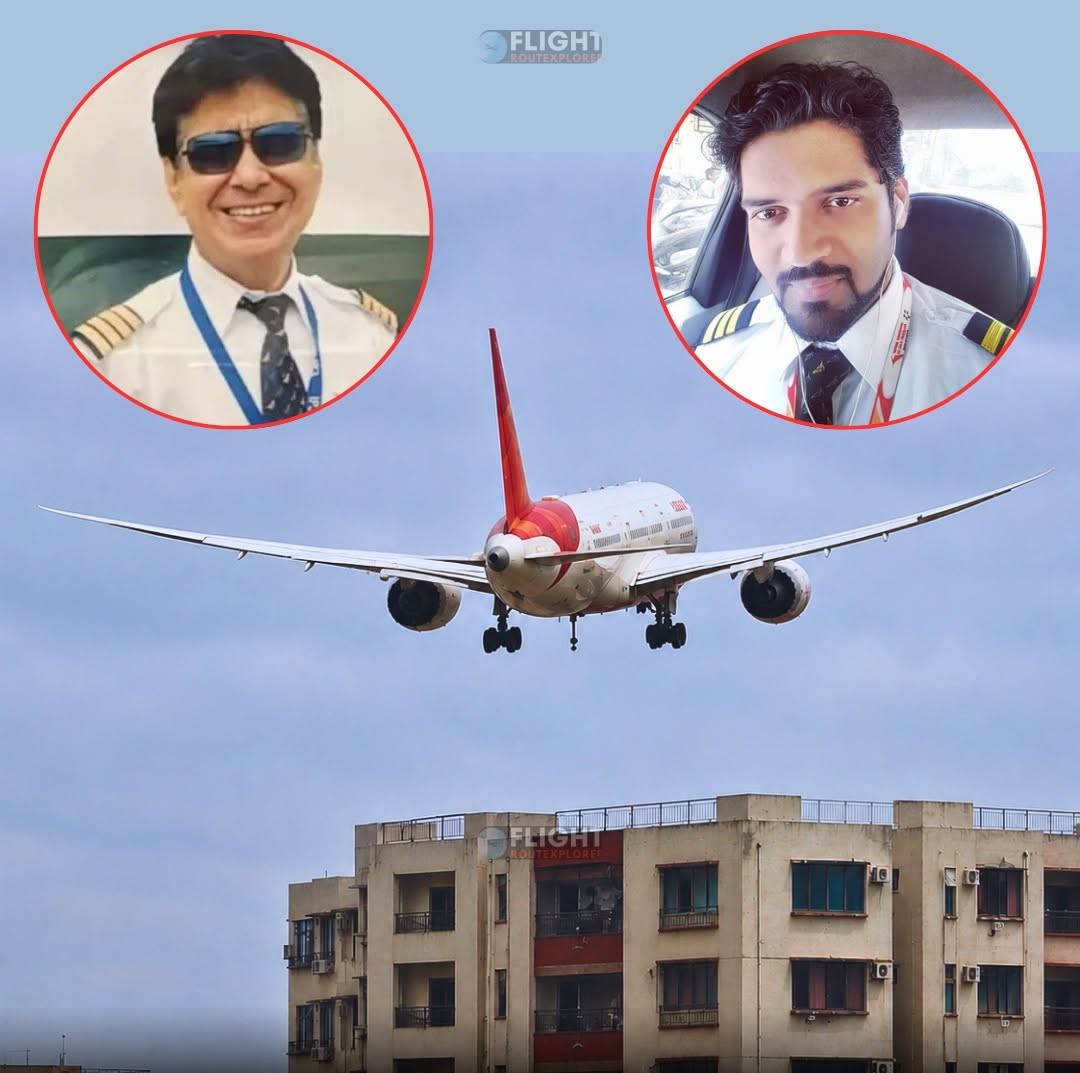
The aircraft involved was a Boeing 787-8 Dreamliner registered as VT-ANB. It was operating a scheduled international service from Sardar Vallabhbhai Patel International Airport in Ahmedabad to London Gatwick Airport in the United Kingdom. On board were 230 passengers and 12 crew members, including Captain Sumeet Sabharwal and First Officer Clive Kunder. The passenger list included Indian, British, Portuguese, and Canadian nationals.
At 1:38 PM local time, the aircraft began its takeoff roll from Ahmedabad Airport. Everything appeared normal during the initial phase of departure. The Boeing 787 accelerated, rotated, and lifted off the runway. However, merely three seconds after becoming airborne, a catastrophic sequence of events began inside the cockpit.
According to the preliminary investigation, both engine fuel control switches moved from the “RUN” position to “CUTOFF,” cutting the fuel supply to both General Electric GEnx engines. This caused an immediate and almost complete loss of thrust at the most critical phase of flight, leaving the aircraft unable to continue climbing. The aircraft initially reached a height of only a few hundred feet before it started losing altitude.
Cockpit recordings revealed that the pilots quickly recognized the loss of power and attempted to recover the situation. The fuel switches were moved back to the “RUN” position, allowing the engines’ automatic restart systems to attempt relighting the engines. Around nine seconds after the switches were restored, one of the pilots transmitted a desperate mayday call reporting the loss of thrust. Unfortunately, there was not enough altitude or time for the engines to regain sufficient power to prevent the disaster. The final recordings ended just 32 seconds after takeoff.
The aircraft descended into the campus of B. J. Medical College, located approximately 0.9 nautical miles from the runway. It struck the student hostel and residential buildings, creating a massive explosion and fire that destroyed the aircraft and severely damaged multiple structures. The aircraft’s tail section remained visibly lodged in the damaged building, becoming one of the most haunting images of the disaster. Rescue teams, firefighters, and emergency medical personnel rushed to the scene, but the intensity of the impact and post-crash fire made survival extremely unlikely.
Of the 242 people on board, 241 lost their lives. A single passenger survived the crash with injuries. The disaster also killed 19 people on the ground and injured dozens more, bringing the total death toll to 260. It became the deadliest aviation accident in the world in over a decade and one of the worst disasters in Indian aviation history.
The investigation was led by India’s Aircraft Accident Investigation Bureau (AAIB) with assistance from international agencies including the United States National Transportation Safety Board, the United Kingdom’s Air Accidents Investigation Branch, Boeing, and GE Aerospace. Investigators recovered the aircraft’s advanced flight recorders, which contained both flight data and cockpit voice recordings. These records became crucial in reconstructing the final moments of the flight.
The preliminary report released in July 2025 revealed that there was no evidence of engine failure, incorrect flap settings, or a loss of takeoff power before the fuel cutoff event. The discovery that both fuel switches had moved to the CUTOFF position became the central focus of the investigation. These switches are designed with locking mechanisms to prevent accidental movement, making the event highly unusual. Investigators also reviewed a 2018 FAA advisory involving similar fuel switch mechanisms on Boeing 737 aircraft, although Air India had not carried out the suggested inspections because they were advisory rather than mandatory.
As the investigation continued into 2026, the exact reason why the switches moved remained a matter of intense examination and debate. Further analysis of the engines, cockpit recordings, and aircraft systems was required before a final conclusion could be reached. The investigation remained open, with additional technical examinations continuing in India, the United States, and France.
One year after the tragedy, families of the victims gathered in Ahmedabad to remember those who were lost. The damaged hostel buildings near the crash site remained closed, while authorities and Air India continued efforts related to compensation, rebuilding, and support for the affected families. The disaster remains a painful reminder of how a sequence lasting barely half a minute forever changed hundreds of lives and created one of the most closely studied aviation investigations in recent history.