
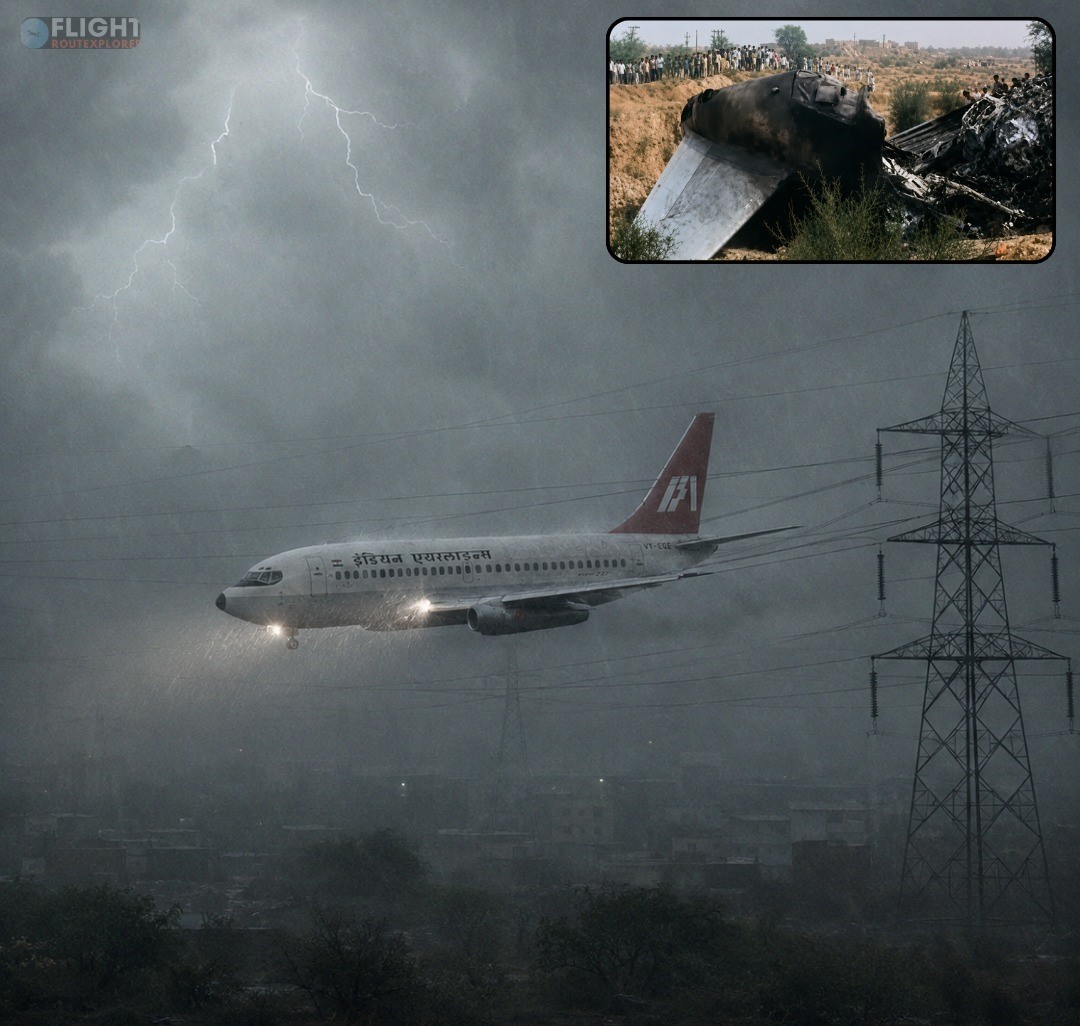
On the night of May 31, 1973, Indian Airlines Flight 440 was only moments away from completing a routine domestic journey from Madras (now Chennai) to New Delhi. Instead, the Boeing 737-200 named *Saranga* disappeared into a wall of dust, rain, and darkness, becoming one of India’s earliest major jetliner disasters.
Flight IC440 departed Madras for Delhi carrying 58 passengers and 7 crew members aboard Boeing 737-2A8 VT-EAM. The aircraft, delivered only a couple of years earlier, represented the modern jet age of Indian civil aviation. Nothing during the flight suggested the tragedy that was about to unfold.
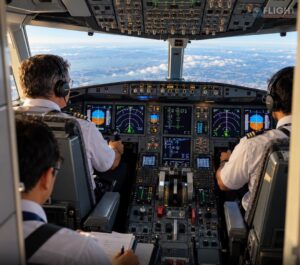
As the aircraft neared Delhi’s Palam Airport late in the evening, weather conditions deteriorated rapidly. A powerful rainstorm mixed with blowing dust reduced visibility around the airport. Pilots were forced to rely heavily on navigation instruments while conducting a Non-Directional Beacon (NDB) approach, a procedure that was far less precise than modern instrument landing systems used today.
Witnesses later described severe weather around the airport area. Despite the worsening conditions, Flight 440 continued its descent toward the runway. Investigators determined that visibility had fallen below the prescribed minimum limits required for the approach. Instead of initiating a missed approach and climbing away, the aircraft continued descending.
The Boeing gradually slipped below the safe approach path. Hidden by darkness, rain, and dust, high-tension electrical transmission lines stood directly in its path. The crew had not yet acquired sufficient visual reference to the runway.
Then disaster struck.
The aircraft’s landing configuration had already been selected with 40 degrees of flaps as it descended toward Palam. Flying too low, the Boeing 737 clipped the high-voltage power cables several kilometers short of the runway. The impact severely damaged the aircraft and immediately robbed it of the ability to continue a controlled flight. Within seconds, the jet crashed near what is now the Vasant Vihar area of Delhi and erupted into flames.
The post-impact fire proved devastating.
Many passengers who survived the initial impact became trapped as flames rapidly consumed sections of the aircraft. Rescue efforts were launched, but the intensity of the fire and destruction made survival difficult for many occupants. Of the 65 people aboard, 48 lost their lives while 17 survived with injuries. Among the victims was senior Indian politician Mohan Kumaramangalam, a prominent cabinet minister whose death shocked the nation.
One remarkable aspect of the tragedy was that both pilots survived the accident. Survivor accounts later recalled how some passengers initially lived through the crash itself but succumbed to the intense fire that followed. Many victims were burned beyond recognition, making identification difficult for authorities and families.
The investigation concluded that the accident was a classic case of controlled flight into terrain and obstacles. The Boeing was mechanically sound. There was no evidence of engine failure, structural failure, or sabotage. Instead, investigators found that the crew had continued the instrument approach despite weather conditions being below the required minimums. The aircraft descended below the minimum descent altitude without obtaining the necessary visual contact with the runway environment. As a result, it collided with the transmission lines.
Aviation experts later pointed to the limitations of NDB approaches, especially during severe weather and nighttime operations. During the 1970s, many airports lacked the advanced precision approach systems and terrain-warning technologies that modern pilots rely on today. The Flight 440 disaster became another reminder of how quickly poor weather, limited visibility, and a small deviation from procedure could combine into catastrophe.
The crash left a lasting mark on Indian aviation history. It highlighted the dangers of continuing an approach below weather minimums and reinforced the importance of strict adherence to instrument flight procedures. In the decades that followed, improvements in navigation aids, approach guidance systems, pilot training, and obstacle awareness significantly reduced the likelihood of similar accidents.
More than five decades later, the final moments of Flight 440 remain haunting: a nearly completed journey, a runway hidden behind rain and dust, a Boeing 737 descending through darkness, and unseen power lines that turned a routine landing into one of the deadliest air disasters in India’s early jet age.