On May 25, 1979, American Airlines Flight 191 departed Chicago O’Hare International Airport for Los Angeles in what should have been a routine domestic flight. Instead, it became the deadliest aviation accident in United States history, killing all 271 people onboard and two more on the ground. The aircraft involved was a McDonnell Douglas DC-10-10 registered as N110AA.
The day of the crash began under ideal flying conditions. Weather was clear, visibility was excellent, and there were no reports of technical problems before departure. At approximately 3:02 PM local time, Flight 191 was cleared for takeoff from Runway 32R at O’Hare Airport. The DC-10 accelerated normally down the runway and everything initially appeared routine.
As the aircraft reached takeoff speed and the pilots initiated rotation, disaster struck within seconds. The entire left engine assembly, including its pylon mount, suddenly separated from the wing. Witnesses saw the engine flip over the top of the wing before crashing onto the runway behind the aircraft. The detached engine ripped away hydraulic lines and damaged part of the wing’s leading edge.
The loss of the engine created several catastrophic failures simultaneously. The damage caused the left wing’s leading-edge slats to retract unexpectedly. These slats are critical during takeoff because they increase lift at lower speeds. With the left slats retracting while the right wing’s slats remained extended, the aircraft suddenly produced much less lift on the left side than on the right. At the same time, the left engine was no longer producing thrust while the right engine and tail engine continued operating at full power.
Inside the cockpit, the pilots faced an almost impossible situation. Due to electrical damage caused by the engine separation, important warning systems stopped functioning. The crew did not immediately realize that the left wing slats had retracted. Instruments continued to indicate normal slat positions, leaving the pilots unaware of the true aerodynamic imbalance developing on the aircraft.
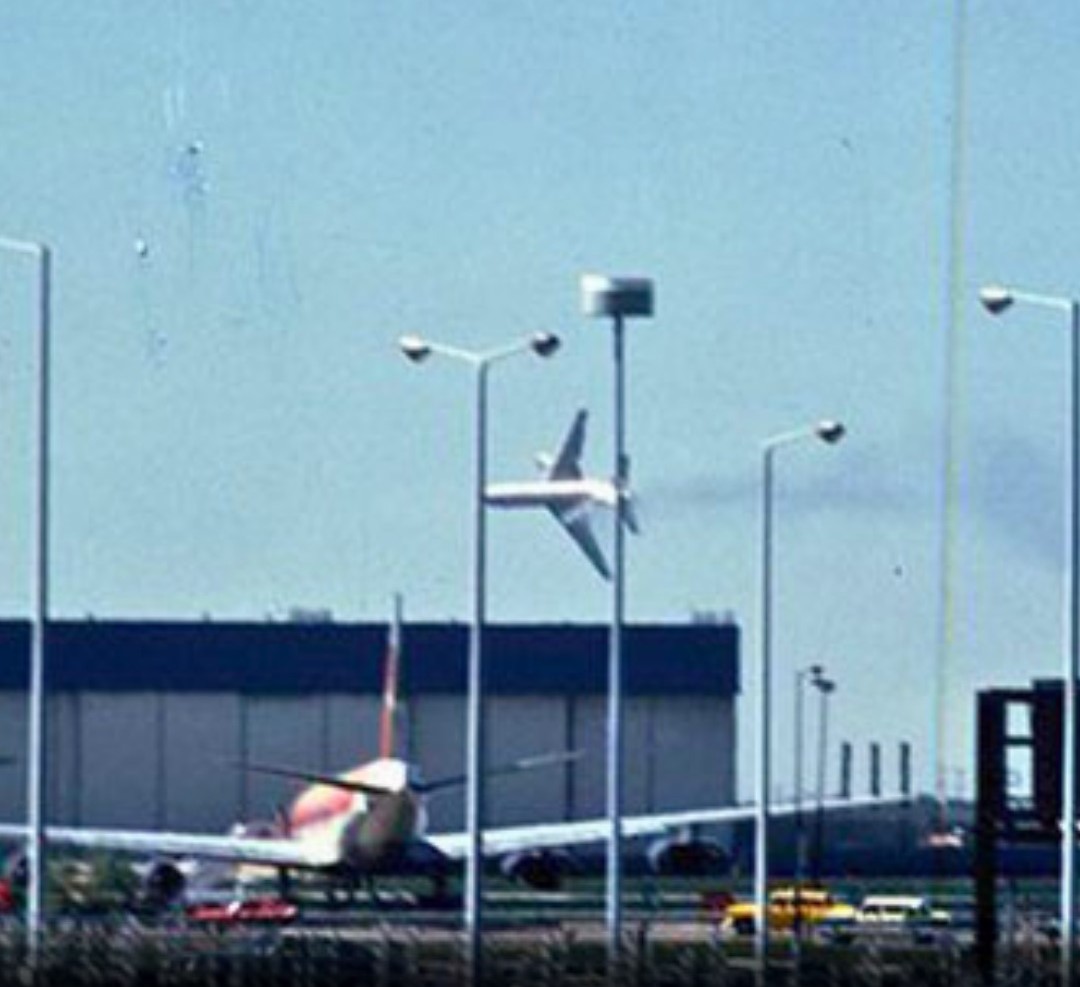
The aircraft briefly climbed after takeoff, reaching around 300 feet above ground. However, the damaged left wing began to stall because it could no longer generate enough lift. The DC-10 rolled sharply to the left. Witnesses described the aircraft banking increasingly steeply until it reached more than 100 degrees of bank angle. The nose dropped and the aircraft entered an unrecoverable descent.
Less than 31 seconds after liftoff, Flight 191 crashed into an open field near a trailer park northwest of the runway. The impact destroyed the aircraft instantly and triggered a massive fireball fueled by tens of thousands of pounds of jet fuel. Thick black smoke rose over the airport and surrounding suburbs. Rescue crews rushed to the scene, but there were no survivors among the passengers or crew. Two people on the ground were also killed and several others were injured.
Investigators from the National Transportation Safety Board quickly began examining the wreckage and interviewing witnesses. One crucial clue was immediately obvious: the left engine was found separated from the main crash site on the runway. Early speculation initially focused on possible structural weakness in the DC-10 design. The DC-10 already had a controversial reputation following earlier cargo door incidents earlier in the decade, increasing public concern about the aircraft type.
The investigation eventually uncovered that the primary cause of the crash was improper maintenance procedures used by American Airlines. According to McDonnell Douglas procedures, the engine and pylon were supposed to be removed separately during maintenance. However, to save time and labor costs, American Airlines mechanics had been removing the engine and pylon together as a single unit using a forklift. This shortcut placed enormous stress on the pylon attachment points.
During maintenance performed weeks before the crash in Tulsa, Oklahoma, the forklift method slightly misaligned the engine assembly and caused structural damage to the pylon mount. Tiny cracks developed in the attachment structure. Over subsequent flights, those cracks grew larger due to metal fatigue until the mount finally failed during takeoff at O’Hare.
The NTSB concluded that the engine separation was not caused by pilot error, sabotage, or weather. Instead, the accident resulted from maintenance-induced structural damage combined with critical aerodynamic vulnerabilities in the DC-10’s design. The investigation also criticised the aircraft’s warning systems because the pilots received no direct indication that the wing slats had retracted.
The aftermath of the crash had enormous consequences for the aviation industry. The Federal Aviation Administration temporarily grounded the entire DC-10 fleet in the United States, one of the most dramatic regulatory actions in aviation history. Airlines worldwide inspected their DC-10 aircraft for similar pylon cracks and maintenance damage. American Airlines and Continental Airlines were later fined for using improper maintenance procedures.
The crash also permanently damaged the reputation of the DC-10. Although the aircraft later returned to service after modifications and inspections, public confidence never fully recovered. Many passengers avoided flying on DC-10s for years afterward. McDonnell Douglas redesigned inspection procedures and maintenance practices, while regulators introduced stricter oversight regarding airline maintenance methods and structural fatigue inspections.
Today, American Airlines Flight 191 remains one of the most studied aviation disasters ever investigated. The tragedy highlighted how maintenance shortcuts, even small ones intended to save time, can create catastrophic consequences. It also demonstrated the importance of fail-safe aircraft design, redundant warning systems, and strict compliance with manufacturer-approved procedures. The lessons learned from Flight 191 continue to influence aircraft maintenance standards and aviation safety regulations decades later.