
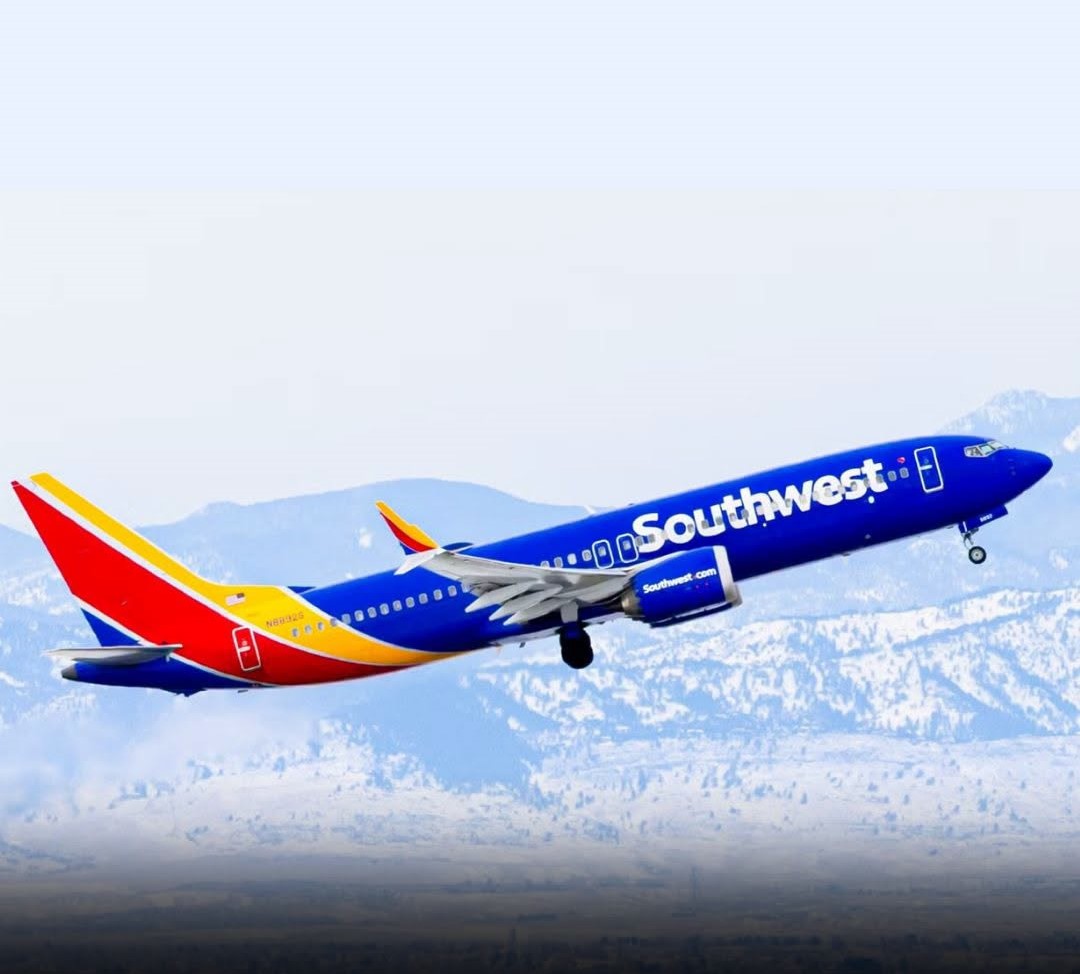
A Southwest Airlines flight bound for Las Vegas was forced to declare an in-flight emergency and make a dramatic U-turn over the Pacific Ocean after a passenger suffered a medical emergency onboard.
Southwest Flight WN139, operated by a Boeing 737 MAX 8, departed Kahului Airport (Maui, Hawaii) at approximately 8:40 p.m. local time on Sunday, July 5, for its scheduled overnight flight to Harry Reid International Airport in Las Vegas.
About 90 minutes into the journey, while cruising at 32,500 feet over the Pacific Ocean, the flight crew declared an emergency by transmitting the international distress code “Squawk 7700” and immediately turned the aircraft back toward Hawaii.
Instead of returning to Kahului, the pilots diverted to Daniel K. Inouye International Airport in Honolulu. The aircraft remained airborne for more than three hours before landing safely just before midnight, where emergency responders were ready to assist.
Southwest Airlines later confirmed that the diversion was caused by a passenger medical emergency. While the airline did not disclose details about the passenger’s condition, it explained that FAA operational procedures for Hawaii-mainland flights determine whether an aircraft should continue, return, or divert during emergencies. In this case, Honolulu was the appropriate diversion airport.
Following the safe landing, Southwest arranged an additional flight from Honolulu to Las Vegas to accommodate affected passengers. The airline noted that repositioning aircraft and flight crews in Hawaii can take additional time, leading to delays before travelers could continue their journey.
The incident serves as another reminder that the Squawk 7700 emergency code does not necessarily indicate a mechanical failure. It is the universal transponder code used by pilots to alert air traffic controllers to any serious onboard emergency, including medical situations, allowing emergency services to prepare before the aircraft lands.