
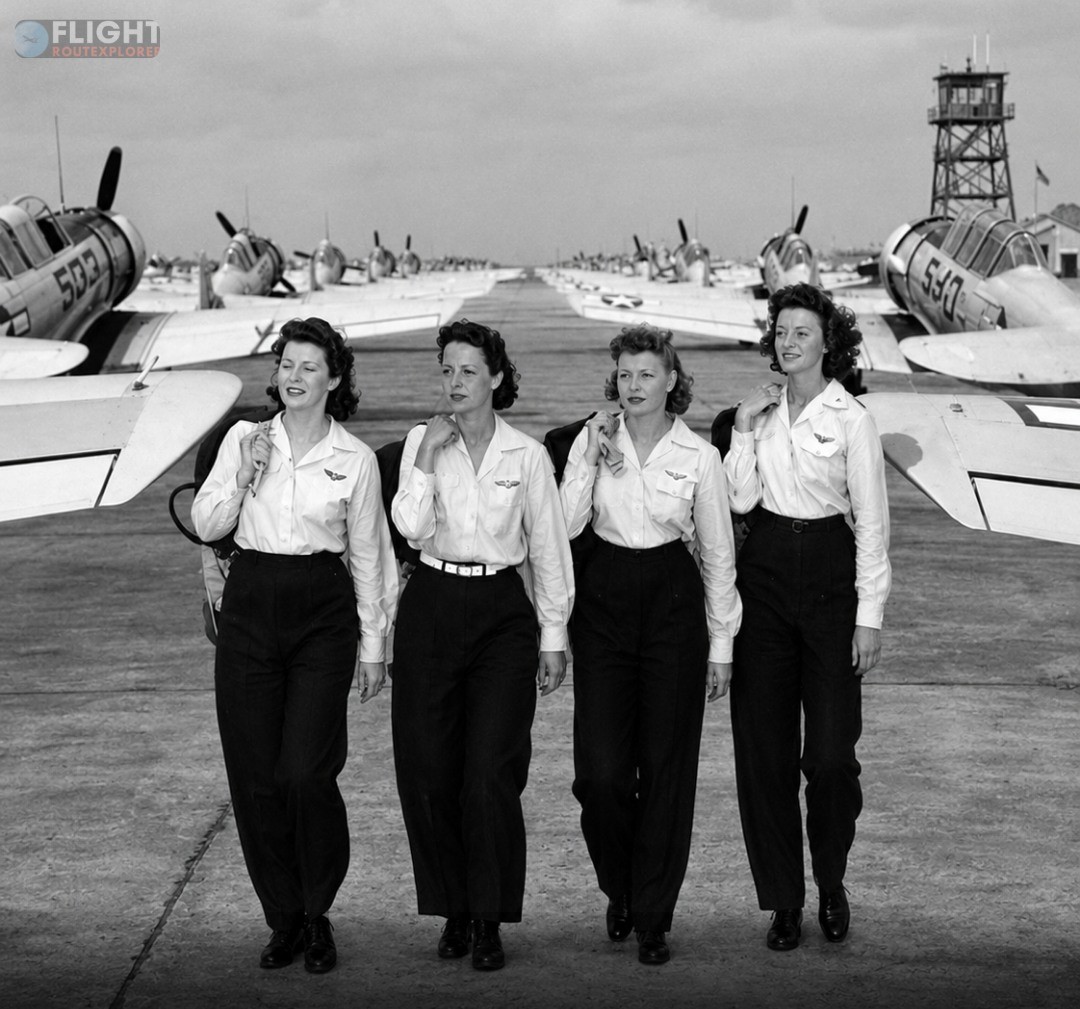
Long before women were regularly seen in military cockpits, a fearless group of female aviators quietly helped power America’s war effort from behind the controls of military aircraft. They were the Women Airforce Service Pilots, better known as the WASP — and their iconic silver wings became one of the most powerful symbols of courage in aviation history.
During World War II, more than 1,000 women earned those coveted silver wings after completing rigorous military flight training. Although they were technically civilians at the time, their responsibilities were anything but ordinary. WASP pilots ferried newly built warplanes across the country, transported cargo, tested repaired aircraft, and even trained male gunners for combat missions. They flew nearly every aircraft in the U.S. Army Air Forces inventory, from nimble trainers to powerful bombers.
The journey was far from easy. Many of these women arrived with civilian flying experience, but military aviation demanded an entirely different level of discipline and precision. Training at Sweetwater, Texas, pushed them physically and mentally. The women endured intense flight schedules, strict military-style routines, and the constant pressure of proving they belonged in an overwhelmingly male profession.
Their silver wings carried enormous meaning. The badge, specially designed for WASP graduates, featured a distinct shield and became a visible mark of achievement in an era when female military aviators were almost unheard of. For many pilots, earning those wings represented not just personal success, but a breakthrough for women in aviation itself.
One of the most fascinating symbols associated with the WASP was “Fifinella,” the organization’s official mascot. Originally created by Walt Disney for a proposed adaptation of Roald Dahl’s “The Gremlins,” the mischievous female gremlin was adopted by the WASP during the war and appeared on uniforms, aircraft artwork, and memorabilia. The Disney-approved mascot became a playful but proud emblem of the women breaking barriers in the skies.
Despite their vital contributions, the WASP program was abruptly disbanded in December 1944 before the women could receive full military status. Many returned home without veterans’ benefits or formal recognition. It would take decades before the United States officially honored their service.
Today, the legacy of the WASP continues to inspire new generations of pilots. Their determination helped pave the way for women in commercial aviation, military flying, aerospace engineering, and beyond. Modern female fighter pilots, airline captains, and astronauts all stand on foundations built by those pioneering women who wore silver wings during one of history’s most turbulent eras.
The WASP may not have flown combat missions overseas, but their contribution to victory was undeniable. They proved that skill, bravery, and determination had no gender — and in doing so, they forever changed aviation history.