


A high-altitude scare unfolded aboard a FlySafair flight when a sudden loss of automatic cabin pressurization triggered an emergency descent, testing crew response and system resilience mid-flight.
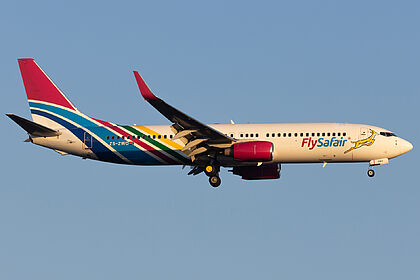
On Sep 22nd 2025, a Boeing 737-800, registration ZS-SJU, operating flight FA-31 from Port Elizabeth to Cape Town with 185 passengers and 6 crew, was cruising at FL360 about 200 nautical miles east of Cape Town when the cockpit was suddenly confronted with a cabin altitude warning accompanied by an “AUTO FAIL” message.
Recognizing the seriousness of the situation, the flight crew immediately donned their oxygen masks and initiated an emergency descent. The captain took control of the aircraft as it descended rapidly toward a safer altitude of FL100, where breathable conditions could be maintained without supplemental oxygen.
During the descent, the first officer worked to regain control of the cabin environment by switching to manual pressurization. The attempt proved successful, stabilizing the situation before the aircraft reached lower altitude. Once level at FL100, the crew removed their oxygen masks, and control of the aircraft was returned to the first officer. With the emergency under control, the flight continued toward Cape Town.
However, the challenges were not yet over. On final approach to runway 19, the aircraft was positioned too high, prompting the crew to initiate a go-around. After repositioning, the aircraft conducted a second approach and landed safely without further incident.
The South African Civil Aviation Authority released its final report on Mar 18th 2026, identifying the root cause of the serious incident as a latent internal failure within one of the aircraft’s cabin pressure controllers. The malfunction prevented the automatic pressurization system from functioning correctly and also blocked a seamless transfer to the backup controller, resulting in a complete loss of automatic cabin pressure regulation during cruise.
Despite the failure of a critical system, the crew’s prompt execution of emergency procedures, effective coordination, and successful transition to manual control ensured the safety of everyone on board, turning a potentially dangerous loss of pressurization into a controlled and well-managed incident.