


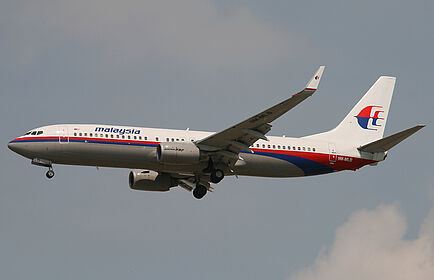
On May 19th 2025, a Malaysia Airlines Boeing 737-800, registration 9M-MLL, operating flight MH-620 from Singapore to Kuala Lumpur with 145 people on board, was involved in a runway incursion incident during taxi for departure.
As the aircraft approached the holding point for runway 20C, air traffic control cleared the crew to line up on the runway. The crew responded that they required an additional two minutes before being ready. In response, the controller cancelled the line-up clearance and reactivated the red stop bar lights at the holding point.
Despite the cancellation, the aircraft continued taxiing and entered the runway environment. The situation was later resolved without further escalation, and the aircraft was subsequently cleared for takeoff, completing its flight to Kuala Lumpur without incident.
A final report released by Transport Safety Investigation Bureau (TSIB) identified a chain of miscommunication and procedural breakdowns as the root cause of the occurrence.
Investigators found that the pilot-in-command twice read back instructions incorrectly, interpreting them as clearance to line up on the runway even after the clearance had been explicitly cancelled. In one instance, the controller’s instruction to “hold at Holding Point T2” was partially lost due to a simultaneous radio transmission, leaving only fragments of the message audible in the cockpit.
The report highlighted how expectation bias may have played a role. Having previously received a line-up clearance, the captain may have anticipated a similar instruction once the aircraft was ready, leading to misinterpretation of subsequent communications—especially when transmissions were unclear or incomplete.
The investigation also noted that the controller did not correct the second incorrect readback from the flight crew and chose not to insist on the aircraft holding position, even after recognizing the discrepancy. This decision was influenced by the controller’s intention to line the aircraft up anyway, though at the same time there were concerns about another aircraft still vacating the runway.
Additionally, the TSIB emphasized the importance of clear and direct phraseology. It suggested that instructions using a direct imperative format—such as “cancel line-up clearance” or “hold position”—are less prone to misunderstanding than more conversational phrasing.
The report further concluded that the controller’s earlier use of medication for a cough was unlikely to have contributed to the incident, as there was no evidence of impairment at the time.
Although the incident did not result in any injuries or damage, it underscores the critical importance of precise communication, correct readbacks, and assertive air traffic control in maintaining runway safety—especially in high-traffic environments where even small misunderstandings can escalate quickly