
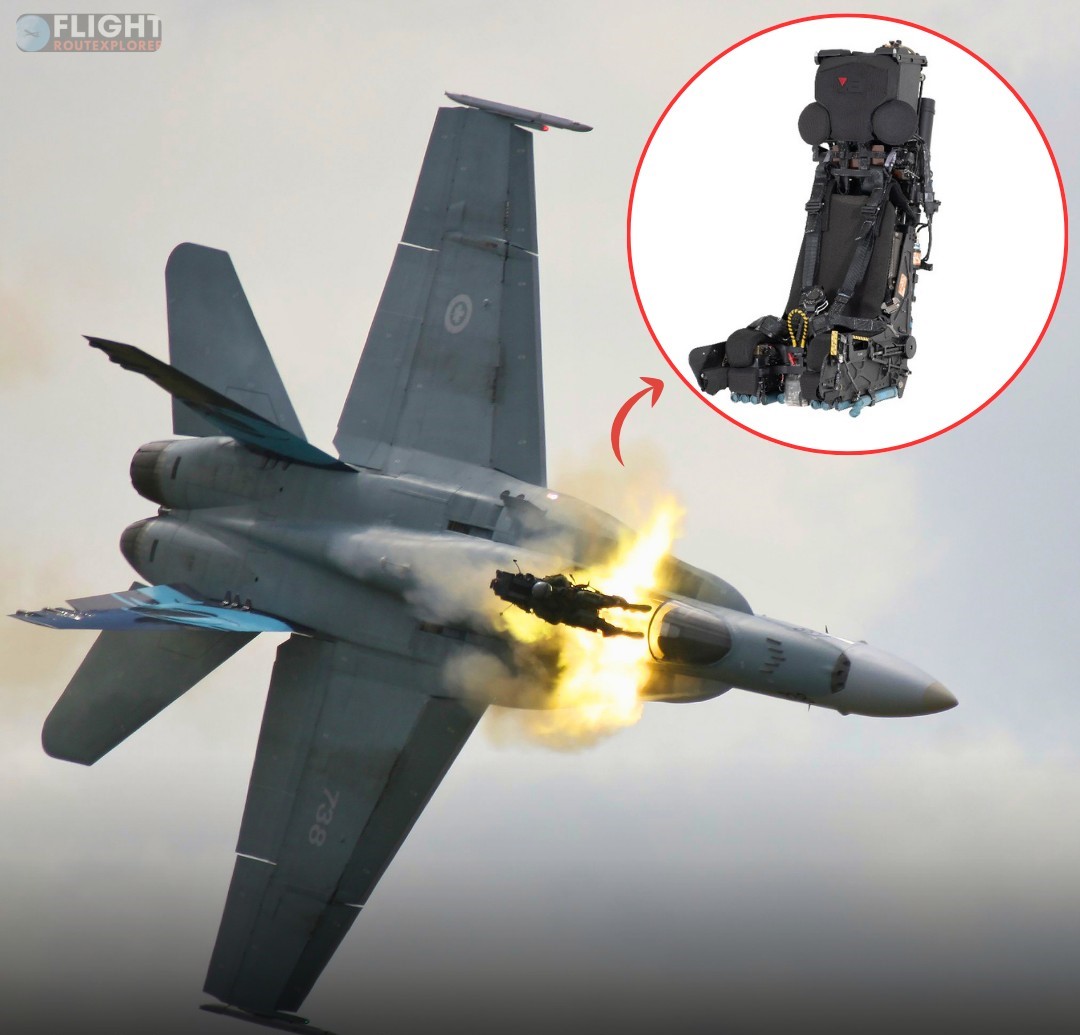
Two U.S. Navy EA-18G Growler electronic warfare jets collided mid-air during the “Gunfighter Skies” air show near Mountain Home Air Force Base in Idaho on May 17, 2026. What could have turned into one of the deadliest military air show disasters in recent years instead became an incredible demonstration of pilot training, split-second decision making, and life-saving engineering. All four aviators onboard the two aircraft successfully ejected and survived the fiery collision.
Witness videos captured the terrifying moment the two Growlers appeared to strike each other during a precision aerial maneuver. Within seconds, both aircraft spiraled downward while four parachutes blossomed in the sky above the crash site. Spectators initially feared the worst, but air show announcers soon confirmed that every crew member had escaped safely.
The survival of all four aviators was remarkable because low-altitude mid-air collisions leave almost no time for escape. Aviation analysts noted that the aircraft remained stable just long enough for the crews to activate their ejection systems before the jets broke apart and erupted into flames.
The EA-18G Growler is a two-seat electronic warfare aircraft derived from the Boeing F/A-18F Super Hornet. Each jet carries a pilot in the front seat and an electronic warfare officer in the rear cockpit. Both positions are equipped with advanced Martin-Baker ejection seats designed specifically for naval aviation.
The life-saving system involved in the incident is the Martin-Baker NACES NXG, short for Navy Aircrew Common Ejection Seat – Next Generation. Manufactured by British aerospace safety specialist Martin-Baker, the NACES family has protected naval aviators for decades and is considered one of the most advanced ejection seat systems ever built.
One of the most fascinating features of the NACES NXG is its “zero-zero” capability. This means the seat is designed to save a pilot even if the aircraft is stationary on the ground at zero altitude and zero airspeed. In combat aviation, that capability can mean the difference between life and death during takeoff failures, carrier deck accidents, or low-level emergencies like the Idaho collision.
The sequence of an ejection happens with astonishing speed. Once the pilot pulls the ejection handle, the canopy is blasted clear using rocket motors. The seat then fires upward on guide rails using a catapult system before an under-seat rocket motor ignites, propelling the crew member away from the doomed aircraft. Stabilizing drogues deploy almost instantly, followed by the main parachute. The entire process can unfold in less than a second.
The NACES system was groundbreaking because it became the world’s first microprocessor-controlled ejection seat. That onboard computer constantly calculates altitude, speed, and flight conditions to determine the safest parachute deployment sequence for the pilot. This automation dramatically improved survival chances in chaotic situations where fractions of a second matter.
The newer NXG version adds even more advanced protection technologies. One major upgrade is the Neck Protection Device, designed to reduce severe spinal and neck injuries during high-speed ejections. Modern fighter pilot helmets are increasingly heavy because of night vision systems and helmet-mounted displays, creating additional strain during ejection. The NXG system was specifically engineered to protect pilots from those extreme forces.
Another impressive feature is the Gen 5 integrated harness system. Older harness designs could sometimes drag aircrew dangerously after landing or during water survival situations. The NXG system includes automatic water-release mechanisms and improved body stabilization, helping aviators survive not just the ejection itself, but also the critical minutes afterward.
The seat is also rated for ejections at speeds up to 600 knots equivalent airspeed and altitudes reaching 50,000 feet. Those extreme operating conditions show how engineers designed the system for virtually every emergency imaginable, from supersonic combat failures to catastrophic low-level accidents.
Martin-Baker’s reputation in aviation safety is legendary. Since the company’s first live ejection test in 1945, its seats are credited with saving more than 7,800 lives worldwide. Military pilots who survive thanks to Martin-Baker seats traditionally join an unofficial “Ejection Tie Club,” a unique fraternity of aviators who literally owe their lives to the company’s engineering.
The Idaho crash once again demonstrated a harsh truth about military aviation: even the world’s best-trained crews operate in an environment with virtually no margin for error. Yet it also highlighted how decades of engineering innovation, pilot training, and survival system development can transform what appears to be a certain tragedy into a miraculous escape story.