


A serious runway conflict at a major German airport brought two passenger jets dangerously close after a late go-around call during a busy arrival and departure sequence.
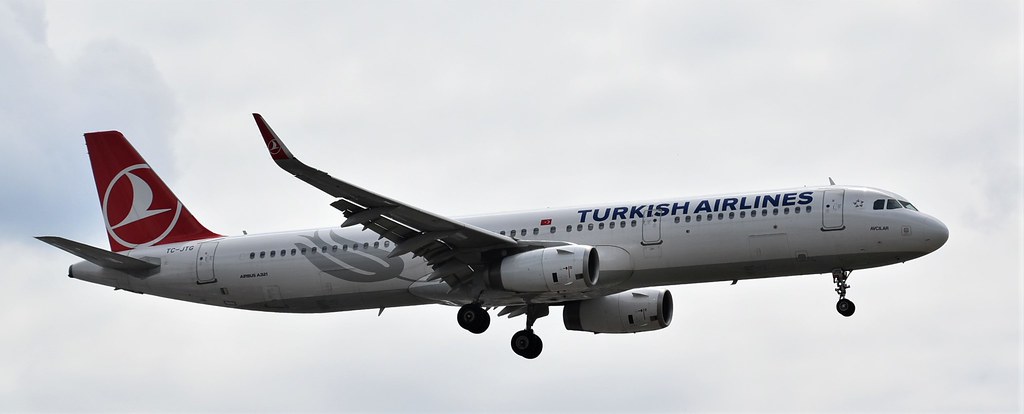
On October 23rd 2023, an Turkish Airlines Airbus A321-200, registration TC-JSZ, operating flight TK-1706 from Stuttgart to Istanbul, was departing runway 07 while a SunExpress Boeing 737-800, registration TC-SOR, operating flight XQ-154 from Antalya to Stuttgart, was on final approach to the same runway.
Germany’s German Federal Bureau of Aircraft Accident Investigation classified the event as a serious incident due to a loss of separation between the aircraft and launched an investigation.
According to flight tracking data, the approaching Boeing 737 was about 4.4 nautical miles from the runway threshold when the departing Airbus A321 lined up for departure. The situation quickly tightened as the landing aircraft continued its approach while the A321 began its takeoff roll.
The Boeing 737 ultimately touched down at the runway threshold but immediately initiated a go-around while the Airbus was still on the runway accelerating for takeoff. At that moment the horizontal distance between the two aircraft was about 0.9 nautical miles.
As the aircraft climbed away, the minimum separation between them was recorded at approximately 300 feet vertically and about 0.8 nautical miles horizontally before the landing aircraft turned left onto a diverging heading.
A preliminary report released on February 1st 2024 detailed the complex sequence of air traffic control instructions that preceded the event. The tower controller had been managing multiple aircraft movements, including a previously landing Airbus A319 and a departing business jet.
During this sequence, the controller first cleared an Embraer Phenom 100 for departure from an intersection on runway 07. Shortly afterward, the Airbus A321 was cleared for takeoff while the Boeing 737 was already approaching the runway on final approach.
As the 737 descended toward the runway, the controller informed its crew that a departure was rolling. Only seconds later, with the aircraft less than a nautical mile from the runway and descending to about 200 feet above the threshold, the controller issued an urgent go-around instruction.
The Boeing 737 crossed the runway threshold at only about 18 feet above it while beginning to climb away, passing just as the Airbus A321 lifted off roughly 0.8 nautical miles further down the runway.
Air traffic control then instructed the 737 to turn left to a heading of 350 degrees in order to diverge from the A321’s departure path. Within seconds the lateral distance between the two aircraft began to increase again.
After the go-around, the Boeing 737 climbed away and eventually returned to land safely at Stuttgart at 20:04 local time.
In its final report released on March 10th 2026, the BFU concluded that the serious incident resulted primarily from decisions made in the control tower. Investigators determined that the tower controller had changed the departure sequence at short notice, misjudged the time required to execute the revised sequence, and issued the go-around instruction to the approaching aircraft too late.
Although both flight crews followed the instructions they received and the aircraft remained under control throughout, the incident demonstrated how rapidly runway operations can become critical when arrival and departure sequencing is misjudged.