
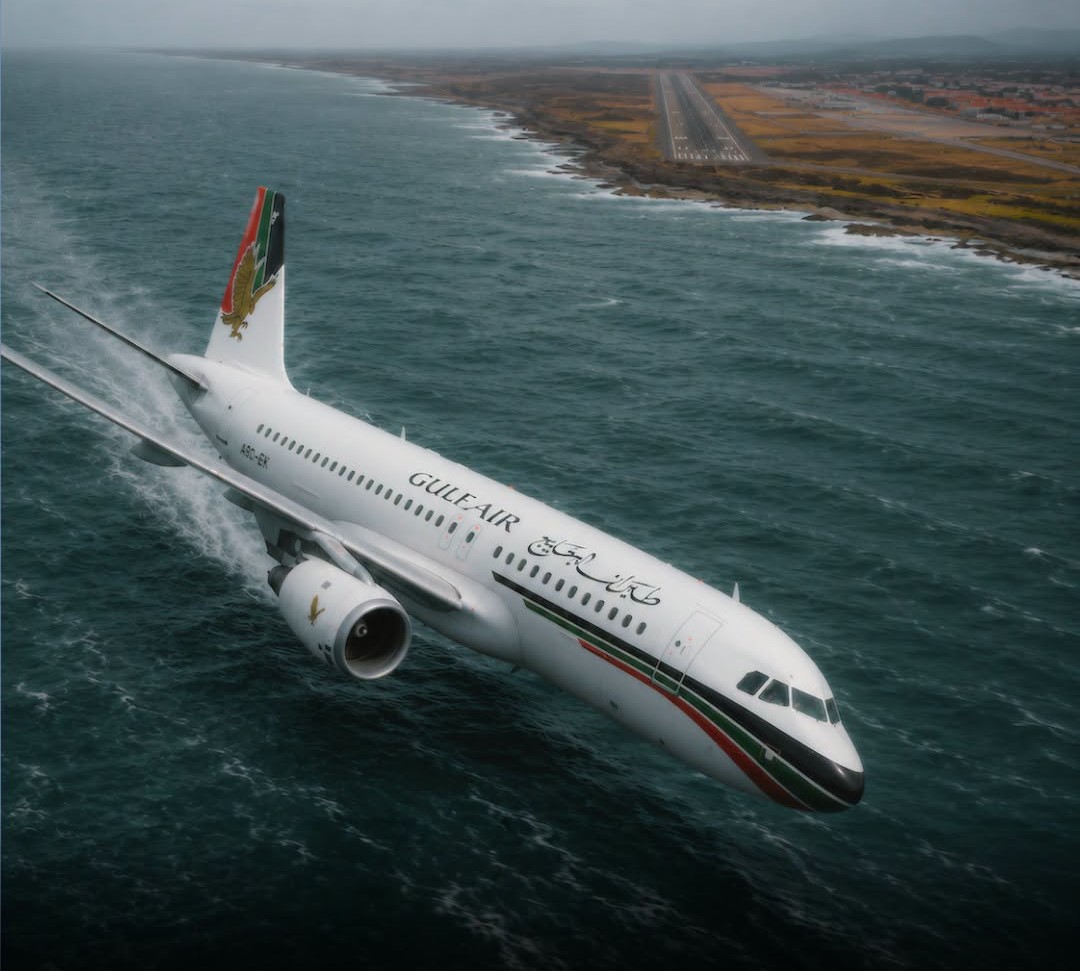
On 23 August 2000, Gulf Air Flight 072 approached Bahrain from Cairo. Within minutes, an unstable approach, poor cockpit coordination and spatial disorientation turned the landing into Bahrain’s deadliest aviation disaster.
The Airbus A320-212, registered A4O-EK, carried 135 passengers and eight crew members, including 37 children and eight infants. The aircraft was airworthy and had been delivered to Gulf Air in 1994.
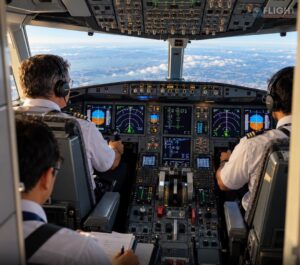
Flight 072 departed Cairo at 16:52 local time, more than 50 minutes late. Captain Ihsan Shakeeb, 37, was the pilot flying, while 25-year-old First Officer Khalaf al-Alawi monitored the flight. The journey was uneventful until the aircraft entered the Bahrain terminal area.
A misunderstanding arose over the cleared altitude. The crew believed they had been cleared to 7,000 feet, while the controller said 3,500 feet. The aircraft descended rapidly and reached about 313 knots during the approach.
The A320 was now too high and too fast for a stabilized landing. Instead of abandoning the approach, the captain continued, switched from an instrument approach to a visual approach and disconnected the autopilot and flight directors.
Captain Shakeeb then requested a 360-degree orbit to lose altitude and speed. Air traffic control approved it, but the maneuver began less than a mile from the runway at roughly 586 feet above sea level. With the landing gear down and flaps extended, the aircraft experienced heavy drag while its altitude and bank angle fluctuated.
The orbit failed. The aircraft completed only about 270 degrees and overshot the intended alignment. When the first officer identified the runway, the aircraft was heading away from it. The captain then initiated a go-around.
The aircraft turned left over the sea with takeoff thrust applied. As it accelerated, the crew managed changing aircraft configuration, air traffic instructions and the missed-approach procedure.
Then an overspeed warning appeared.
The first officer warned about the excessive speed for the current flap setting. Instead of prioritizing a safe climb, the captain focused on the flap problem and made a substantial nose-down control input….