
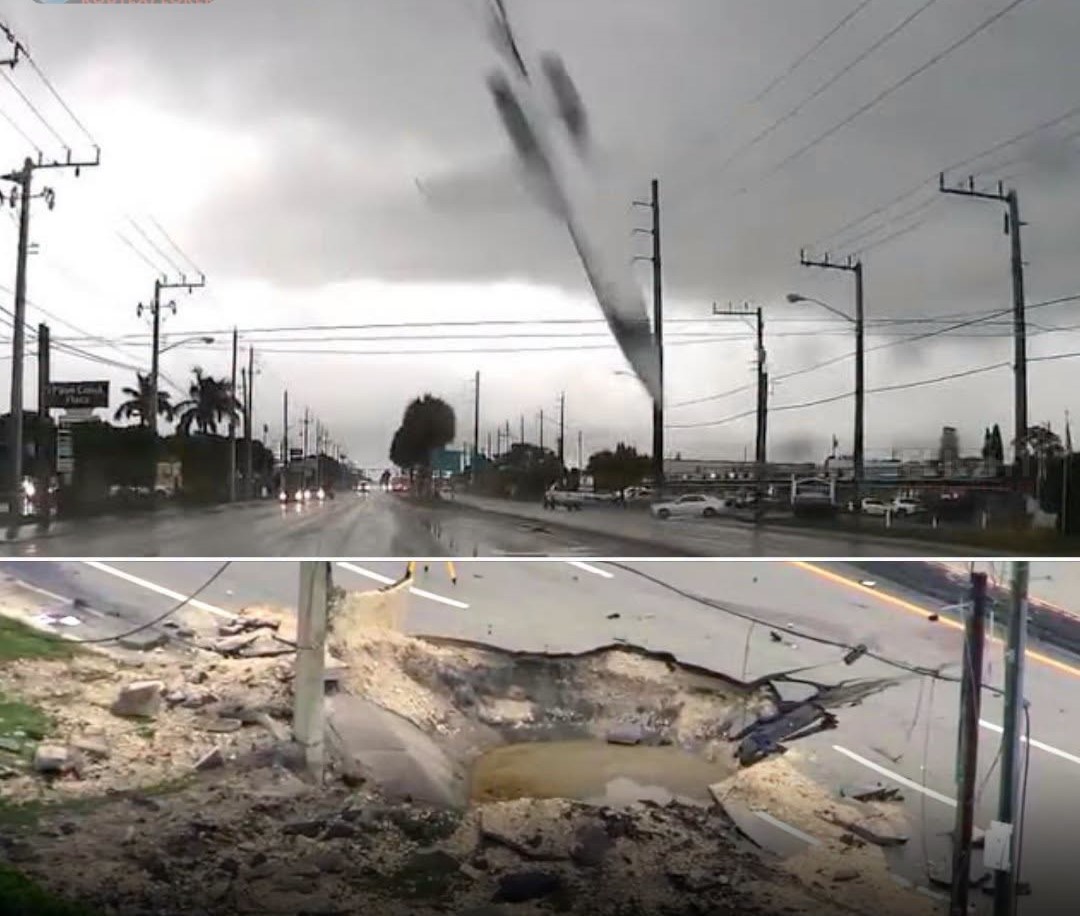
The investigation into the deadly Learjet 60 crash in South Florida has taken a significant turn, with the National Transportation Safety Board (NTSB) revealing evidence that the aircraft may have started breaking apart while still airborne, before crashing and killing all nine people aboard.
During a November 2 briefing, NTSB Board Member Tom Chapman confirmed that investigators had found indications of an in-flight breakup. He said there was evidence that parts of the aircraft may have separated before ground impact, potentially leaving components some distance away from the main wreckage.
The revelation raises critical questions about what happened during the aircraft’s final moments.
The Learjet 60, registration N722BD, was operating a charter flight from Austin, Texas, to North Eleuthera in the Bahamas on November 1, 2026.
At approximately 35,000 feet, the crew reported light clear icing and moderate turbulence. The pilots subsequently encountered precipitation and requested clearance to climb to 37,000 feet.
Less than 30 seconds later, the aircraft entered a rapid descent. The crew declared an emergency, reporting an overspeed condition. The aircraft subsequently experienced an extraordinary descent rate, reportedly reaching approximately 22,000 feet per minute.
Could the aircraft have exceeded its structural limits during this uncontrolled descent?
As an aircraft accelerates beyond its maximum operating speed, aerodynamic forces acting on its wings, fuselage and tail can increase dramatically. At sufficiently high speeds, even relatively small control inputs or atmospheric disturbances can generate dangerous structural loads.
Investigators will need to examine whether the Learjet experienced an overspeed-related structural failure, a loss of control, severe turbulence, icing-related complications or another mechanical problem.
Thunderstorm activity and wind shear are also important areas of investigation. However, there is currently no confirmed evidence that the aircraft penetrated a severe thunderstorm.
Another critical question is whether any major structural component, particularly the horizontal stabilizer or wing assembly, separated before impact. The NTSB has not yet identified the specific components involved or established the sequence of any structural failure.
The distribution of wreckage could provide important clues. If investigators locate aircraft components away from the main impact area, their condition and separation characteristics may help reconstruct the aircraft’s final moments.
The biggest question remains: Did the Learjet first lose control and subsequently break apart under extreme aerodynamic forces, or did an initial structural or mechanical failure trigger the catastrophic descent?
These are two very different accident scenarios, and determining the sequence is essential to identifying the actual cause.
For now, the NTSB has confirmed evidence suggesting a possible in-flight breakup, but the exact mechanism and contributing factors remain unknown.
The investigation will now focus on detailed wreckage examination, flight data, weather conditions, aircraft maintenance history and available cockpit and air traffic control recordings.
The final findings could reveal whether this tragedy was primarily a loss-of-control event, a structural failure or a combination of multiple factors.