

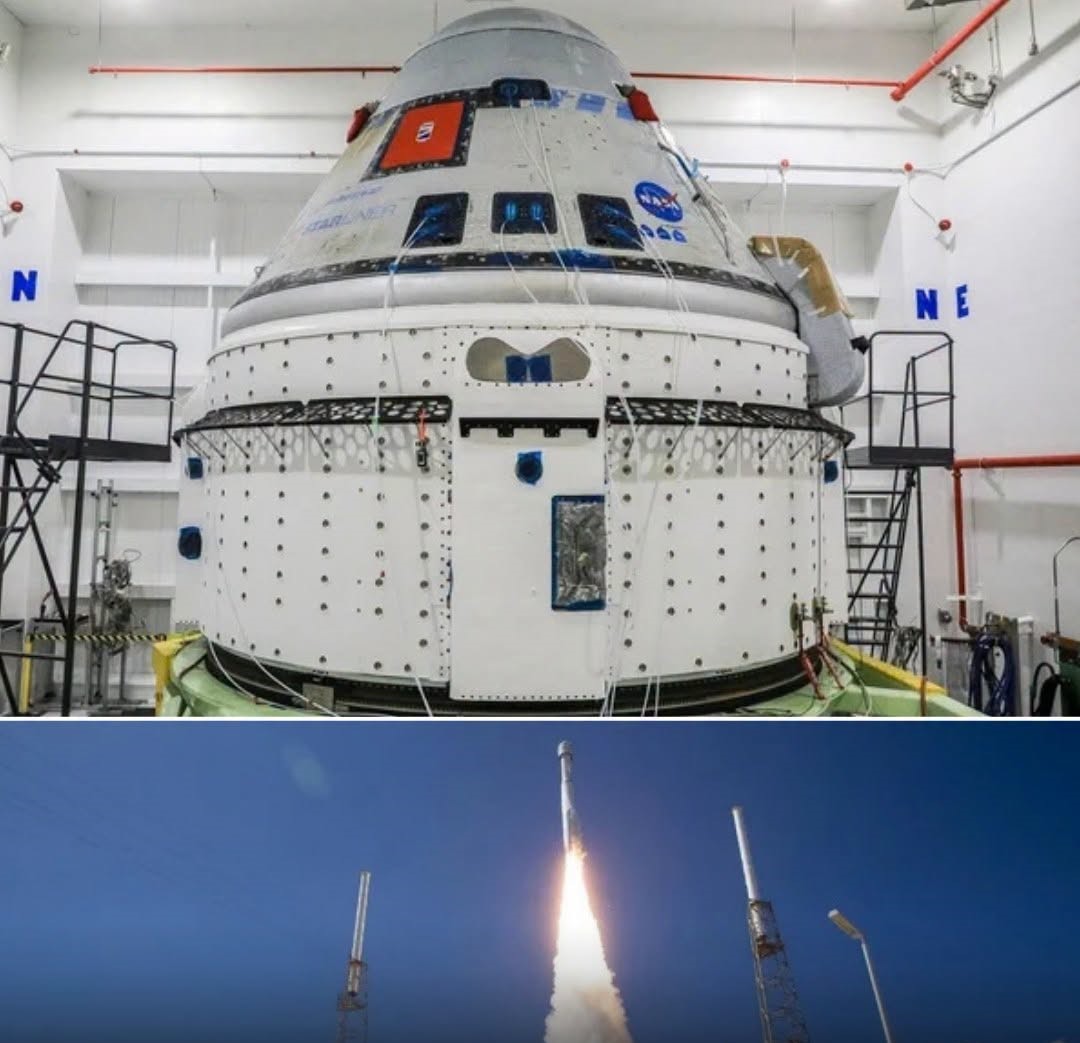
NASA plans to put Boeing’s troubled Starliner back to the test — this time without astronauts aboard.
NASA and Boeing are targeting December 2026 or January 2027 for the uncrewed Starliner-1 mission, designed to test major upgrades introduced after the spacecraft’s troubled 2024 crewed flight.
Astronauts Barry “Butch” Wilmore and Sunita Williams launched aboard Starliner on June 5, 2024, expecting a 10-day mission to the International Space Station. Instead, propulsion-system problems kept them in orbit for 286 days.
During the mission, Starliner experienced multiple helium leaks and thruster failures. Five service-module thrusters failed during rendezvous, while another thruster malfunctioned during the spacecraft’s uncrewed return to Earth.
An independent review board later identified major design and propulsion-system concerns, describing the 2024 problems as a “close call” that endangered the astronauts.
Starliner eventually returned to Earth without its crew in September 2024. Wilmore and Williams remained aboard the ISS and finally returned to Earth aboard SpaceX’s Crew Dragon on March 18, 2025.
Now Boeing is implementing extensive changes, including redesigned propulsion valves, modifications aimed at reducing thruster heating and erosion, upgraded batteries, improved parachutes and a faster flight-data recorder.
The upcoming Starliner-1 mission will rendezvous and dock with the ISS while flight controllers deliberately put the spacecraft’s propulsion and pressurization systems through demanding on-orbit tests.
If the uncrewed test succeeds, NASA and Boeing are targeting a crewed Starliner mission around mid-2028, with veteran astronaut Warren “Woody” Hoburg expected to command it.
NASA says restoring Starliner is important because the agency wants two U.S. crew transportation systems capable of supporting the ISS and future commercial space stations.
The next Starliner flight will therefore be more than another test — it will be a critical demonstration of whether Boeing’s spacecraft can overcome the problems that derailed its first crewed mission.










