

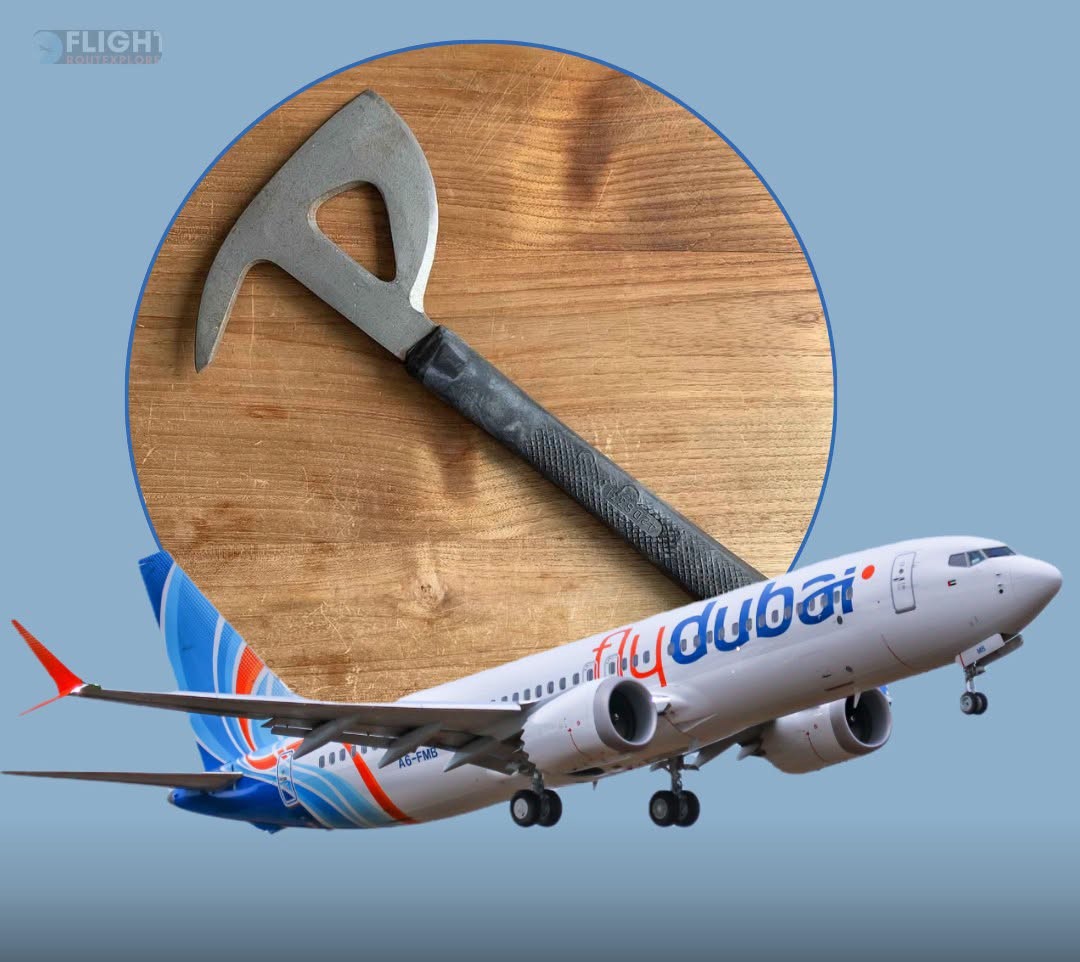
A COCKPIT EMERGENCY TOOL TURNED INTO A WEAPON? Flydubai Flight FZ1073 Co-Pilot Hamam al-Hammami Reportedly Used the Aircraft’s Crash Axe to Attack Captain Smit Machchhar, Raising Serious Questions About Cockpit Security!
A tool designed to save lives during an aircraft emergency may have become a weapon in one of the most alarming reported cockpit incidents involving Flydubai Flight FZ1073.
According to reported details, co-pilot Hamam al-Hammami allegedly used the cockpit’s crash axe, rather than the pocket knife mentioned in earlier rumours, to attack Captain Smit Machchhar aboard the Boeing 737 MAX 8.
But what exactly is a crash axe doing inside an aircraft cockpit?
A crash axe is an essential emergency safety tool carried on many commercial aircraft. It is designed to help pilots and crew deal with emergencies involving fire, smoke and inaccessible areas.
In certain situations, the axe can be used to cut through interior panels, break through obstructions and gain access to concealed areas where fire or damaged equipment may be present. Depending on the aircraft’s design, it can also help crews overcome certain obstacles during an emergency.
However, the same tool designed to protect an aircraft can become dangerous if deliberately misused.
The reported Flydubai incident highlights a disturbing aviation security challenge. Cockpit emergency equipment is readily accessible to authorized flight crew because it may be needed immediately during a crisis. Yet that accessibility also creates a potential risk if a crew member turns against another.
Removing such equipment is not a simple solution. A crash axe serves a genuine safety purpose, and other objects aboard an aircraft could also potentially be misused.
Instead, the incident raises serious questions about crew screening, cockpit security, emergency equipment placement and procedures to handle threats originating from within the flight deck.
Captain Smit Machchhar reportedly fought to regain control and open the cockpit door, allowing others to intervene. The aircraft eventually diverted to Saudi Arabia, where the incident was brought to an end.
A tool designed to help crews survive an aircraft emergency had reportedly become part of the emergency itself.
This incident raises a chilling question: How can airlines protect passengers from threats not only outside the cockpit, but also from the person sitting beside the captain?










