

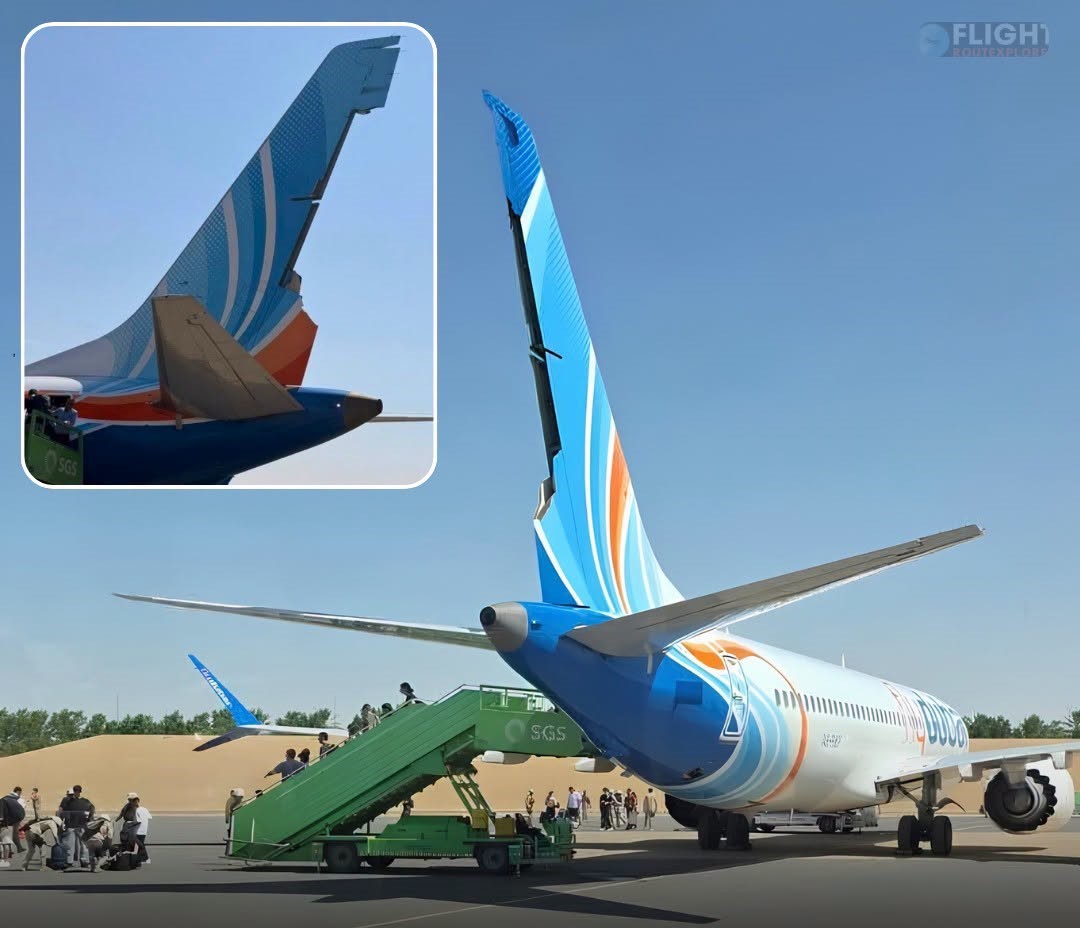
Israel-bound Flydubai Flight FZ1073 exposed the enormous aerodynamic forces an aircraft can experience during an extreme dive, leaving the Boeing 737 MAX 8 with severe damage to its vertical stabilizer and rudder.
On September 30, 2026, the aircraft was reportedly cruising at approximately 34,000 feet when the co-pilot allegedly attacked the captain and attempted to force the aircraft into a dive.
Flight-tracking reports indicated that the aircraft lost approximately 14,000 feet in under 30 seconds, corresponding to an average descent rate of around 29,000 feet per minute. Its speed reportedly approached 600 knots during the plunge.
The most alarming evidence of the aircraft’s extreme manoeuvre was the damage to its vertical stabilizer, with a portion of the rudder reportedly torn away.
The rudder is a critical flight-control surface mounted on the vertical stabilizer. It controls yaw, helping the aircraft maintain directional stability and allowing pilots to coordinate turns and counter unwanted yawing movements.
At very high airspeeds, even relatively small rudder deflections can generate enormous aerodynamic loads. Abrupt control inputs, rapid changes in direction and severe sideslip can further increase stress on the tail assembly.
A damaged rudder can significantly reduce directional control. If the damage extends to the vertical stabilizer or its supporting structure, the aircraft could also lose some of its essential directional stability.
The exact aerodynamic load, G-forces and speed at which the rudder was damaged have not been established in publicly confirmed investigation findings. The visible damage alone cannot establish whether the rudder failed because of excessive deflection, aerodynamic overload, structural damage or a combination of factors.
The consequences could have been far worse had the dive continued. Increasing airspeed and aerodynamic pressure could have subjected the tail to even greater loads, potentially causing more extensive structural damage. A major failure of the vertical stabilizer could have resulted in a severe loss of directional stability and control, potentially making the aircraft impossible to recover.
The aircraft could also have exceeded its structural speed limits or encountered loads beyond its design envelope. In an extreme scenario, structural breakup or an unrecoverable loss of control could have led to the loss of everyone on board.
Inside the cabin, passengers reportedly experienced violent drops, panic and uncertainty as the aircraft descended. The emergency was eventually brought under control after passengers intervened against the attacker and other pilots assisted the crew.
The aircraft ultimately landed safely at Tabuk Airport in Saudi Arabia.
The damaged rudder tells a critical part of this incident’s story: an aircraft can survive an extreme manoeuvre yet sustain damage that raises serious questions about how close it came to losing essential flight-control capability.










