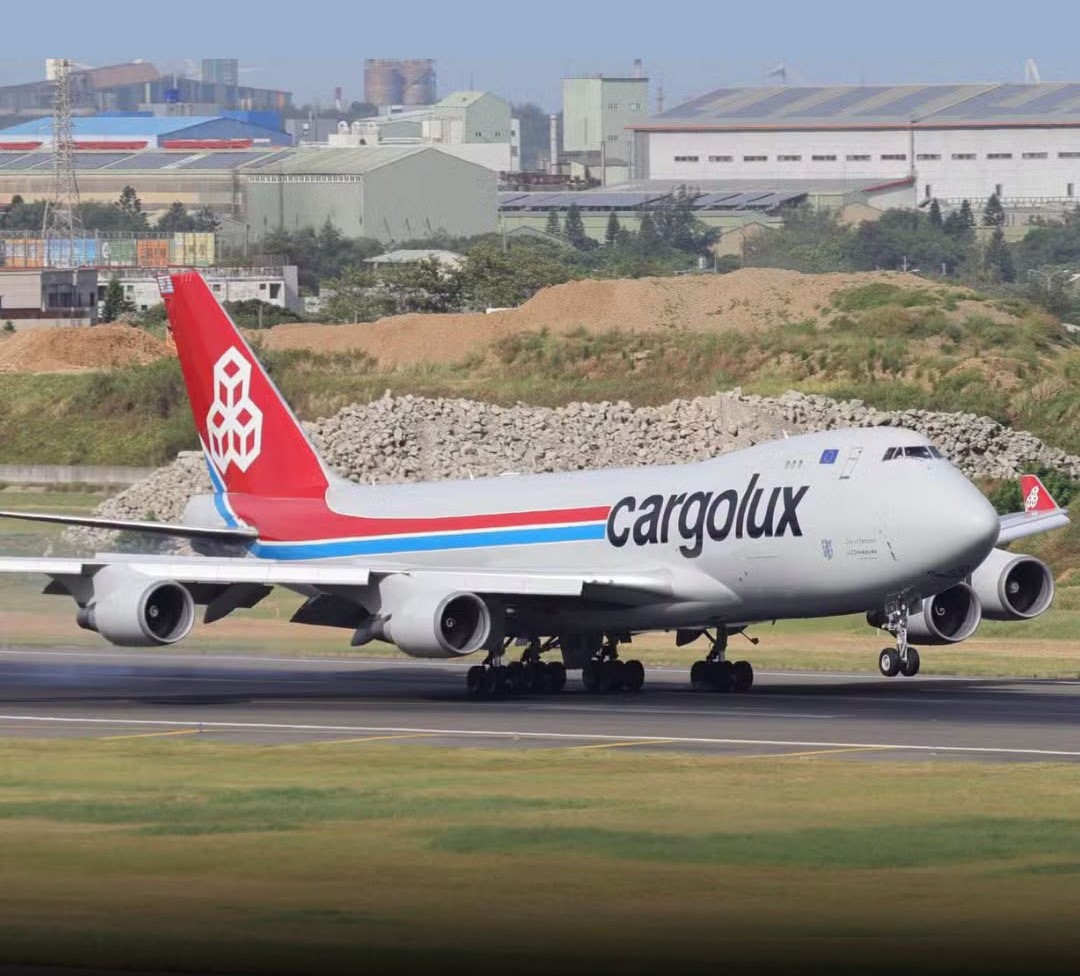
A Cargolux Boeing 747-400 freighter operating Flight CV-6374 was forced to make an emergency return to Hartsfield-Jackson Atlanta International Airport on July 23 after the crew received a main deck cargo fire indication while climbing out of the airport.
The aircraft, registered LX-OCV, had departed Atlanta for Luxembourg with two crew members on board. As the jumbo freighter climbed through approximately Flight Level 220 (22,000 feet), the pilots reported a fire indication on the aircraft’s main cargo deck. Following standard emergency procedures, the crew immediately halted the climb and declared their intention to return to Atlanta.
The Boeing 747 safely landed on Runway 26L around 40 minutes after departure. Instead of taxiing directly to the gate, the aircraft stopped on a parallel taxiway where emergency response teams surrounded the freighter to assess the situation.
Fortunately, firefighters found no visible signs of fire after inspecting the aircraft. The crew also informed air traffic control that an evacuation was not necessary, indicating the situation remained under control throughout the return.
Because the aircraft landed significantly heavier than normal due to the emergency, the crew requested firefighters inspect the brakes for possible overheating caused by the overweight landing. As a precaution, all four engines were shut down to allow emergency personnel to safely access the landing gear and braking system.
After approximately 30 minutes of inspections, no fire or brake-related issues requiring further emergency action were found. The crew restarted the engines and taxied the aircraft back to the apron.
The aircraft remained on the ground in Atlanta several hours after the incident, suggesting the freighter underwent additional technical inspections before being considered for further operations.
Although no actual fire was discovered, cargo fire warnings are treated as one of the most serious emergencies in aviation. On freighter aircraft like the Boeing 747-400F, the main deck carries large volumes of cargo, making rapid detection and immediate action critical. Flight crews are trained to assume every fire warning is genuine until proven otherwise, as smoke or fire in the cargo compartment can escalate rapidly if left unchecked.
This incident highlights the effectiveness of aviation safety procedures. From the immediate decision to return, the coordinated response by air traffic control and airport emergency services, to the careful inspection following an overweight landing, every step was carried out exactly as designed to ensure the safety of the crew and aircraft.
Thankfully, the event concluded without injuries or damage, demonstrating once again that in aviation, treating every warning seriously is the key to preventing accidents.