
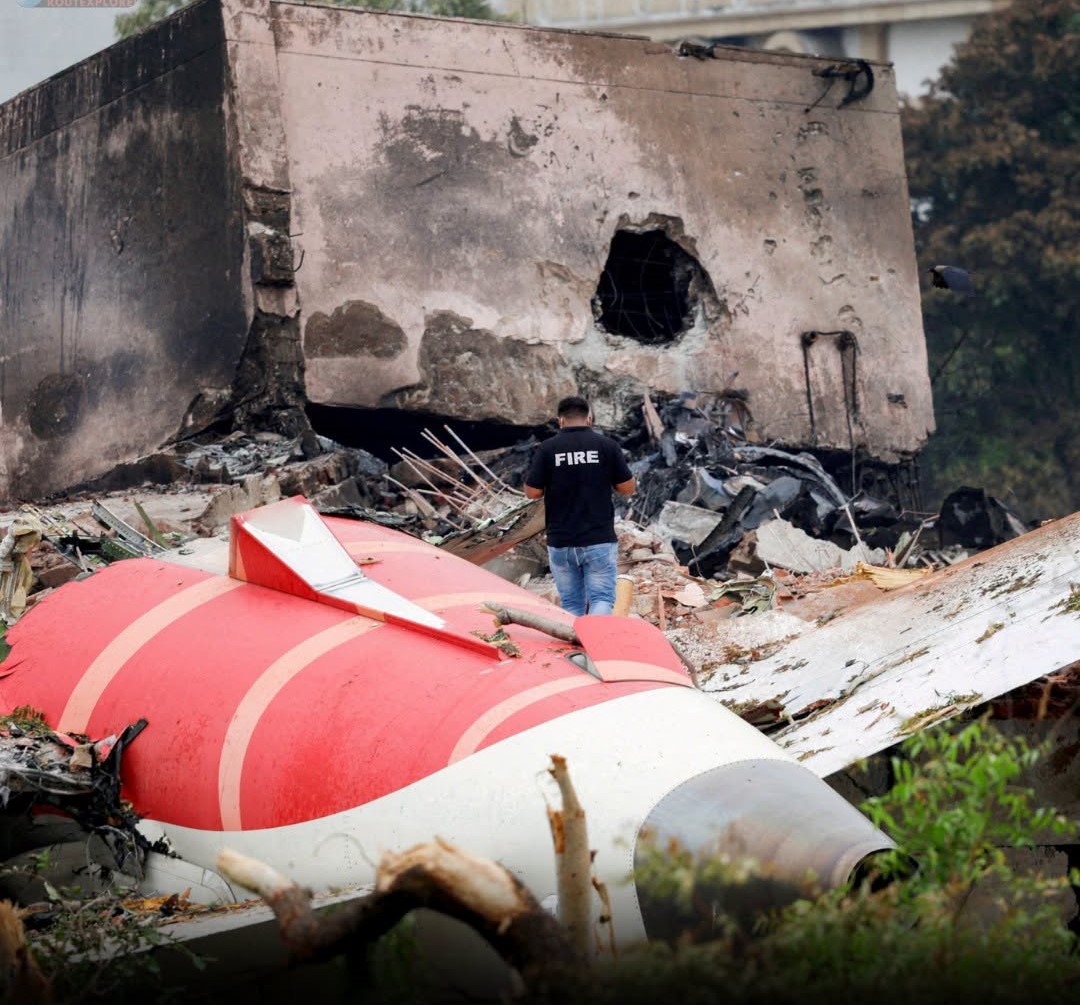
The Aircraft Accident Investigation Board (AAIB) has told the Supreme Court that cockpit voice recordings and airborne image recordings from the June 12, 2025 Air India Flight AI171 crash in Ahmedabad cannot be disclosed to any external committee or released to the public.
In an affidavit filed before the Supreme Court, the AAIB said there is an “absolute statutory prohibition” on sharing such recordings under Rule 17(1) and Rule 17(5), read with Schedule C of the Aircraft (Investigation of Accidents and Incidents) Rules, 2025.
The affidavit was filed in response to a writ petition by Pushkar Raj Sabharwal, father of late Commander Sumeet Sabharwal, one of the pilots of the ill-fated flight.
According to the AAIB, strict confidentiality is essential to protect the independence of aviation accident investigations and preserve the “no-blame” safety investigation process.
The board argued that if witnesses and people involved in aircraft operations believe their statements could later be disclosed in litigation or public proceedings, they may become guarded or unwilling to cooperate. This, the AAIB said, could undermine the very purpose of a safety investigation.
The AAIB further stated that any legal balancing test to consider disclosure can only be carried out by the competent authority — the Central Government — and no such determination has been made in the AI171 case.
It also noted that the final investigation report cannot disclose the names of persons involved, reflecting the intent of aviation safety investigations to prevent future accidents rather than assign individual blame.
Addressing concerns over interactions with the families of deceased crew members, the AAIB clarified that such meetings are voluntary, sensitive and non-adversarial. Investigators may seek factual background information relating to health, rest patterns and recent activities solely to understand potential safety factors and develop measures aimed at preventing similar tragedies.
The AAIB also maintained that the existing investigation framework under the Chicago Convention, ICAO Annex 13 and Indian aviation rules provides a complete mechanism for investigating aircraft accidents. According to the board, there is no scope for a parallel, judicially monitored investigation as sought in the petition.
Air India Flight AI171, a Boeing 787-8 bound from Ahmedabad, India, to London Gatwick, United Kingdom, crashed shortly after takeoff on June 12, 2025, striking a medical hostel complex.
The disaster claimed 265 lives. Only one person aboard the aircraft survived.
The Supreme Court proceedings now place a major focus on a critical aviation safety question: how should investigators balance transparency, the interests of victims’ families and the strict confidentiality protections surrounding cockpit recordings?