
A cargo aircraft suffered substantial damage after it bounced twice during landing at East Midlands Airport in Castle Donington, Leicestershire, according to a newly released report by the UK Air Accidents Investigation Branch (AAIB).
The incident occurred at 20:55 GMT on November 14, 2025, when the aircraft arrived from Guernsey on a scheduled cargo flight carrying 3,300 kg of fuel and 3,858 kg of freight. Only the pilot and co-pilot were on board, and neither was injured.
The pilots described the conditions as “far from ideal,” although they considered them within safe operating limits. As the aircraft approached the runway, both pilots noticed it appeared to be floating in ground effect.
The commander reduced power, but the aircraft unexpectedly remained airborne before pitching down sharply. The sudden movement caught the pilot completely by surprise, leaving only one or two seconds to react.
The aircraft struck the runway heavily on its nose landing gear and bounced back into the air. The commander raised the nose, but the aircraft bounced for a second time.
After the second bounce, the commander decided not to add power, fearing that the aircraft’s nose-down attitude could cause it to accelerate into the runway.
The aircraft touched down for a third time, by which point the crew realized the nose landing gear had been damaged. They brought the aircraft to a stop on the runway.
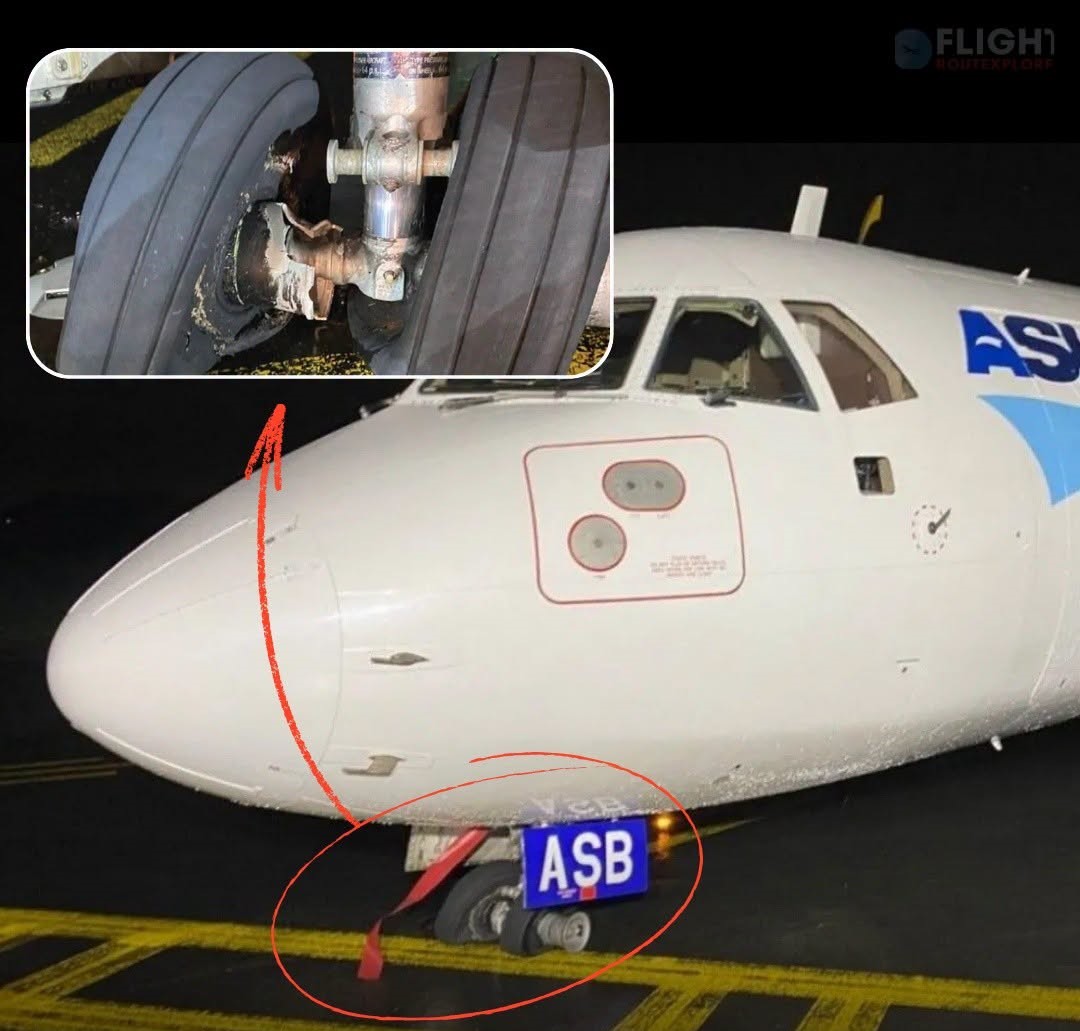
Inspection revealed extensive damage. The nose landing gear leg, drag brace, right main landing gear leg and shock absorber had exceeded their design load capacities and required replacement. The left main landing gear shock absorber also had to be removed and inspected.
The AAIB concluded that turbulent airflow may have caused the unexpected change in the aircraft’s pitch and contributed to the sudden drop toward the runway.
Investigators also highlighted the human factors involved. The entire sequence—from the initial pitch-down to the final touchdown—lasted only about nine seconds. The AAIB said the unexpected pitch-down and bouncing may have triggered a physiological and psychological response that affected the commander’s decision-making during the critical landing sequence.
No injuries were reported, but the aircraft sustained substantial damage and required replacement wheels before it could be towed away.