

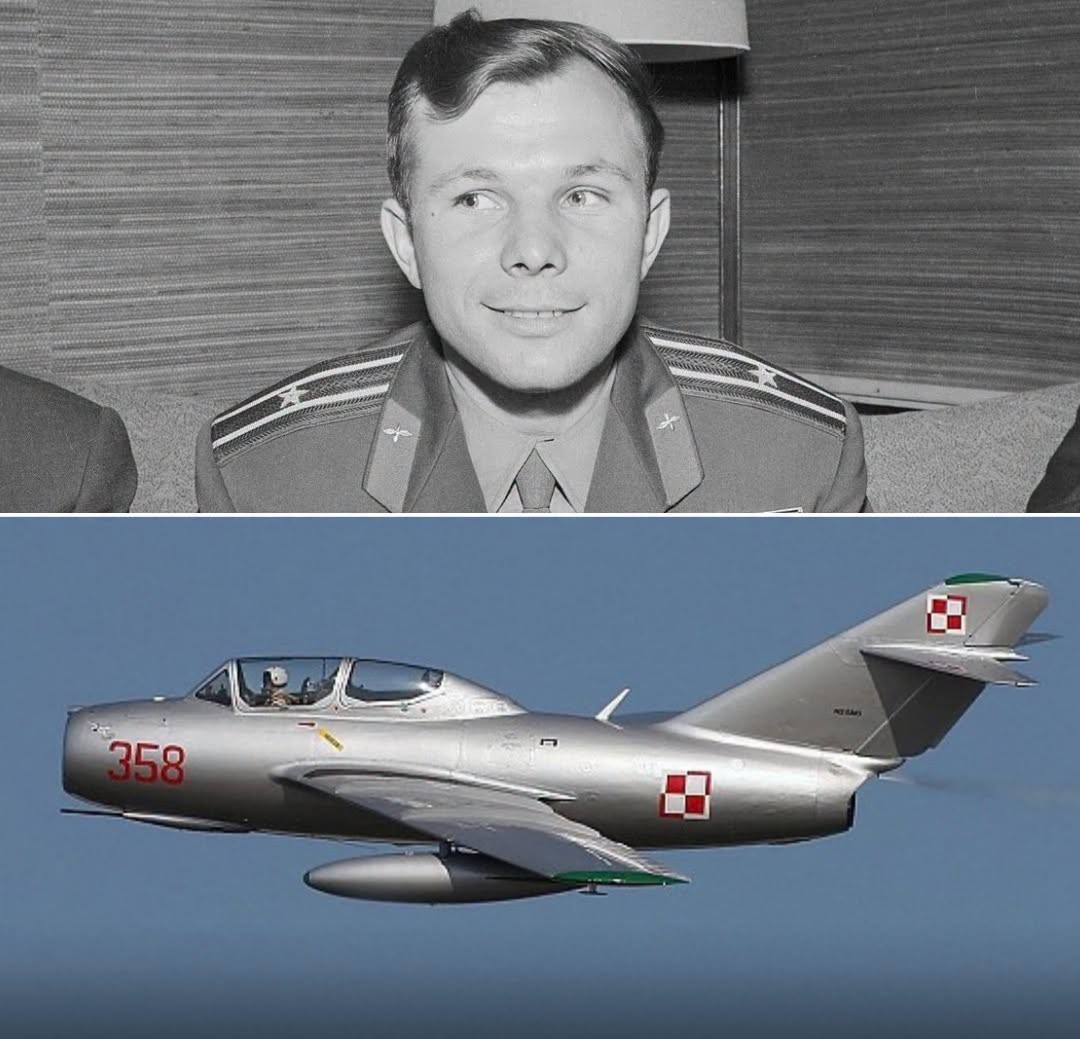
On March 27, 1968, Yuri Gagarin—the first human to travel into space—climbed into a two-seat MiG-15UTI at Chkalovsky Air Base near Moscow for what was supposed to be a routine training flight.
Minutes later, the aircraft crashed into a forest near Kirzhach. Gagarin, 34, and his instructor, Vladimir Seryogin, were killed instantly.
Gagarin had become a global icon after completing the historic Vostok 1 mission in 1961. Yet seven years later, he was back flying military aircraft and rebuilding his experience as a pilot.
Seryogin was an exceptionally experienced aviator—a World War II combat pilot, Hero of the Soviet Union, test pilot and senior figure involved in preparing cosmonauts for flight.
So what caused the crash?
The investigation produced several explanations.
A declassified KGB report blamed several possible contributing factors, including deteriorating weather, outdated weather information provided by air-traffic control and the possibility that the MiG entered a spin after encountering another aircraft or a bird.
Documents released in 2011 showed that the original official investigation believed the pilots may have made a sharp manoeuvre to avoid a weather balloon or cloud, placing the aircraft into a dangerous flight regime.
Other theories followed. One suggested an open cabin air vent may have caused oxygen-related problems. Another proposed that the crew descended rapidly after discovering the problem and became incapacitated.
Perhaps the most famous explanation came from cosmonaut Alexei Leonov, the first human to perform a spacewalk and a member of the commission investigating the crash.
Leonov later said he believed a Sukhoi Su-15 fighter had flown dangerously close to Gagarin’s MiG-15UTI in poor weather. According to his account, the fighter’s supersonic passage and wake may have sent the trainer into an unrecoverable spin.
That explanation, however, was never officially confirmed.
The Soviet Union held a state funeral for both men, and their ashes were placed within the Kremlin walls. Decades later, crews preparing for missions to the International Space Station continued the tradition of laying flowers there.
More than half a century later, the exact sequence of events inside Gagarin’s cockpit remains uncertain.
The man who became the first human in space ultimately lost his life not during a space mission—but during a routine training flight in a small Soviet jet.










