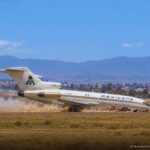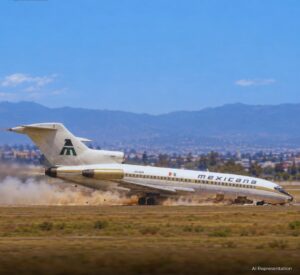

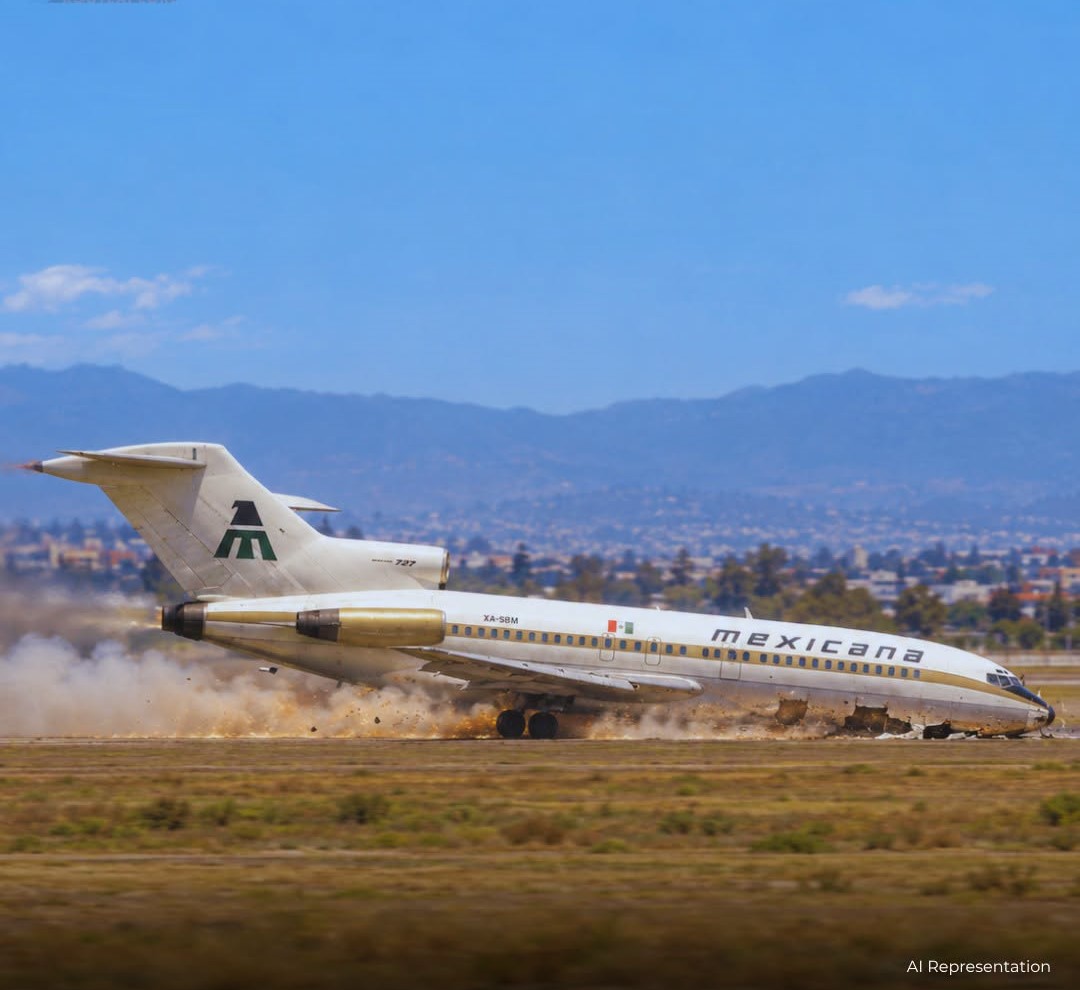
On September 21, 1969, Mexicana de Aviación Flight 801 was completing a scheduled international journey from Chicago O’Hare International Airport to Mexico City International Airport.
The aircraft was a Boeing 727-64 registered XA-SEJ and carried 111 passengers and seven crew members. Many of the passengers were American tourists traveling to Mexico City or Acapulco.
As the Boeing 727 approached Mexico City in the late afternoon, the crew was cleared for an instrument landing approach to Runway 23L. The aircraft was configured for landing, with its landing gear down, flaps extended and leading-edge slats deployed. There was no indication that the crew was dealing with a major emergency.
At approximately 5:45 p.m., however, the aircraft suddenly lost altitude and struck the ground short of the runway. The Boeing 727 became airborne again before its landing gear and forward fuselage struck a railway embankment.
It then crashed into a swampy area, breaking into three major sections. One engine separated from the aircraft, while the cockpit and forward section came to rest away from the main wreckage. There was no major post-crash fire.
The violent breakup killed 27 of the 118 people aboard, including all three pilots and five flight attendants. Ninety-one people survived, although many were injured. Rescue operations were complicated by the muddy and waterlogged terrain surrounding the wreckage.
Boats were used to reach parts of the crash site, while rescuers and local residents worked to free trapped survivors. Fifty-three people were hospitalized, with five suffering serious injuries.
The investigation soon encountered a major obstacle: critical flight-recording evidence was unavailable. The aircraft’s flight data recorder had been improperly installed only two days before the crash and did not provide usable information.
Even more significantly, the cockpit voice recorder had been removed during the same maintenance work and had not been replaced.
Investigators examined the wreckage, aircraft configuration and circumstances of the approach, but they could not establish a definitive mechanical failure, crew error or another specific cause.
Without usable flight-recording evidence, investigators were unable to reconstruct what was happening inside the cockpit during the crucial final seconds.
The official investigation therefore left the precise cause undetermined. The sudden descent remained unexplained, despite extensive examination of the aircraft and crash site.
Mexicana Flight 801 became a particularly striking example of how missing flight-recorder evidence can prevent investigators from solving an aviation disaster. The Boeing 727 appeared to be conducting a normal approach when it unexpectedly descended into terrain, leaving investigators without enough evidence to determine exactly why the aircraft lost altitude.
More than five decades later, the crash remains one of aviation’s unresolved mysteries, remembered not only for the 27 lives lost but also for the crucial evidence that was unavailable when investigators needed it most.