
On This Day In 2008: A Boeing 737 Flew Into a Volcano After Missing Its Approach Turn by Miles
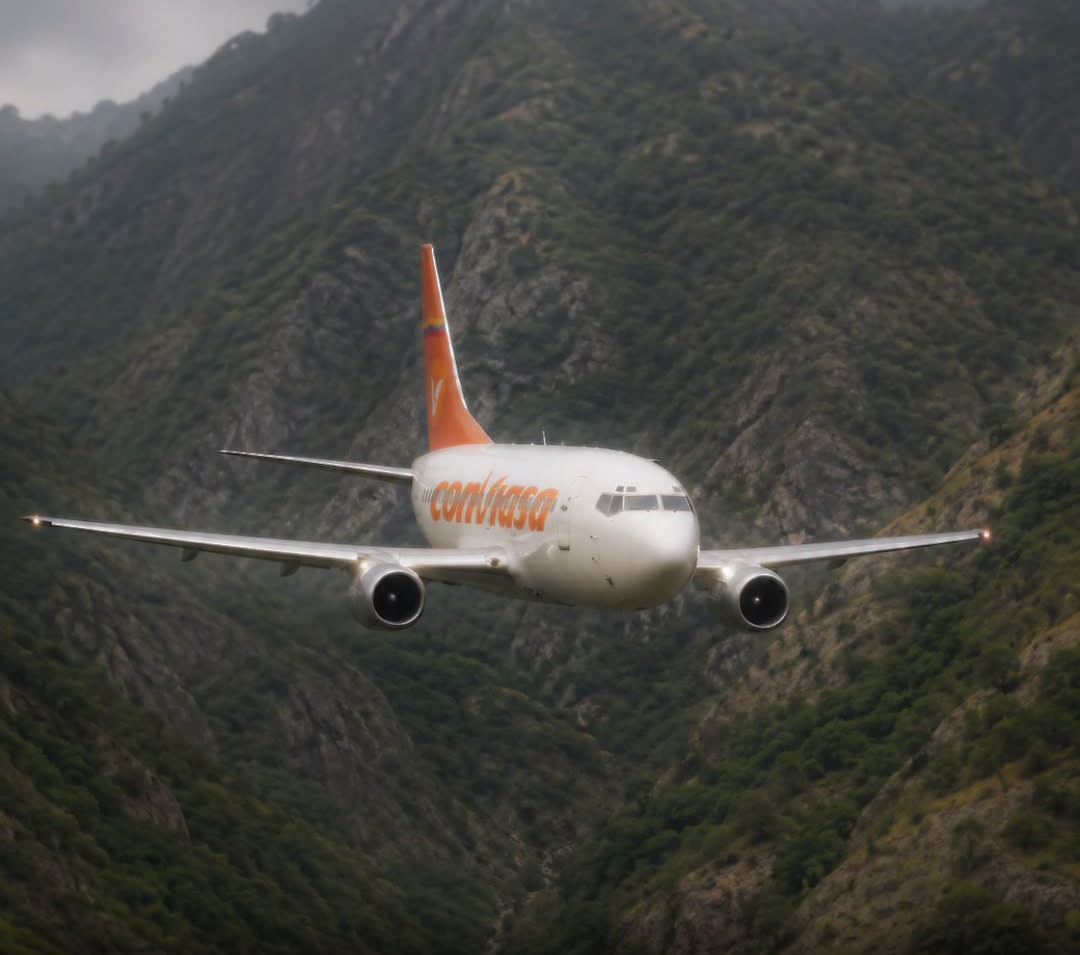
On August 30, 2008, a Conviasa Boeing 737-291 Advanced was being flown on what should have been a routine ferry flight from Maiquetía, Venezuela, to Latacunga, Ecuador. Instead, the aircraft disappeared while approaching its destination and crashed into the side of Ecuador’s Illiniza Volcano. What made the accident particularly troubling was that the aircraft was not suffering from an engine failure or an obvious mechanical emergency. It was flown into high mountainous terrain after the crew deviated outside the protected area of the published approach procedure. All three people aboard were killed.
The aircraft, registered YV102T, was a Boeing 737-291 Advanced powered by two Pratt & Whitney JT8D-17A engines. It had originally been delivered to Frontier Airlines in 1978 and subsequently operated by United Airlines and Atlantic Airlines de Honduras before being acquired by Conviasa. At the time of the accident, the aircraft had been stored in Caracas and was being ferried to Latacunga as part of its transfer to a new operator. There were no passengers on board; the occupants were three crew members.
The flight approached Latacunga in the evening. At approximately 20:51 local time, the crew was cleared to descend to Flight Level 180, and air traffic control advised them to expect the “Descenso 4” procedure for Runway 18. The approach was important because Latacunga lies in a mountainous region where following the published procedure was critical to keeping aircraft within a protected corridor clear of surrounding terrain.
The crew initially had another approach procedure in mind and had briefed a different descent. They then had to adapt to the “Descenso 4” procedure, which required a procedure turn. According to the investigation material summarized by aviation accident sources, the change caught the crew by surprise and they were already descending when they worked through the revised procedure.
At about 20:53, the aircraft reported that it was approximately 12 miles from the airport. The controller cleared it to descend further, to Flight Level 150. Roughly two minutes later, the crew reported passing the Latacunga VOR, known as LTV. They were then cleared to descend to Flight Level 130 and carry out the required procedure turn.
This was the point at which the flight began to depart from the protected approach path.
The aircraft passed the VOR at approximately 210 knots and was still in a clean configuration, whereas the procedure called for a slower and more appropriately configured aircraft, including Flaps 5. During the turn, the Boeing accelerated to around 225 knots while maintaining a bank angle of only about 22 degrees. The combination of excessive speed, insufficient bank angle and the aircraft’s configuration meant that it could not complete the turn within the prescribed area. A significant tailwind further contributed to the aircraft being carried beyond the intended track.
Instead of remaining within approximately four nautical miles of the VOR as required by the protected procedure, the aircraft reportedly reached about seven nautical miles west of the VOR. That seemingly small navigation error was catastrophic because the aircraft was now heading toward terrain that the published approach procedure was specifically designed to avoid.
The crew apparently did not fully appreciate how far they had strayed from the protected approach corridor. They were operating in unfamiliar mountainous terrain, and the investigation later identified the crew’s lack of familiarity with the area surrounding the approach path as an important contributing factor.
Then the Ground Proximity Warning System began sounding.
The GPWS warnings continued for approximately 22 seconds. The crew recognized the danger and attempted to climb, applying high engine power in an effort to escape the terrain. But by then the aircraft was already dangerously close to the mountainside, and there was insufficient altitude and time to recover.
At approximately 21:03 local time, the Boeing struck the slopes of Illiniza Volcano at an elevation of about 13,100 feet, or approximately 3,992 metres. The aircraft was destroyed and all three occupants were killed. The wreckage was located in the mountainous area near Toacaso. There were no survivors and no passengers aboard.
The accident was a classic example of controlled flight into terrain, or CFIT. The aircraft was apparently capable of flying, both engines were operating, and the crew had a functioning terrain-warning system. The tragedy was that the airplane was inadvertently flown into terrain because the flight path, configuration and altitude had become incompatible with the surrounding geography.
The investigation was conducted by Ecuador’s Dirección General de Aviación Civil, or DGAC. It took 622 days, with the final report released on May 14, 2010. Investigators did not conclude that a mechanical failure caused the crash. Instead, they identified the crew’s failure to follow the technical requirements of the published approach as the probable cause.
The official conclusion was that the flight crew failed to observe the required procedures governing the initial turn of Instrument Approach Procedure No. 4 for Latacunga. Specifically, the aircraft’s configuration, speed and bank angle were not maintained as required. This caused the aircraft to leave the protected area of the published procedure and enter high-elevation mountainous terrain.
The investigation also uncovered important organizational weaknesses. The crew was unfamiliar with the terrain surrounding the approach path, while the airline lacked adequate documentation and procedures governing flights to non-scheduled or special airports. That was particularly significant because this was not an ordinary scheduled airline arrival into a familiar airport. It was a ferry flight into a challenging high-altitude environment.
The accident therefore was not simply a case of an airplane being in the wrong place. A chain of circumstances placed it there: the crew’s initial preparation for a different procedure, the change to the required approach, the high speed, inadequate bank angle, late configuration, unfamiliarity with the surrounding terrain and the lack of specific company procedures for special-airport operations.
One of the most haunting details is that the aircraft’s GPWS did warn the crew. The system reportedly sounded for about 22 seconds before impact, giving the pilots a final indication that they were dangerously close to terrain. They attempted to climb, but the warning came too late for the aircraft to escape the mountainside.
The crash demonstrated why instrument approaches in mountainous regions demand strict adherence to published tracks, speeds and altitudes. A deviation that might be recoverable over flat terrain can become fatal within seconds when an aircraft is surrounded by mountains rising thousands of feet above the approach corridor.
The final investigation consequently placed the primary responsibility on the flight crew’s failure to comply with the prescribed approach procedure, while also pointing to organizational shortcomings involving terrain familiarity and airline documentation. The Conviasa Boeing 737 had not suffered a mysterious disappearance or an unexplained mechanical failure. It had flown beyond the safety boundaries built into the approach procedure, and by the time the terrain warning sounded, there was simply not enough room left to recover.
On August 30, 2008, a ferry flight carrying only three people ended on the slopes of Illiniza Volcano. The accident remains a stark example of how, in mountainous aviation, speed, configuration, navigation and situational awareness can converge into a disaster within minutes—and how a functioning warning system cannot always save an aircraft once a crew has unknowingly crossed the limits of a protected approach path.