

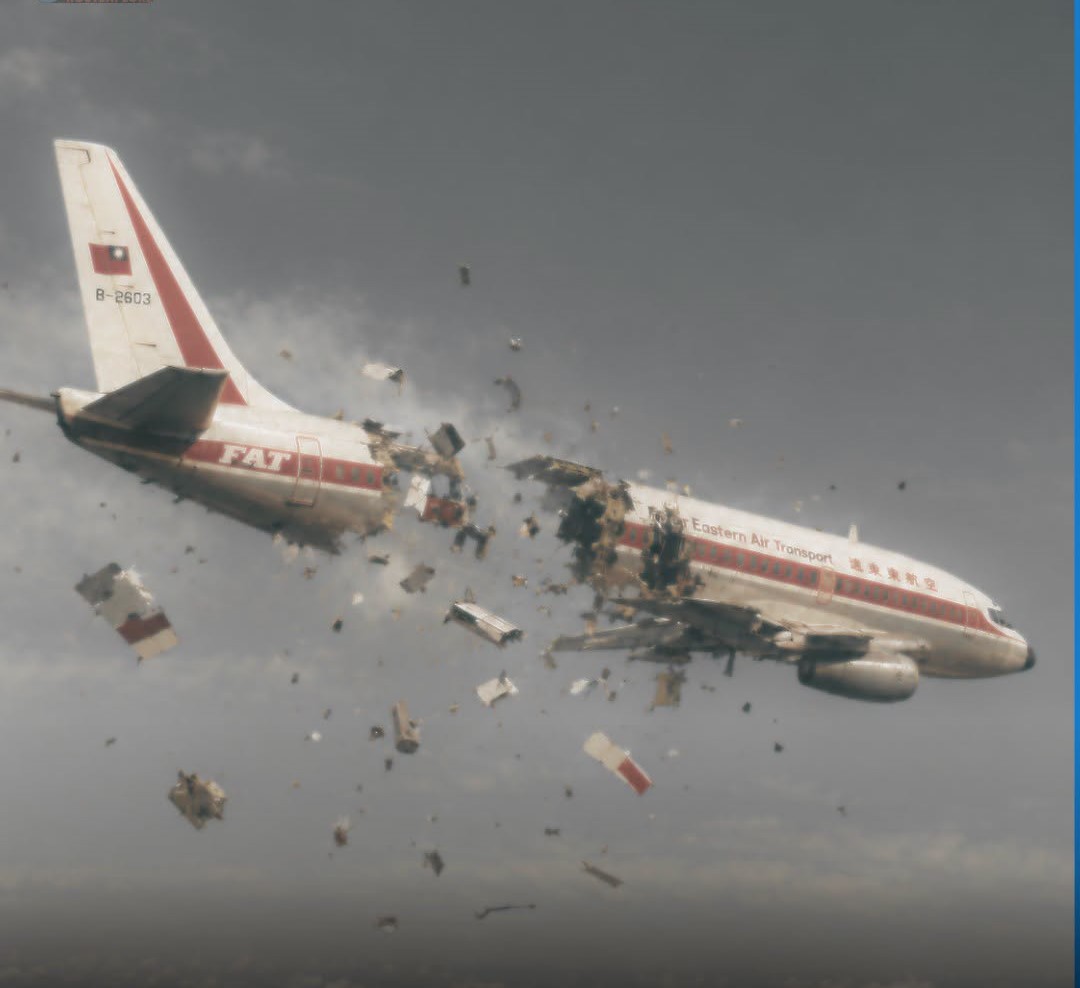
On August 22, 1981, Far Eastern Air Transport Flight 103 was flying from Taipei Songshan Airport to Kaohsiung in Taiwan when a Boeing 737-222 suddenly broke apart in midair. All 110 people aboard were killed. What made the disaster especially disturbing was that the same aircraft had already suffered cabin-pressure problems earlier that day — and had even returned to Taipei after another pressure loss only minutes into a previous flight.
The aircraft was Boeing 737-222 registered B-2603, a relatively old 737 that had accumulated 33,313 landings by the time of the crash. It had entered service in 1969 and had subsequently been operated by Far Eastern Air Transport on domestic routes in Taiwan. The enormous number of pressurization cycles became an important part of the later investigation.
On the morning of August 22, B-2603 departed Taipei Songshan Airport on an earlier flight. About 10 minutes after takeoff, the crew experienced a loss of cabin pressure and decided to return to Taipei. The aircraft landed safely and was inspected. Maintenance work was carried out, and the airplane was subsequently released for another flight.
The aircraft was then prepared for Flight 103. This time, it was scheduled to fly from Taipei to Kaohsiung. After takeoff, everything initially appeared normal. There was no indication that the aircraft was about to suffer a catastrophic structural failure.
Approximately 14 minutes after departure, while the Boeing 737 was cruising at roughly 22,000 feet, radar contact with the aircraft was lost. The crew did not transmit a distress call. The airplane suffered a sudden explosive decompression and began to disintegrate while still airborne.
The failure originated in the lower portion of the fuselage. The pressure difference between the highly pressurized cabin and the surrounding atmosphere placed enormous stress on the already weakened structure. Investigators later determined that extensive corrosion had penetrated the fuselage skin in numerous locations. Pits, holes and cracks had developed, while thinning of the aluminum structure further reduced its strength…