
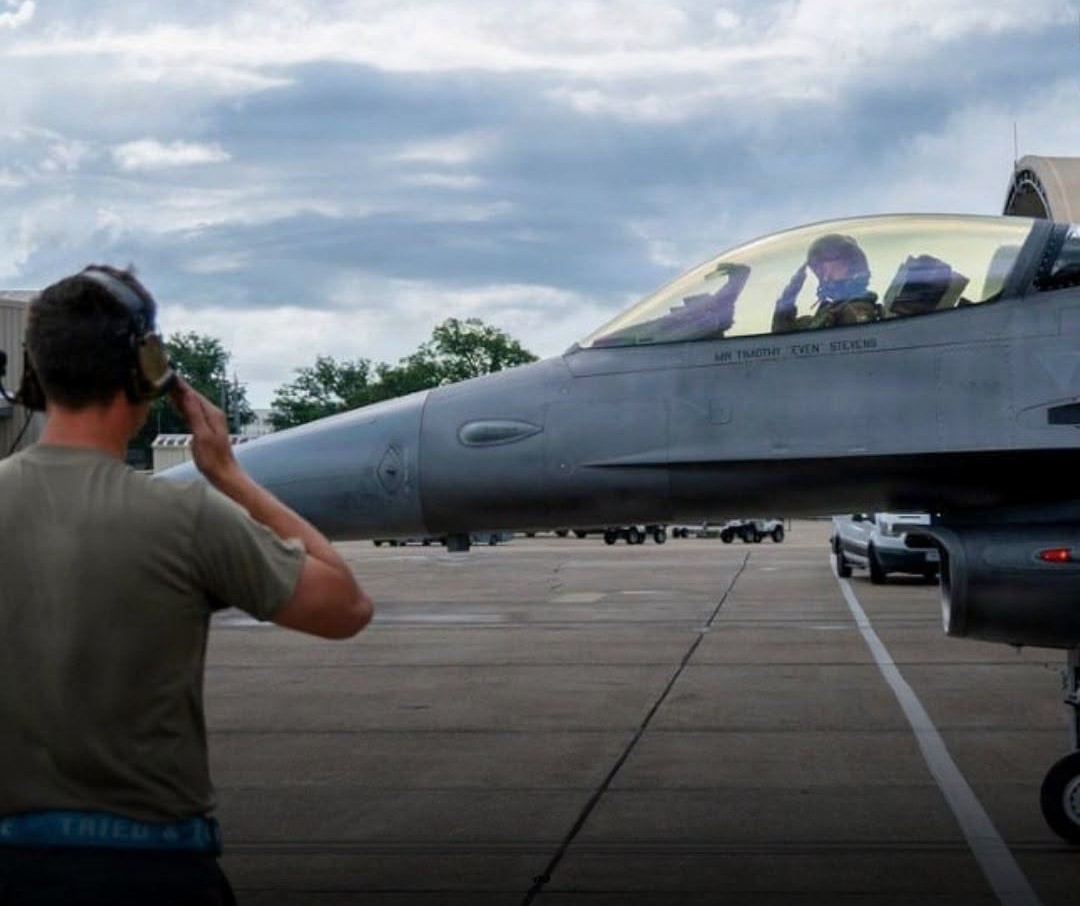
The U.S. Air Force has officially entered a new era of military aviation by beginning piloted flights and in-air autonomy testing of AI-enabled F-16 Fighting Falcons under the VENOM (Viper Experimentation and Next-generation Operations Model) program.
The modified F-16s are equipped with advanced hardware, software, and instrumentation that allow artificial intelligence agents to fly the aircraft while experienced test pilots remain in the cockpit to monitor the missions and ensure safety. After completing verification flights in June, the program has now moved into the next phase, where AI is taking control of the aircraft during real flight tests.
One of the AI-equipped F-16s recently completed a successful sortie at Eglin Air Force Base, Florida, marking a major milestone in the U.S. Air Force’s effort to integrate autonomous technology into future combat operations.
The VENOM program is a joint initiative between the U.S. Air Force and DARPA under the Air Combat Evolution program. It aims to accelerate the development of AI-powered combat aircraft that could eventually operate alongside or independently of human pilots in future conflicts.
Before reaching this stage, the aircraft underwent months of ground testing, engine evaluations, system integration, and hundreds of hours of simulations dating back to 2024.
Test pilot Tim Stevens called the first flights “a monumental milestone,” saying they represent years of engineering, aircraft modifications, and planning by hundreds of personnel.
The successful AI flights are another significant step toward the future of autonomous military aviation, where artificial intelligence could transform the way air combat missions are planned and executed.