
D-Day Air Operations: The Greatest Air Armada Ever Assembled
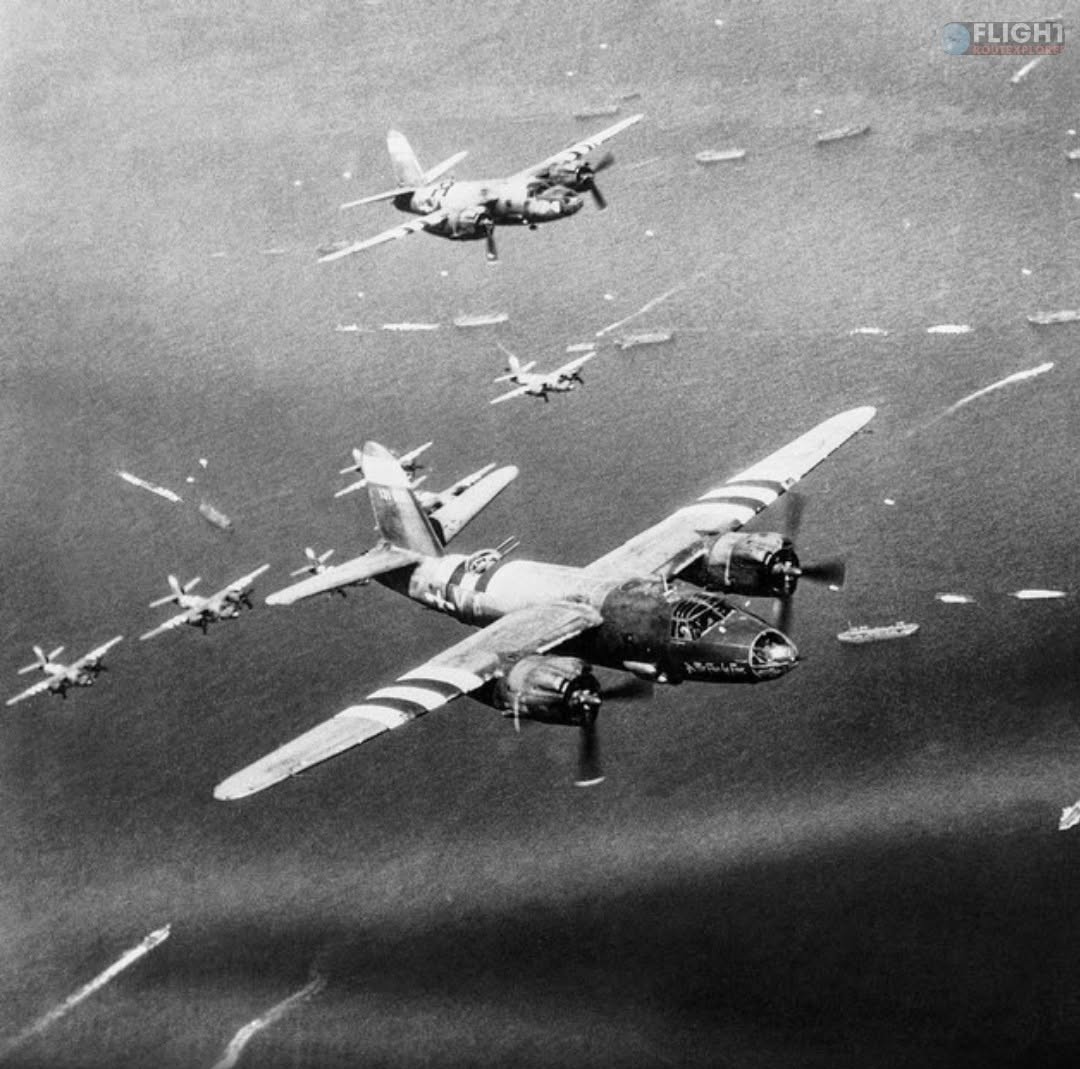
On June 6, 1944, while thousands of Allied soldiers stormed the beaches of Normandy, an even larger battle was unfolding in the skies above France. The success of D-Day depended heavily on one of the most ambitious and complex air operations ever conducted. More than 11,000 Allied aircraft took part in the invasion, making it the largest coordinated air campaign in history up to that point.
The operation began shortly before midnight on June 5, when hundreds of Douglas C-47 transport aircraft carrying American and British paratroopers crossed the English Channel. Their mission was to land behind German lines, seize bridges, block roads, disrupt communications, and prevent German reinforcements from reaching the invasion beaches.
The first troops to arrive in Normandy were not the soldiers landing on the beaches but airborne forces dropped from the sky. American paratroopers from the 82nd and 101st Airborne Divisions descended into darkness amid anti-aircraft fire, low clouds, and confusion. Many landed far from their intended drop zones, but small groups quickly organized and carried out their objectives, creating chaos among German defenders.
At the same time, hundreds of gliders silently crossed the Channel. Unlike powered aircraft, these gliders were towed by transport planes and released near their targets. One of the most famous missions saw British troops land near Pegasus Bridge shortly after midnight. They captured the bridge within minutes, securing a key route and helping protect the eastern flank of the invasion.
As dawn approached, Allied fighters filled the skies over Normandy. Aircraft such as the P-51 Mustang, Spitfire, and P-47 Thunderbolt patrolled overhead, ensuring German aircraft had little opportunity to interfere with the landings. By June 1944, Allied air superiority over Western Europe was overwhelming, and the Luftwaffe was unable to mount a significant response.
Heavy bombers also played a crucial role. In the hours before the invasion, they attacked coastal defenses, artillery positions, railway lines, bridges, communication centers, and radar installations. These attacks were designed to isolate the battlefield and delay German reinforcements moving toward Normandy.
The scale of the operation was extraordinary. Allied aircraft flew more than 14,000 sorties during the first day of the invasion. Thousands of pilots, aircrew members, and airborne soldiers participated in a carefully coordinated effort involving aircraft from the United States, United Kingdom, Canada, Australia, New Zealand, and several other Allied nations.
The operation was not without losses. Hundreds of Allied aircraft were damaged or destroyed by anti-aircraft fire, accidents, bad weather, and combat. Many aircrews and paratroopers never returned home. Despite these sacrifices, the air campaign achieved its primary objectives and was instrumental in the success of the Normandy landings.
The events of June 6, 1944 demonstrated the decisive power of coordinated air operations. D-Day remains one of the greatest examples of air, land, and sea forces working together toward a common goal. The success of the invasion marked the beginning of the liberation of Western Europe and ultimately contributed to the defeat of Nazi Germany less than a year later.
For aviation historians, D-Day is not just a story about troops landing on beaches. It is also the story of thousands of aircraft, countless airmen, and one of the most remarkable aerial operations ever undertaken.