
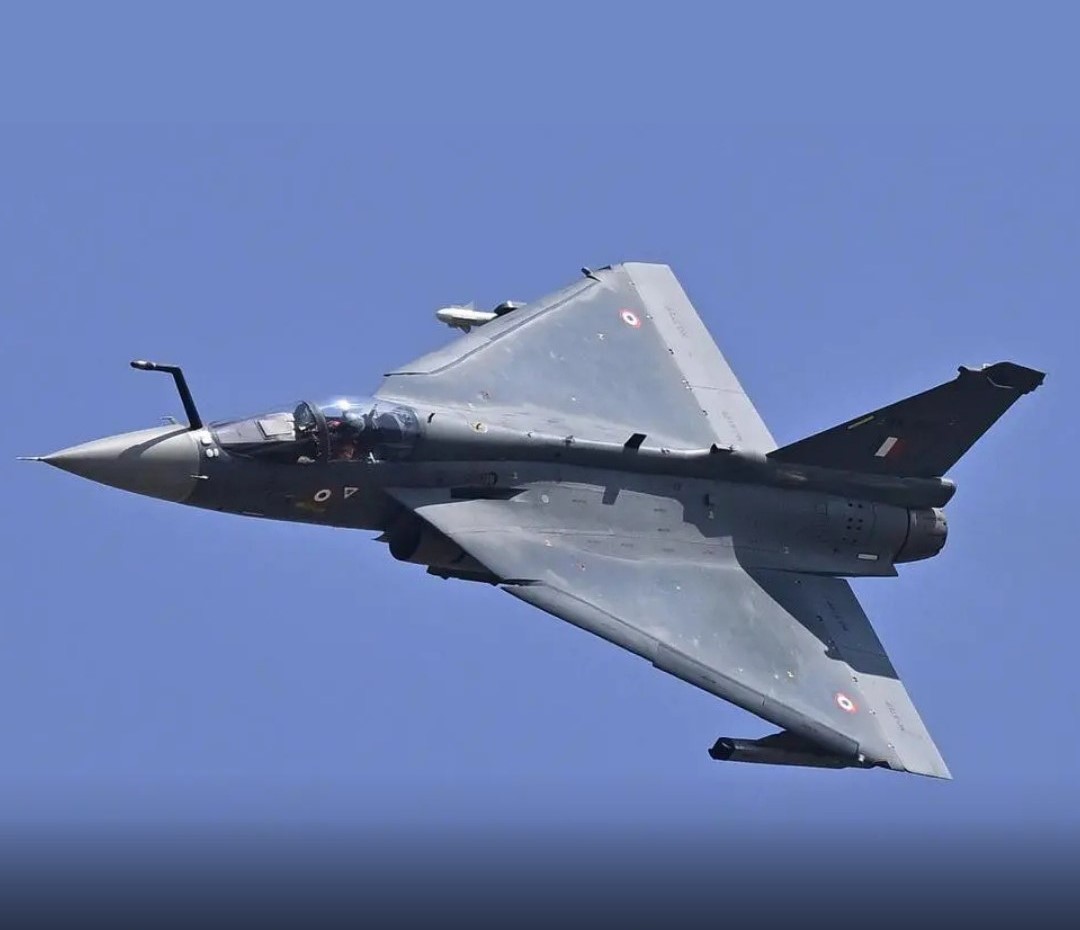
The Indian Air Force is facing a serious and immediate crisis. Its indigenous fighter jet, the Tejas Mk1, suffered an accident on February 7 at a frontline airbase, when the aircraft overshot the runway during a training sortie.
The pilot ejected; the airframe sustained damage severe enough to be considered a write-off. Hindustan Aeronautics Limited described the event as a “minor technical incident on ground”—language carefully calibrated to distinguish it from an official crash.
Whatever the terminology, the operational consequences have been significant: the Air Force has grounded approximately 30 of its Tejas Mk1 aircraft pending investigation. This is a major setback for a force already operating well below its sanctioned strength.
By its own assessment, the Air Force requires at least 42 squadrons to meet current defence contingencies, particularly given the possibility of a two-front challenge from Pakistan and China. Following the retirement of its last MiG-21 squadrons in September 2025, it fields 29-31 squadrons, a deficit translating into nearly 200 fighter aircraft. With the entire Tejas fleet grounded, India is effectively short by the equivalent of two additional squadrons, deepening an already critical gap.
This crisis must be understood in the broader context of India’s recent military experience. India’s Operation Sindoor against Pakistan became a turning point in how observers assess the country’s defence capabilities. Before it, India was widely viewed as a rising power whose capabilities could potentially match China’s over time, and as a key pillar of America’s Indo-Pacific strategy within the Quad framework. India was increasingly regarded as the most important regional power capable of balancing China’s rise.